Wednesday, 21 April 2021

An ex-Police Station and a gunsmiths ……….. Cheadle Hulme

Now,  Andy didn’t elaborate on the connection, and so I will leave that to the imagination and perhaps the curiosity of a reader to dive into the story of both.


Andy tells me that “Cheadle Hulme Police Station was built in 1911/12, with quarters for a married sergeant and three cells”.

It is the first Cheshire police station I have come across, and it differs to those erected by Lancashire which relied heavily on stone to face the front of the building or the more utilitarian ones built by Manchester City Council in the late 19th and early 20th century.

But I am confident that Andy will offer up more examples in the near future.

For now, I shall just say that it stands on Station Road, just round the corner from the gunsmiths which was established in 1968 and has its own facebook page.


Opposite the shop is the war memorial, and by one of those odd twists of coincidence, back in 1972 I commuted in to Cheadle Hulme every week day for three months doing a teaching practice at the Direct Grant Grammar School, which to this day seems a bizarre experience given that I attended a secondary modern school.

Not that my route took me past the police station or the gunsmiths, and after a fruitless twenty minutes with google maps I gave up my search for the route I took from the railway station.

But like all things it will come back.


Location; Cheadle Hulme


Pictures; Cheadle Hulme, 2021, from the collection of Andy Robertson


Cornflakes Pigs and a Vulture called Squashy ………… tales of Chorlton by two local lads

Now  I have spent the last decade and a bit writing about Chorlton-cum-Hardy which has been home for 45 years, and during that time I have leaned heavily on people who were born here and can call up a vast reservoir of memories, along with photographs, letters and a heap of documents.

One family in particular have been exceptionally helpful, providing me with a collection of memorabilia going back to the 1760s, and during the course of writing about my adopted township, have offered advice, and encouragement, and so I am pleased Francis and Oliver Bailey have now published their own book which is part family history and part the story of Chorlton from the inside.

So, while I have spent the last eleven years researching Chorlton’s history, Francis and Oliver lived it.

At which point I shall just quote the publisher’s introduction which welcomes the reader “to the very unusual farming world of the Baileys and their contract with the mighty Kellogg's company which led to the family fortune. 

The story dates from the 1940s onward, and the young boys of the family get up to all sorts of scrapes and meet plenty of great characters from an Iranian Secret Policeman to local bobbies. 


The local bobbies are a source of amusement when they clash with runaway pigs and sheep and even get deluged with a load of Kellogg's grains. The strangeness continues with exotic animals, ghosts in England and Wales, and even a stream that runs uphill and is very attractive to poachers. They are a family that clearly enjoyed life, and their stories will make you smile a lot”.

Leaving me just to reflect that when I was still unsure about believing the story of the circus which regularly came to Chorlton, featuring two elephants, Oliver not only confirmed the story, but happily recounted how the said elephants were watered in their farmyard and the entire collection of circus animals stayed on Bailey land for the duration of their visit.

I could say more, but I doubt I could say it as well as Francis and Oliver.

Cornflakes Pigs and a Vulture called Squashy was written by Francis and Oliver Bailey, and published in 2019, by Austin Macauley Publishers Ltd.


Picture, Bailey’s Farm, courtesy of The Bailey family

Tuesday, 20 April 2021

Glass, reflections ....... and the new build at the MRI ……..

It’s the picture we all take at sometime ….. that mix of glass and reflected buildings, which in this case is the new corridor in the sky.


I have to admit to not having been down to Outpatients for almost a year, and usually don’t take a camera.

But it was an early appointment, the sun was shining and what better way to while away a bit of time while waiting to be collected?


In the last three years I can lay claim to having been a regular visitor at three of our local hospitals, with an option on another two back at the beginning of the century.

And like so many people I am impressed with the dedication and professionalism of the staff, and the treatment I have received.

Yesterday was just a blood test, but one under Covid conditions. There were fewer people, dedicated and sign posted routes, and more staff ensuring I got to where I needed to be.


The procedure was quick leaving me more time than I bargained, but  the sun was out, the sky was blue and all around me the NHS just got with the business of caring for people.

And that is it.  I pondered on writing about the National Health Service, and the history of the MRI, but some of that I have already done.

So it’s just sun, blue sky and a new building.

Location; Grafton Street


Pictures; The MRI, 2021, from the collection of Andrew Simpson


Monday, 19 April 2021

Suppose they built a railway and people forgot about it

Now it’s the station everyone gets wrong.

And I suppose I know why for today all that remains is a bit of the platform on the Fallowfield Loop Walk

But it was here that Muddy Waters, Cousin Joe Pleasant, Sister Rosetta Thorpe, Sonny Terry and Brownie McGhee performed on May 7 1964.

This was the Blues and Gospel train at Chorltonville which of course was really Wilbraham Road station which had once been Alexandra Park.

The station had opened as Alexandra Park on Sepetmber1 1891 and its name  was changed to Wilbraham Road eight months later to avoid confusion with a London station with a similiar name.

“The station was situated on the MSLR’ Fallowfield Loop line, a 7 mile double track route that linked the Midland Railway’s Manchester South District Line from a point just to the south of Chorlton-cum-Hardy to the MSL main line between Manchester and Sheffield at Fairfield. The reason for the line was to give the MLSR access to Manchester Central Station.”*

During the Great War it was where aircraft parts were unloaded to be reassembled at Alexandra Park Aerodrome.**

And that marks the station off as both a place in our history and of course the station many get wrong.

Ask most people about Granada’s Blues show on that rainy May evening and they will tell you it was at Chorlton Railway Station which would have been difficult given that trains still ran from Central through Chorlton and on to Stockport and Derbyshire.

Not so Wilbraham Road which closed for passenger traffic in 1958 and there I suspect is why history has forgotten the place.

Memories of boarding trains there will be fast fading and I doubt that there will be anyone today who can remember the aerodrome which closed in 1924.

But as Andy Robertson’s pictures show there is still something left.

Like him we have walked the Fallowfield Loop and gazed down at the old station master’s house and stood beside the platform.

I just wish I had been at the concert.

Pictures; Wilbraham Road Station, 2015 from the collection of Andy Robertson

*Disused Railway Stations, http://www.disused-stations.org.uk/w/wilbraham_road/index.shtml


Sunday, 18 April 2021

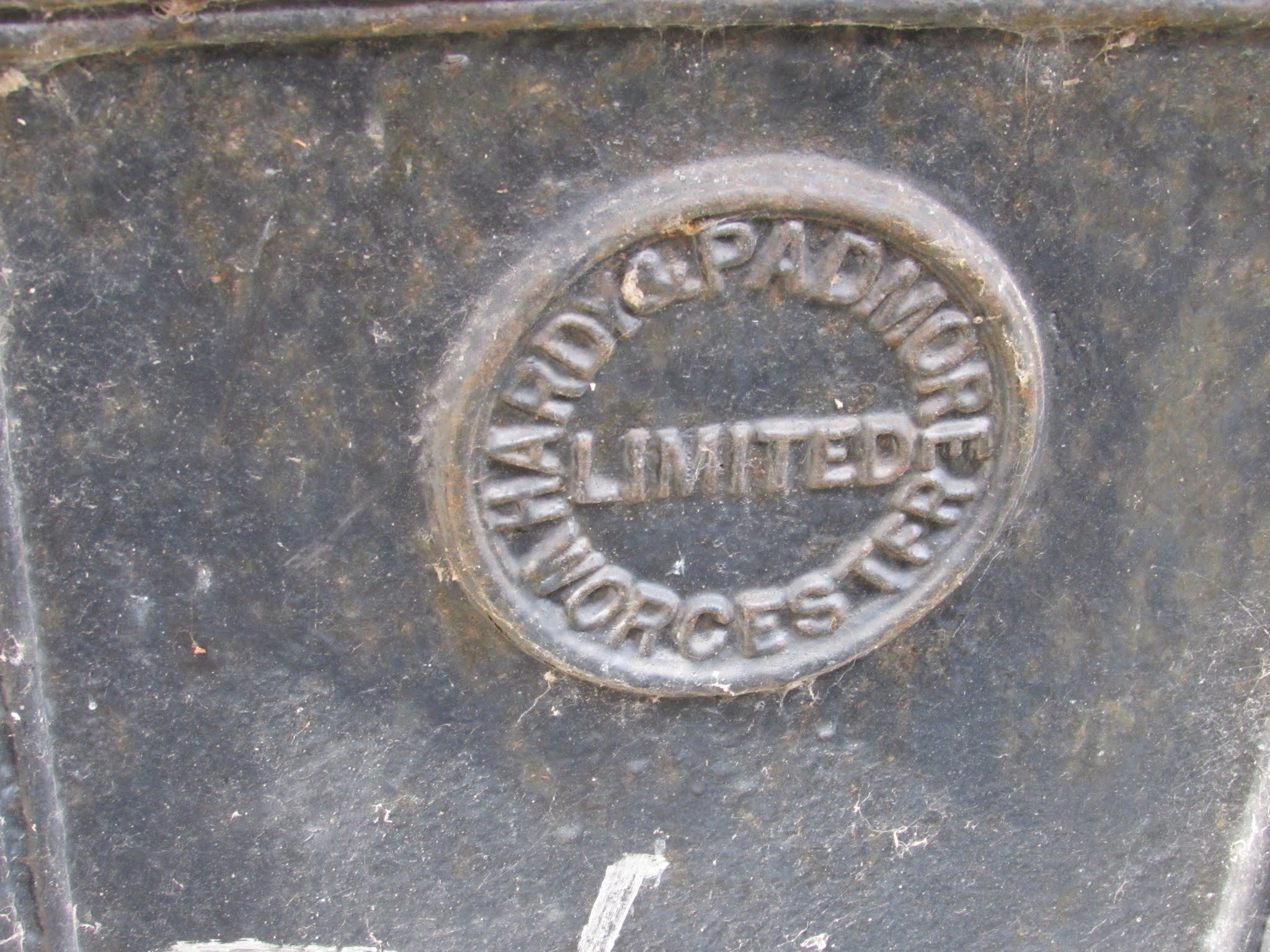
A Hardy & Padmore of Worcester Lucy Box in Castlefield ……. It doesn't get more exciting than this!

Now yesterday afternoon Andy came across this Lucy Box in Castlefield.


It was an event that couldn’t be bettered leading him to say “ It doesn't get more exciting than this!”


And according to my I Spy Lucy Boxes, site, a "Lucy box" is a name applied to boxes, about 3 feet high, about 2 feet wide and about 18 inches deep, which are to be found on pavements throughout the city.   

Such boxes were originally used in connection with the tram network and then with the trolley bus network; and as part of the general electricity supply network; and for telephone purposes”. 

Leaving me just to sit back and wait for the authoritative and erudite comments to roll in, and of course to thank Andy.

Location; Deansgate

Picture; A Hardy & Padmore of Worcester Lucy Box, 2021, from the collection of Andy Robertson


* I Spy Lucy Boxes , http://www.historywebsite.co.uk/articles/lucy/lucyboxes.htm


More stories from an industrial landscape


I suppose I am on a roll and have slid into a series of stories about that industrial landscape many of us grew up with.*

In my case it was the narrow rows of terraced houses, mills and foundries bounded by London Road, Traffic Street and the railway.  This was where my grandparents lived, and it was where every summer holiday I went until the age of 11.

They lived in Hope Street, one of a series of long roads of densely packed two up two downs which all seemed to have a pub on the corner and lead to a noisy big place of work.

Now child hood memories are supposed to be of long hot sunny days without a rain cloud in the sky, but mine are of those grimy streets which seemed to go on forever and dank cold entries which led from the busy road into the communal yard at the back.

And because I was sometimes packed off from London in the winter I remember those wet and cold days when lazy palls of smoke from countless domestic fires and factory chimneys hung over the roof tops giving off that sooty smell and adding another layer of grime to everything including the few trees by the Royal Infirmary and Arboretum.

No matter how many times I was told I always got seduced by the challenge of climbing them and was always surprised at how the stuff came off on your hands and clothes.

All of which you accepted and took in your stride.  This after all was how we lived and the idea that there could be places without noisy factories or that an open space was more than just a small pocket of tired looking grass didn’t even occur to me.

Looking back it is the way that so much industry existed side by side with where you lived.  Tucked away behind a row of houses were the yards where men repaired things with hammers and torches, at the end of most roads was a factory or mill of sorts and there was always the railway with its long lines of shunting yards whose locos worked long into the night.

For some the railway station was that magic place offering the promise of journeys to faraway places, but for us in Hope Street it meant that distinctive clunk sound as another loaded wagon was pushed and sent to its destination in the far corner of the marshalling yard.

Of course the upside was that you were never far from work.  No long bus ride or expensive commuter journey for my granddad and his neighbours. Work was just minutes away and like as not was a journey made in the company of the men who he spent the working day with.

And they were the same men who you would drink with and see at football matches and around the town. There is a story that during one shipbuilders strike in the North East the pubs opened early so that the striking men had somewhere to go to play darts, drink tea and fill the day in the place of work in the ship yard.

But let’s not over romanticise the picture.  Places like Hope Street in Derby and Butterworth Street hard by Bradford Colliery were no rural idyll and if the sun shone on a bright spring day it was accompanied by the noise of factories, and illuminated the canal side and gasworks.


Pictures; from the collection of Andrew Simpson


*Industrial Landscapes,  http://chorltonhistory.blogspot.co.uk/search/label/Industrial%20landscapes

Friday, 16 April 2021

If its Tuesday ……. it must be Castlefield ……. stories from walks through the past

Now I have been doing walks and talks for over 34 years.

Mr. Rothwell's house, Castlefield, 2003

It is one of those things I do because I enjoy talking about the past , love an audience and never tire of tramping the streets of the city in pursuit of a story.

And I fully admit that part of it is simply that I’m a frustrated actor who delights in the dramatic turn of phrase and revels in an audience.

It all started around 1987 with trips to Castlefield which was one of the GCSE History assignments I taught, and they rumbled on through the next two decades getting more comprehensive but always running the gauntlet of Derek the Developer who each year would take out another old and interesting building.

For those thinking of beginning a career doing guided talks, I recommend starting with parties of fifteen and sixteen year old students, who range from the eager and studious, to those looking for a secluded spot for a quick cigarette.

Southern Street, as was, 2003

It sharpens the skill of being both interesting and knowledgeable and encourages the acquisition of more than a few silly stories to lighten the delivery.

All of which are part of any teacher’s skills.

The ground had already been well prepared a decade earlier with impromptu walks through the city centre and along the Rochdale Canal with groups of students when for a variety of reasons the “planned” adventure had fallen apart.

I can happily report that there were no serious upsets, and the worst that I remember was a year seven student who when introduced to a rare Roman coin at Manchester Museum proceeded to bite it in imitation of Long John Silver testing out a “piece of eight”.

Gathering for the walk along Beech Road in 1847, 2014

Most have been done for free, although over the years I have picked up an annual commission from Manchester Library Service, and regular visits to history societies, and a very successful series of talks at the Chorlton Post Box Café.

The key as always is that mix of knowledge, humour and the honesty to admit to not knowing when Hiram from New Jersey asks the unexpected question, which only the “All Seeing” would know.

Sun, spectators and a bit of history, 2010

Added to which it is about never talking down to those who have taken the time to come along, or when as often happens someone wants to know about tunnels between old buildings or headless  ghosts, the response should always be one that leaves the questioner feeling that their opinion is valued.

And for those who want to know how we know, there must always be the willingness to advance the sources, and suggest where to go to follow up the inquiry, which is as much about good manners as it is about professional integrity.

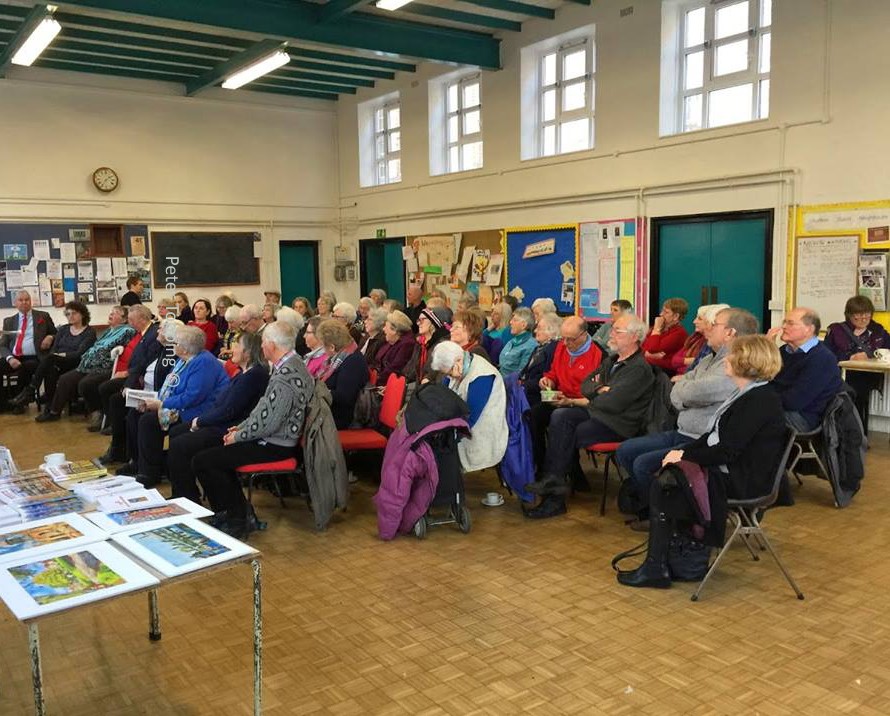
So, there is always a souvenir booklet, with pictures, stories and of course at least one image of an appreciative audience, with links to my books and those I have written with Peter Topping. 

Indoors at Chorlton Good Neighbours, 2018
And now, with Covid restrictions appearing to fade, and the sun making a reappearance I think it may be time to hit the road again.

There are plans for walks through Chorlton and Didsbury, the return of the Library walk for Chorlton Book Week, and in fulfilment of  promises made, a series of talks postponed by the successive lock downs.

Nor does it stop there because the arrival of Zoom and all those "virtual" opportunities have transformed how we go about talks as well as walks.

It is all out there to do.

Along the Rochdale Canal, 1979

Castlefield, 2002

And in the year or more since the last walk and talk, there will no doubt be plenty of changes which makes the research and the walk always more fun. 

Location; everywhere where there is history


Pictures; talks and walks wot I have done, 1979-2018, from the collection of Andrew Simpson, Mr. Rothwell's house, Castlefield, 2003, Liverpool Road, 2003,  The Rochdale Canal, 1979, Castlefield, 2002, from the collection of Andrew Simpson  © Andrew Simpson