Showing posts with label Eltham Church. Show all posts

Monday, 22 June 2026

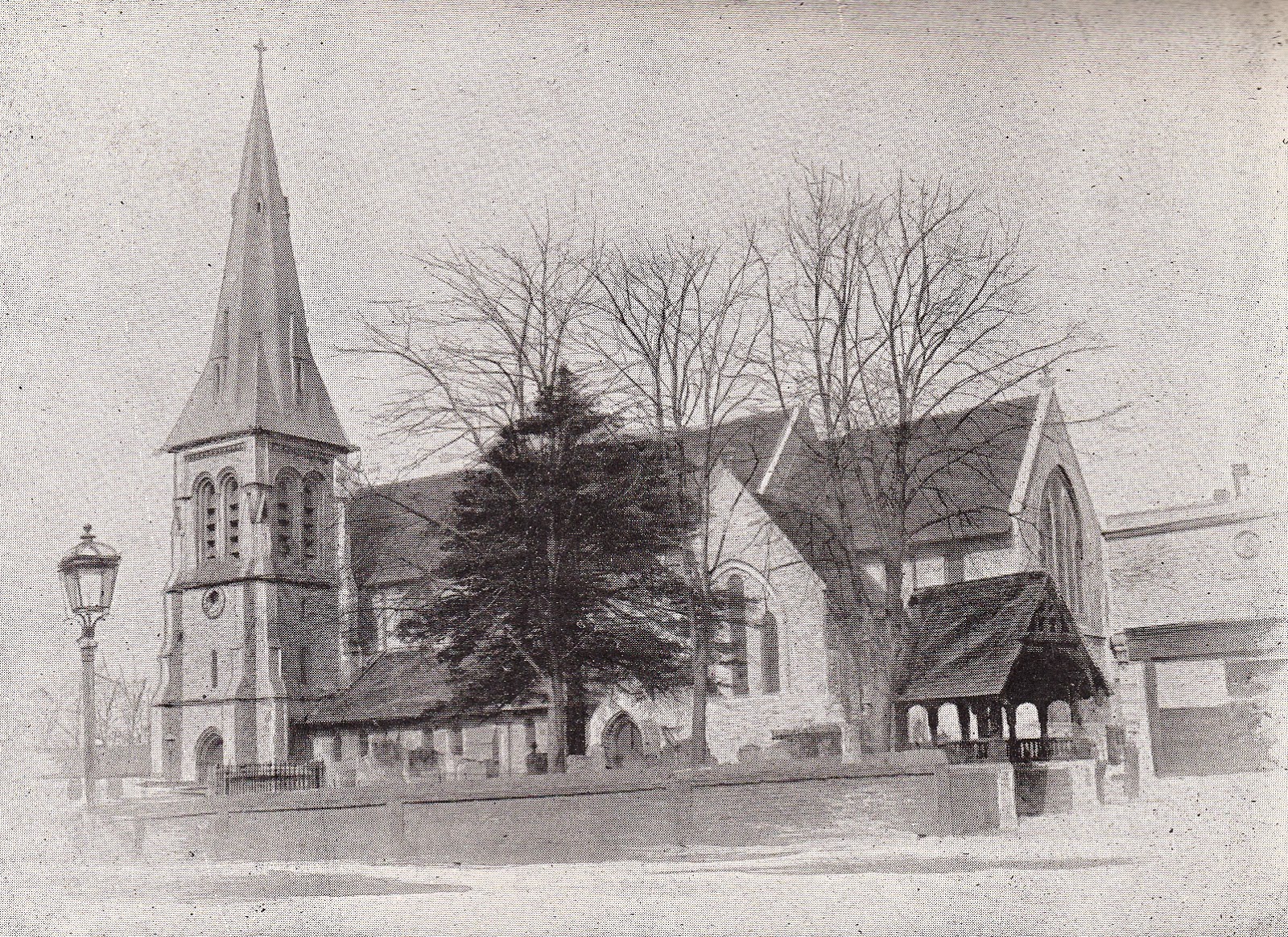
Looking at the parish church from the south in 1903

Now I like this picture of the parish church.  

It dates from around 1903 and comes from Some Records of Eltham 1060-1903 which is a marvellous little book written by Rev. Elphinstone Rivers who was the vicar of St John’s from 1895.*

I have written about our parish church before but what fascinates me about this photograph is that at first glance it looks just as it does today, but then there are the tiny details which I leave you to spot.

For me the added complication is that I was pass by in the summer when the mature trees pretty much obscure the view of the church so this 1903 picture does much to show the place off as it would have looked when brand new.

Picture; the parish church from the south , 1903, from Some Records of Eltham

*Some Records of Eltham 1060-1903, Rev. Elphinstone Rivers, 1903


Monday, 11 May 2026

Calling in at the parish church on a spring day in 1851 at the start of our Eltham walk

The Old Vicarage from Well Hall Lane, 1833
Now I had planned on starting our walk up the High Street in the spring of 1851 at Sherad House which was roughly on the site now occupied by the Nat West Bank.

But that would be to ignore the church and the vicarage.

So like all best laid plans it has gone out of the window, and instead I am at the corner of Sherard Road which was where Well Hall Lane began.

All of which was a surprise to me given that I have always thought that Well Hall Road began beside the church and the old Burtons and ran north to the station.  But not so, once before the beginning of the last century it had a more devious route and before it was Well Hall Lane had been known as Woolwich Road “so called because it led to Woolwich.”*

And so standing by the beginning of what was Well Hall lane and is now Sherard Road, this is what we would have seen.  In the distance are the old church which was demolished in 1875 and the vicarage.

The Church, circa 1860s
Now the old church was not exactly the most elegant of places leading one writer to comment that it was

“A mean fabric, much patched and modernised; with scarce a trace of anything like good work, and from repeated alterations, the plan has become irregular.”**

But that belies the point that this was a working church at the heart of the community and which underwent alterations partly to reflect its growing use.

So I shall return to the description of the place
“The nave has a south aisle cased in brick, and a north chapel of stone, bearing the date 1667, with square headed, labelled windows, and a door of mixed Italian character.  

The chancel was wholly brick.  At the west end of the nave was a tower of flint, cased with brick, with large Buttresses and pointed doorway.  It was surmounted with a spire of wood, covered with lead (shingle).  

Inside the old Church
Galleries were carried all around the interior of the church, and a double one at the west end, with an organ.  The north chapel opened to the nave by three pointed arches, with octagonal pillars.”

Now at this point I have to confess that much of the story is not original research but comes from that wonderful book, The Royal Story of Eltham, by R.R.C.Gregory, which I will use again when we spend more time in and around the church its vicarage and actually begin the walk up the High Street.

Location; Eltham, Londson

*R.R.C.Gregory The Royal Story of Eltham, 1909

**Sir Stephen Glynne 1830, Churches of Kent

Pictures; from The story of Royal Eltham, R.R.C. Gregory, 1909 and published on The story of Royal Eltham, by Roy Ayers, http://www.gregory.elthamhistory.org.uk/bookpages/i001.htm,


Saturday, 25 April 2026

Walking into Eltham in 1862

The parish church in 1860
 I am back with Bradshaw in 1862  continuing  to explore one of the walks laid out in the Illustrated Handbook to London and its Environs.*

The book remains a wonderful snap shot of London in the early 1860s and for the curious 21st century reader here are descriptions on how to cross the city by foot, train and boat as well as what was on offer to the tourist of the period.

“For those who either have seen Woolwich, or prefer postponing their visit thither for a distant excursion, we can especially recommend a deviation from Shooter’s Hill down the inviting green lane that leads to ELTHAM, a pleasant walk of hardly two miles.”

And as you would expect the guide goes into great detail about the Palace, its history and its appearance in 1862 all of which I shall leave you to read yourself.

Partly because the guide does it so well and the publishers may jib at me stealing their book.

Suffice to say it makes fascinating reading and is a good contrast to what can be seen today added to which
I am sure there will be those who fall on the description and speculation about the ancient tunnels.

But for me I shall close with Bradshaw’s instruction to

“go and see Eltham Church; not that it is architecturally remarkable, but in the churchyard will be found a tomb to Doggett the comedian, who bequeathed the coat and badge still rowed for every 1st of August by the ‘jolly young watermen of the Thames.”

One he missed, Well Hall from a photograph taken in 1909
Now this is not as daft as it seems given that this was the old church and vanished not that long after the guide book was finished.

Now I do have to confess to a little disappointment in that this is all we get.

The fine large houses along the High Street and beyond do not get a look in, nor does that fine old pile at Well Hall which had been built in the early 18th century and would last into the 20th.

So having done the Palace and the parish Church our guide was content to announce that it was now time to “get back to Greenwich and go home by railway,” which does however open up the prospect of more walks courtesy of the guide to Woolwich Greenwich and Blackheath.

But these are for another time.

Pictures;  Eltham Church, 1860, & Well Hall 1909,  from The story of Royal Eltham,  R.R.C. Gregory, 1909 and published on The story of Royal Eltham, by Roy Ayers, http://www.gregory.elthamhistory.org.uk/bookpages/i001.htm,

* Bradshaw’s Illustrated Handbook to London and its Environs, 1861, republished in 2012 by Conway 

Friday, 24 April 2026

Eltham Church ......”one towards your collection”

Now, I don’t for one minute think that when Lizzie sent this picture postcard to her auntie in Bridlington, that she ever thought it would reappear in Eltham a full century and a bit later.

And I am please it has courtesy of Tricia Leslie, because it offers up some interesting detail.

To the right, directly opposite the church is the wall of the Congregational Church which was later demolished to build Burton’s which is now McDonald’s.

The half timbered gateway is there but the space beyond, heading north down Well Hall Road, has yet to get the tram huts and has a second wooden gate and iron fence where today the stone seat and low wall with the word Eltham have been placed.

Add to this, that Well Hall Road looks narrower and was itself just under two years old, having been cut at this point as far as the railway bridge in 1905.

That said there is a lot that does look familiar, even though today the novelty of a camera has worn off leaving people unlikely to pose for a photographer.

Location; Eltham Church

Picture; Eltham Church,1907, courtesy of Tricia Leslie

Thursday, 23 April 2026

In the parish graveyard

I wish I had spent more time exploring the parish grave yard.

But when you are growing up wandering past the monuments to the long dead is not very high on the agenda.

And yet for the historian they are a powerful insight into what a community was like in the past and Eltham’s is no different.

Here for centuries were buried the good, the wealthy and those whose rank and occupation was such that they have left few records.

But some at least of those that lived here will be recorded both in the parish records and in the grave stones.

Not that I intend to name them or for that matter to dwell on their lives but more to reflect on what can be learnt from combining the inscriptions with those held in the church books.

Once upon a time the researcher had to visit the individual parishes, or walk through the often overgrown church plots seeking a family member or just getting a sense of things like life expectancy and the pattern of
names.

Now of course most records are held on microfilm in local history libraries and increasingly are being digitalised.

All of which makes possible for the historian  to track individuals from the comfort of a kitchen table.

Now there are those who regret this development, but I am not one of them. What once took months of slow laborious work can be undertaken in a few hours and opens up parts of the country which would otherwise be a train away.

Of course there is still a thrill at holding an old document secure in the knowledge that perhaps only a handful of people have touched its pages in two centuries.

Likewise to stand in front of the gravestone of a long lost family member is to get close to them.

All of which I think has written me into a new series of stories, matching those buried in the grounds of St John’s with the stories of their lives from the census returns, rate books and casual comments of their contemporaries.

And for all those who like a bit of homework, I recommend a visit to the parish graveyard and a walk with history.

Pictures courtesy of Jean Gammons

Wednesday, 22 April 2026

In Eltham with the Reverend John Kenward Shaw Brooke and some revealing records

John Kenward Shaw Brooke from an engraving in the church
am sitting looking at a picture of the Reverend John Kenward Shaw Brooke and have been reflecting on what started as a simple piece of research about the man led me off in all sorts of directions.


John Kenward Shaw Brooke was vicar of St John’s in Eltham from the age of 24 in 1783 till his death in 1840.

Such was his reputation in the parish that on the jubilee of his tenure in office the newly built row of cottages owned by John Fry became known as Jubilee Cottages, a name they retained till their demolition in 1957.

He was in the words of the local historian R.R.C. Gregory “a man greatly revered of strong character, and holding the office of Vicar for the long period of fifty-seven years, he has left a mark upon parochial history more indelible, perhaps, than that of any preceding Vicar.”*

So much so that over 70 years after his death in the summer of 1909 there were engravings of the man “in many of the homes of Eltham ...and so impressive were the demonstrations that took place [to commemorate his fifty years on office in 1833] that the children and grandchildren of those who witnessed them find to this day, a congenial theme for conversational purposes.”

Cover of the by Rev Myers, 1841 
Nor was this all for just a year after his death his life and contribution were recorded in a 22 page booklet focusing particularly on his establishment of the National Infant and Sunday Schools, the endowment he left to the school and his other charity work.**

And as I dug deeper I got side tracked and despite serious efforts to return to our man I was led off on different tracks.

All of which began with the poll books which are not only a record of who could vote in Parliamentary elections but also how they voted.

John Kenward Shaw Brooke appears in a number of them from the late 18th century into the 19th and encompassing the great election after the 1832 Reform Act.

The first comes from 1790 and the last in 1838, and what they show is that the Reverend Shaw Brooke consistently voted Tory.

One of thast enteries by the Reverend Shaw Brook in December 1839
Nor is this all for like so many men of the period he voted in more than one place.

So along with Eltham he was registered in the parish of St Dunstan in the West in the City of London and Wickhambreaux which is just five miles from Canterbury.

And like so many clergymen of the period he also managed more than one church.

In his case the second living was at the Rectory of Hurst-Pierpoint, in Sussex, “where respect and esteem ever awaited him; and where, although his residence was limited to a few weeks annually, he lost no opportunity of promoting the well being of his parishioners, by his sanction and liberal support of every means of advancing their temporal and spiritual interests.”***

But it was in Eltham where he was most busy and trawling the parish records there frequently is his name and of course his handwriting which for any historian is an exciting link with both the man and the period.


Here too purely by chance I came across the burial record of Lucy Jeffery who died in her first year in the June of 1841.

Only weeks before I had uncovered her baptismal records along with her siblings and in the course of charting the family through from the 1840s noted she had fallen off the official records.  At the time I assumed she had changed her name on marriage, and thought that I would follow it up in the future.

Not so, she was buried on June 19th in the parish church yard, which led me to ponder on the ages of the others laid to rest during the period. In time I think it will turn into a major piece of research but for now of the 48 buried during 1840, 19 were under the age of 5 of which many were never to see their first birthday.

Burial record for John Kenward Shaw Brook
It is unscientific, lacks at present any details of the causes of death and is confined to that one year but most of us will I suspect reflect on the lost lives and unfilled futures which they represent.

John Kenward Shaw Brooke had died the year before aged 81 and was buried on December 23rd 1840.

Pictures; John Kenward Shaw Brookes from The story of Royal Eltham, R.R.C. Gregory, 1909 and published on The story of Royal Eltham, by Roy Ayers, http://www.gregory.elthamhistory.org.uk/bookpages/i001.htm,

*The story of Royal Eltham, R.R.C. Gregory, 1909

**Rev W.T.Myers, 1841

***ibid R.R.C. Gregory
Tuesday, 21 April 2026

Passing the parish church one Sunday in November and remembering Bradshaw's guide

Now I like Ryan’s picture of Eltham Church which got me thinking about how a modern guide book would describe it.

Back in 1861 Bradshaw’s Illustrated Handbook to London and its Environs reported that visitors should
“go and see Eltham Church; not that it is architecturally remarkable, but in the churchyard will be found a tomb to Doggett the comedian, who bequeathed the coat and badge still rowed for every 1st of August by the ‘jolly young watermen of the Thames.”*

Sadly for anyone using that edition and happening on the church a decade and a bit later they would have been disappointed because it no longer existed having been replaced by the one we know today.

Work on the present church began in 1871 and was finished eight years later  just  3 metres north of the old site and occupying a larger area.

At which point I do have to be careful because those with a much greater knowledge than I will point out that the unfinished building was consecrated in 1875.

The spire was added in 1879 when funds became available and s service of thanksgiving for the completion of the building was conducted by Rev. Walter J Sowerby on 24th June 1880 which is the  feast day of St John the Baptist.**

So there you have it ................ three possible dates for the historian with an eye for detail to go for.

In the meantime I will go looking for a later edition to Bradshaw’s guide book to see if they updated the entry and leave you with this earlier photograph of the parish church from the 1860s.

Back then the clock ticked the hours away and it is nice to know that after some time the clock in Ryan's photograph is again offering up the correct time.


Pictures;  Eltham Church, 2015 from the collection of Ryan Ginn and back in  1860,  from The story of Royal Eltham,  R.R.C. Gregory, 1909 and published on The story of Royal Eltham, by Roy Ayers, http://www.gregory.elthamhistory.org.uk/bookpages/i001.htm,

* Bradshaw’s Illustrated Handbook to London and its Environs, 1861, republished in 2012 by Conway

**Eltham Parish Church,  http://elthamchurch.org.uk/wp/?page_id=2

Monday, 13 April 2026

Looking out on the High Street with memories of past girlfriends

Even on a Sunday in late October our High Street can be a busy place.

And looking out from the parish church I am reminded of the countless times I stood in the shelter of that entrance waiting for a friend.

More often than not it will have been a girl friend although thinking about it there were only three steady ones.

That said the corner of Well Hall Road and the High Street was a favoured place for me and Jenny to meet up.  In term time she lived in the lodge at Crown Woods and if we were going out to the cinema this was a sensible place to meet.

And this was in that pre mobile age when once the choice of where to meet was made you had to stick to it or suffer the consequences of missing each other and trying to second guess an alternative which otherwise meant mutual recriminations on the Monday morning.

So along with the entrance to Avery Hill and the Wimpy bar this place will always have a special place in my memory.

Picture; the parish churchyard, October 2015 from the collection of Elizabeth and Colin Fitzpatrick

Thursday, 21 August 2025

The story behind the story of an Eltham postcard

Now as everyone knows there can always be more than one story behind a picture postcard.

The first is the image on the front which in an instant tells you so much about a place in the past.

And then there is the name, address and message on the back which can be equally revealing.

The skill of the historian is to marry the two sides and tell a story, but just sometimes that story cannot be told and that is what happened to my friend Tricia who found this postcard on eBay back in September.

She told me that having found it “I did a little research on the information on the back and managed to trace the family history of the person it was sent to.”

The research led to a connection with the garage beside the church and a family who had lived in Eltham.

Tricia managed to trace the family, met up with one of them and handed over the postcard.

It would have made a compelling story but given that one of the familiy did not want the details made public Tricia quite rightly chose not to publish it.

But there is always a story in a story and for me the story is less aboutt the family and more about how one postcard in the hands of a skilled researcher can reveal much that might otherwise have been ignored or lost.

It involved Tricia's leap of imagination to use the name and search through social networking sites and then the diligence to match these against people and those listed and  then try and make contact.

And I like the final touch of Tricia's in  choosing to reunite the card with the family a full seventy seventy years after it was sent.

Location; Eltham

Picture; Eltham Church circa 1940s from the collection of Tricia Leslie

Monday, 23 June 2025

In the parish graveyard at Eltham

Eltham Church from the north, 1870
I can’t remember the last time I wandered through the parish churchyard but given that I left for Manchester in 1969 it will have been a long time.

Had I done so in 1851 there would have been plenty of gravestones to read many of which dated back to the 17th and 18th centuries.

Not that I intend to record them here.  Instead I want just to reflect on how the church would have appeared from the northern part of the graveyard.

And I have to agree with Sir Stephen Glynne who in 1830 wrote that it was of “a mean fabric, much patched and modernised; with scarce a trace of anything like good work, and from repeated alterations, the plan has become irregular.”*

But no less a place deep in the affections of many local people.

*Sir Stephen Glynne 1830, Churches of Kent

Picture; from The story of Royal Eltham, R.R.C. Gregory, 1909 and published on The story of Royal Eltham, by Roy Ayers, http://www.gregory.elthamhistory.org.uk/bookpages/i001.htm

Friday, 5 July 2024

Looking out from the churchyard........... home thoughts from abroad nu 1

There are many things I miss about Eltham.

Uppermost of course are the family who while they may have moved a way for a while have always come back.

And then thinking about it there are some special places which meant a lot to me when I was growing up in Well Hall and still do but for slightly different reasons.

All of which is the start of an occasional new series featuring bits of the Eltham I like.

They are in no special order and were prompted by a set of pictures taken by our Elizabeth and Colin.

I had asked if they could take a few next time they were passing through the High Street and with a fine day yesterday that is what they did.

So here we are in the churchyard looking out towards the High Street.

It is a long time since I was last there but the memories of walking through the place are still very vivid, more so because here lay many of the people I have written about over the last few years.

And that is all I want to say.

Picture; in the churchyard, October 2015 from the collection of Elizabeth and Colin Fitzpatrick

Thursday, 24 May 2018

The church ..... on a May morning .... from Ryan

Now I always look forward to the pictures Ryan posts of Eltham.

They are usually taken on his way to work when the day is just beginning and everything looks fresh with the promise of all that is to come.

This is one of my favourites, posted today on a social network site, and just makes me think of home.

Location; Eltham


Picture; our parish church, 2018, from the collection of Ryan Ginn

Thursday, 10 May 2018

Walking out one May morning in Well Hall

Now on a day like this, with the sun already climbing across the sky I am thinking of Well Hall, and Eltham.

It is a feature of getting older, that the memories come flooding back and stay longer.

I guess that with fewer routine things to do, from feeding the kids, sending them off to school and going out to work there is more time to let the past wander in.

For me that morning sun is often a trigger and in an instant I am back at the top of our road by the old church, hard by what was Burtons and Wilcox’s.

And it helps when you get a picture of that very spot.

So yesterday I was really pleased that Ryan shared this one of the parish church, on a bright May day.

It is just how I would have seen it walking up Well Hall and that is all I have to say.

Location; Well Hall Road

Picture; Eltham Church, 2018 from the collection of Ryan Ginn

Friday, 30 March 2018

Eltham Church on a March day ........ from the camera of Ryan

Now you can never get enough of pictures of Eltham in my opinion.


And on that I fully accept I am biased for as much as I love my adopted city of Manchester there will always be a bit of me that is Eltham.

So here is one of Ryan’s photographs which he says “whilst out shopping I passed by the St John the Baptist church. 

As I had a great opportunity I thought of several people . 

Eltham is changing so much now I had to take this photo ."

Location; Eltham


Picture; St John’s Eltham, 2017 from the collection of Ryan Ginn

Saturday, 24 March 2018

Pictures of Eltham I wish I had taken ................ passing our parish church

You can never get enough pictures of Eltham and so here is another from Ryan.

And that is all I want to say.

Except he did show me some interesting letters posted recently in SE 9 about the history of the clock which I may well pursue.


Picture; St John’s, 2014, Ryan Ginn

Thursday, 29 December 2016

A day in December on our High Street ................. nu 4 the parish church

Now if you still live where you grew up the chances are that you take it all for granted.

For those of us who long ago moved away from Eltham that is something we can’t do.

So here for the next few days are a selection of Eltham High street on a December day just before Christmas.

They were taken by Ryan and are not in any order but take me back to the High Street I remember and given that we are close to Christmas it is fitting that there should be one of the church which I am regularly drawn back to.*

And before any one says anything, I too have just spotted the trees are in full leaf, which is either another sign of global warning or this is is a summer picture which I have picked up from Ryan by mistake.

Either way it will feature in June in a walk down the High Street in summer ........... can't be bad.

Picture; St John’s, 2015 from the collection of Ryan Ginn

*Eltham Church, http://chorltonhistory.blogspot.co.uk/search/label/Eltham%20Church