Showing posts with label Industrial landscapes. Show all posts

Thursday, 25 September 2025

When East Manchester became Eastlands


Now there will be those who accuse me today of just taking a few pictures of east Manchester and coming up with some not very subtle sentences to connect them together.  

And that is not so far off the mark.  Yesterday I was reflecting on the changes that overtook the area in just over a decade and half and today I want to continue the theme.

We washed up on Butterworth Street in the January of 1973 and I suppose made a little bit of history.  We and the other five couples were all students or husband and wives of students who attended Manchester Polytechnic which had taken over six flats in the complex that had once housed the Mill Street Police Station, Fire Station and Ambulance Station.  Only the police remained and the six flats which had once been home to the families of fire fighters were now the first residential accommodation run by Manchester Poly.  So in a sense we were making history, while all around us something of a bigger bit of history was unfolding.

East Manchester was one of the centres of industrial production.  Here was the colliery, gasworks, chemical plants, and iron and steel foundaries bounded by the canal and railway lines, and because all these places of enterprise needed a work force here too were the rows of terraced houses, corner shops and pubs.

We arrived just as the area was changing.  Bradford Colliery had closed in 1968 and at the same time many of the old terraced houses were being cleared to make way for the large block of flats close to Grey Mare Lane.

Gazing out across the market at the decks of flats at night was I have to say an impressive sight and reminded me of ocean liners out at sea.  But Fort Beswick had a much shorter life than the terraced houses it had replaced and came down just twenty or so years after they had gone up.  Even at the time they presented a grim appearance in daylight and the idea that families with very young children would be comfortable or safe on the top decks of the block now seems a little absurd.

But there were still plenty of the old traditional houses around and what contributed to their demise was the swift deindustrialization of the area.  In 1951 72% of Britain’s working population was engaged in manual labour* and here in east Manchester they had their pick of places to work.

Just up the New Road was Clayton Aniline, with its tall chimney which belched out different coloured gasses at different times and turned the sky different shades.  Then there were the wireless works up by Philips Park, the canal, the railway lines and countless small lock workshops along with the gas works and the big engineering factories down through Openshaw and into Gorton.

Despite the closure of the colliery in 1968 there was much still working when we arrived five years later. But just a decade and a bit after that much of it had gone. The area was renamed Eastlands and ambitious plans were drawn up to make it the centre of our bid for the 1996 and 2000 summer Olympic Games.  Neither submissions were successful but it was where Manchester hosted the 2002 Commonwealth Games with its exciting new stadium on the site of the old Bradford Colliery.

In a rather odd twist of coincidence my eldest son found work during the Commonwealth Games at the stadium which had been built almost on the spot where just thirty years earlier I had lived.  Nor was this all, for his journey to work along the Ashton Old Road took him close to where I had worked.

I went looking for both sites recently.  The scaffolding yard on Pottery Lane is an open space, and Butterworth Street and our block of flats is just hardcore under Alan Turing Way.  Although I did find a tiny stretch of the road that ran between Mill Street and Butterworth Street along the side of our block, not a blue plaque I grant you but all that is left of when we were there, and of course in a bigger way a little bit of what was there when Eastlands was East Manchester and there were factories, and foundries and much else that was industrial.

Pictures; Courtesy of Manchester Libraries, Information and Archives, Manchester City Council, Butterworth Street, Luft M 1991, m55776, Grey Mare Lane, 1962 Hotchin, F, m15440, Grey Mare Lane, Hotchin, F, m15450, Grey Mare Lane flats, Milligan, H, 1971, m12519, http://images.manchester.gov.uk/index.php?session=pass

Wednesday, 23 November 2022

Remembering east Manchester


Now I was there when they demolished the winding gear at Bradford Colliery in 1973.  

Well that is not strictly accurate.  It was there when we went out in the morning and gone when we got back.  It may even have been a few days before I noticed.  It was one of those places you took for granted.

In the same way we woke one Sunday to the dull persistent sound of some big engines being tested off towards Pottery Lane and again in the way of these things we only realized that it had been going all day when it stopped around tea time.

But then the area was still full of industry.  Just up the New Road was Clayton Aniline, with its tall chimney which belched out different coloured gasses at different times and turned the sky different shades.  There were the wireless works up by Philips Park, the canal, railway lines and countless small workshops.

It is all very different now.  The Aniline went in 2007, most of the smaller industrial units vanished during the Thatcher years and that great sprawling block of deck access flats which was almost brand new when we arrived has gone without a trace.

They say you should never go back to places where you lived and were happy, and as I tried to get my bearings on what was the corner of the Old Road and where Grey Mare Lane stood I did have to agree.

Not that I hasten to add that this is some sort of nostalgic bit of tosh for a lost golden age.  True there was a real sense of community but few would want to return to houses which were past their best with damp walls sagging roofs and the occasional infestation.  Nor I think would there be any appeal in living next to shunting yards and watching clean washing get streaked with soot or live in the shadow of some great grimy factory.
Most who hanker for this never had to live it and never would.

Now I know a little of what I am talking about because although we may only have lived there a year I spent a chunk of my early life in a similar industrial area.  The long rows of terraced houses hard by factories, mills and marshalling yards had been built in the 1780s and time had not been kind to them.  I fell asleep to the clunk of railway wagons in the nearby shunting yards, woke to the sound of steel shod boots of  men passing the door on the way to the local mill and knew it was dinner time by the siren from the same mill announcing the mid day break.

All of which is a belated introduction to David Hall’s book Working Lives: The Forgotten Voices of Britain’s Post Working Class.  It is according to the review “an oral history of post war industrial Britain,” covering “the lives of working people in the 1950s and 1960s.”**

Here are stories of awful industrial accidents of Saturday night outs and mean streets dwarfed by mills, forges and collieries.

It is an industrial landscape and way of life that has in the main vanished and one that those of us who knew east Manchester will share with David Hall who came from Bradford. His was a world bounded by canals, railway line, gas and chemical works and  of factories and lived out under grey smoke filled skies to the incessant sound of noisy forges and engineering plants.

Now as I said nostalgia does nothing for me, but his book goes someway to recreating both my own childhood and that part of east Manchester I got to know just as it was being lost.  And is a real reminder of the transformation of industrial Britain.

Pictures; Courtesy of Manchester Libraries, Information and Archives, Manchester City Council, Bradford Colliery during demolition, 1973, m60850, Grey Mare Lane and Ashton Old Road, 1962, Hotchin,F, W., Ralph, m15433, Grey Mare Lane west side, Hotchin, F. W., Ralph, m15435, Grey Mare Lane Flats, Milligan, H, 1971, m12519, http://images.manchester.gov.uk/index.php?session=pass


*Hall David, Working Lives: The Forgotten Voices of Britain’s Post Working Class. Bantam £25
** Stephen Armstrong, The Sunday Times, August 19 2012

Sunday, 18 April 2021

More stories from an industrial landscape


I suppose I am on a roll and have slid into a series of stories about that industrial landscape many of us grew up with.*

In my case it was the narrow rows of terraced houses, mills and foundries bounded by London Road, Traffic Street and the railway.  This was where my grandparents lived, and it was where every summer holiday I went until the age of 11.

They lived in Hope Street, one of a series of long roads of densely packed two up two downs which all seemed to have a pub on the corner and lead to a noisy big place of work.

Now child hood memories are supposed to be of long hot sunny days without a rain cloud in the sky, but mine are of those grimy streets which seemed to go on forever and dank cold entries which led from the busy road into the communal yard at the back.

And because I was sometimes packed off from London in the winter I remember those wet and cold days when lazy palls of smoke from countless domestic fires and factory chimneys hung over the roof tops giving off that sooty smell and adding another layer of grime to everything including the few trees by the Royal Infirmary and Arboretum.

No matter how many times I was told I always got seduced by the challenge of climbing them and was always surprised at how the stuff came off on your hands and clothes.

All of which you accepted and took in your stride.  This after all was how we lived and the idea that there could be places without noisy factories or that an open space was more than just a small pocket of tired looking grass didn’t even occur to me.

Looking back it is the way that so much industry existed side by side with where you lived.  Tucked away behind a row of houses were the yards where men repaired things with hammers and torches, at the end of most roads was a factory or mill of sorts and there was always the railway with its long lines of shunting yards whose locos worked long into the night.

For some the railway station was that magic place offering the promise of journeys to faraway places, but for us in Hope Street it meant that distinctive clunk sound as another loaded wagon was pushed and sent to its destination in the far corner of the marshalling yard.

Of course the upside was that you were never far from work.  No long bus ride or expensive commuter journey for my granddad and his neighbours. Work was just minutes away and like as not was a journey made in the company of the men who he spent the working day with.

And they were the same men who you would drink with and see at football matches and around the town. There is a story that during one shipbuilders strike in the North East the pubs opened early so that the striking men had somewhere to go to play darts, drink tea and fill the day in the place of work in the ship yard.

But let’s not over romanticise the picture.  Places like Hope Street in Derby and Butterworth Street hard by Bradford Colliery were no rural idyll and if the sun shone on a bright spring day it was accompanied by the noise of factories, and illuminated the canal side and gasworks.


Pictures; from the collection of Andrew Simpson


*Industrial Landscapes,  http://chorltonhistory.blogspot.co.uk/search/label/Industrial%20landscapes

Tuesday, 17 March 2020

The new east Manchester, pictures from the 1970s


I have been reflecting on those industrial landscapes which many of us grew up in.*

They were a product of the 19th century, continued to dominate many parts of our towns and cities into the 1970s and vanished like snow in the winter sun during the last two decades of the 20th century.

Their going was down in part to town and city planning but mostly to the fairly rapid deindustrialization which saw the end much of our heavy industry.

Most of the factories, mills and warehouses went in a cloud of dust and debris leaving wide open spaces we now call “brown sites” and some with imagination or not so good imagination in to flats for those seeking a new inner city experience.

What also went were the old rows of terraced housing replaced by new social houses and flats.  But as these went up the factories were coming down presenting the newly re-housed families with a bleak future.

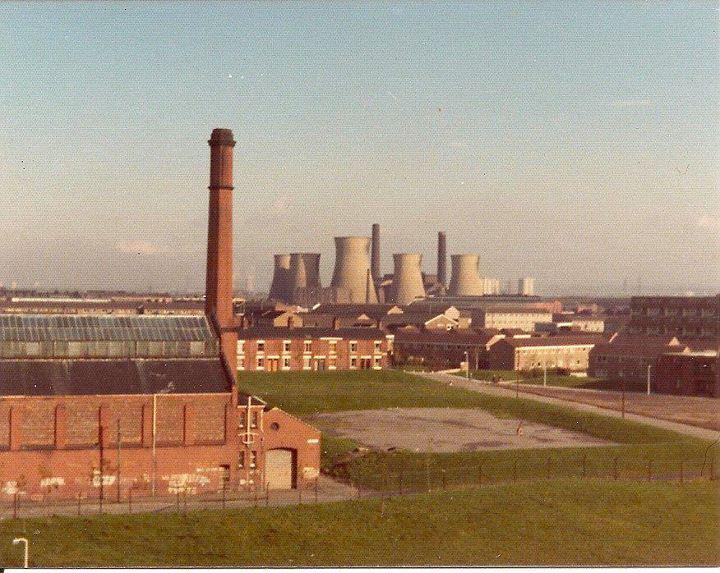
Some of that change was caught in a series of pictures by my friend Eileen Blake.  They are a remarkable record of east Manchester in the 1970s.  Here are the new schools and housing estates, nestling beside the older terraced houses and still dominated by the remnants of the old industry, including the gas works and power station.

Pictures; from the collection of Eileen Blake

*http://chorltonhistory.blogspot.co.uk/search/label/Industrial%20landscapes

Wednesday, 6 July 2016

Watching "Pomona Land" change

Now I could go on at length about  how the area has changed in just a few decades but rather think that is pretty obvious.  

And of course that changes is continuing, all of which makes Andy Robertson’s new series of pictures a welcome addition to the bog.

Back in May he wandered down to “Pomona Land” and recorded the landscape along the ship Canal.

The only question is what will have gone up on the open land opposite the flats next time Andy is down there.

Pictures; Pomona Land, May 2015, from the collection of Andy Robertson

Monday, 20 June 2016

“A few more in near perfect light” .............. out by Pomona with Andy Robertson

Earlier in the year Andy was back out on Pomona land and took these which are two in a series that will feature over the next few days.

They were taken in "near perfect light" on a May day in 2015.


Pictures; Pomona land, May 2015 from the collection of Andy Robertson

Saturday, 21 May 2016

Looking for the story of the Casablanca Mill

I pretty much took the textile mill for granted.

When I first came up to Manchester in 1969 they were still a big part of the landscape especially on the east side of the city and in Ashton-Under-Lyne where we spent a big chunk of the 70s.

And when we left that was where we left them, in clumps at the bottom of street after street and standing proud in a ring around the town and beyond.

But a little over a decade and a bit later there were few of them left and those that still existed faced an uncertain future or had become home to a shed load of small business's most of which had nothing to do with textiles.

Today the most attractive have been converted into smart residents or hotels and the odd one now boasts designer retail outlet.

But what of the Casablanca Mill in Sherborne Street West?

A trawl of the net provides the names of a host of companies that trade from the place ranging from a bedding firm to a set of accountants and an MOT centre.

So far I have drawn a blank on its past.  I can’t find it on the 1911 street directory and it doesn’t appear on Grace’s Guide to British Industrial History.*

Of course there will be someone out there with access to the later directories or will have the knowledge.  I hope so

It caught the interest of Antony Mills who sent me the images and commented “it's still standing in all its glory but never gets a mention.” So here as a starter is the first of what I hope could be a series of stories.

He has offered to send me more of which I will be happy to receive having been very impressed with those he has been posting on that facebook site, Classic Salford Photos Group.

Location; Salford

Pictures; the Casablanca Mill, Sherborne Street West, 2016, from the collection of Antony Mills

* Grace’s Guide to British Industrial History, http://www.gracesguide.co.uk/Main_Page

Tuesday, 2 February 2016

When you get it wrong ........ just own up ........ the corrected story of J & S Eyres of Miles Platting

Now I like the way that in the course of just 24 hours a story about a humble street drain cover excites a fair bit of interest and along the way corrects a little of what I had originally written and adds even more.*

J & S Eyres, Lord Street, 1963
It was Graham’s picture of a 1936 street grid that led me to J and S Eyres who made it.

They were a Manchester firm founded in 1897 and in 1911 were operating on Lord Street, Miles Platting and filed their last set of accounts in 1987.

At which stage I confess I got the wrong Lord Street citing the one near Strangeways which everyone knows is not Miles Platting.  Well everyone but me.

And so I have Edward Ball to thank for correcting me.  He very gently pointed out my mistake, offered up some pictures and thought that they might still be in business.

The street grid that started it all off, 1936
This was confirmed by Peter L Quinn who added that he had worked there for five years.

So there you have it which just leave me to thank Edward and Peter and hope that  this is just the start of the continuing story of J & S Eyres which in time will allow me to offer an update to the entry in Grace’s Guide to Industrial History.**

Location; Miles Plating, Manchester,


Pictures, Lord Street, showing J and S Eyres, 1963, T Brooks, m30010, courtesy of Manchester Libraries, Information and Archives, Manchester City Council, http://images.manchester.gov.uk/index.php?session=pass and that street grid, 1936, courtesy of Graham Gill

*Street grids I have known part 2 ................... the story of J and S Eyres of Miles Platting, Manchester, http://chorltonhistory.blogspot.co.uk/search?updated-max=2016-02-01T03:30:00Z&max-results=7

** Grace’s Guide to Industrial History,  http://www.gracesguide.co.uk/Main_Page

Sunday, 15 November 2015

In Hulme with a little bit more of our industrial heritage

What I like about Andy Robertson’s work is the way that he consistently records our industrial past much of which is on the cusp of disappearing.

But it is more than that because Andy doesn’t just take the odd picture but having identified a site under change he will return and return chronicling its eventual transformation.

And that I think is important particularly as many of the buildings have not received much in the way of attention and I doubt will ever be significant enough to warrant an archaeological survey.

So yesterday managing to dodge the rain and capturing one of the last bits of a sunny November he was back down at Hulme Hall Road watching as the last bits of a warehouse vanished.

The building had been damaged by a fire in the summer and in the months since Andy has built up a fine collection of images of its slow demise.

But with the sun shining he went on to take a few more pictures which I like and which offer up scenes we are all familiar with but rarely bother to photograph.

Pictures; from the collection, Manchester Hulme St Georges, by Andy Robertson, November 2105

Saturday, 14 February 2015

Looking for textile mills ................ nu 3 down at Quarry Bank

Now I have decided to carry on the series of textile mills with Peter’s painting of Quarry Bank.

If you live in Greater Manchester, or have children studying the Industrial Revolution, the betting is that you have been here.

It is now a museum and features on documentaries along with umpteen historical dramas.

So I shall leave it there.

Paintings; Quarry Bank, Styal © Peter Topping, 2013, Paintings from Pictures,
Web: www.paintingsfrompictures.co.uk
Facebook:  Paintings from Pictures

Thursday, 12 February 2015

Looking for textile mills ................ nu 2 out in Leigh

Continuing the series celebrating the textile mills which make up our heritage using the paintings of Peter Topping

The Leigh Spinners or Leigh Mill "is a double spinning mill, built in 1913 and extended in 1923.

It is close to the Brdigewater Canal and is a Grade II* listed building 

The east mill, boiler house and chimney were built in 1913 to the designs of Bradshaw, Gass & Hope and the west mill was completed to match in 1923. 

The mill's spinning machinery was supplied by Platt Brothers of Oldham and a Yates and Thom steam engine, one of a pair named Mayor and Mayoress, survives in working order.”* 

Paintings; the Leigh Spinners,© Peter Topping, 2013, Paintings from Pictures,
Web: www.paintingsfrompictures.co.uk
Facebook:  Paintings from Pictures

* List of mills in Wigan
http://en.wikipedia.org/wiki/List_of_mills_in_Wigan#Bedford.2C_Leigh

Friday, 6 February 2015

Looking for textile mills ................ nu 1 from Styal out to Leigh

Once upon a time the textile mill was a common feature of our towns and villages providing work and acting as a feature which defined the place it was set.

Quarry Bank Styal, retored and now a museum
They date back to the very early years of the Industrial Revolution, worked wool, cotton and silk and a fair few still survive today.

That said many more have been demolished or linger on as empty and forlorn reminders of a lost way of work with a few chopped up and used for smaller businesses.

The lucky ones have been restored and provide stylish homes often in the heart of cities so helping fuel the return to inner city life.

During the last couple of decades there have been valiant efforts to record the history and the appearance of these buildings.  They range from learned studies to short accounts limited to the date they were built, closed and their location.

Butts Mill, Leigh
Now what makes Peter’s contribution different is that he has painted them, and armed with  that image I have dug into the records to come up with a few short descriptions.

And given that I am not an expert I openly confess to trawling the net for information which if it is wrong I am sure will be corrected.

So here are the first two in the series.

Butts Mill in Leigh was built in 1905 to to the designs of Stott and Sons.

"The  six-storey mill has a steel frame faced with red brick and a flat roof. 

It has an ornate tower with a terracotta Arts and Crafts details and parapet and is topped by a copper dome and finial. 


Brookside Mill, Leigh
The mill was used for carding on the lower three floors and spinning on the upper. The carding floors have large nine-light rectangular windows separated by narrow brick piers while the spinning floors have narrower windows and brick panels. 

The mill's hoist tower is a single window wide capped by the mill's name BUTTS in white tiles. It was designed as a double mill but only half was built."*

Brookside Mill Leigh was a "weaving shed on Charles Street owned by Gamble and Smith who also owned Welch Mill. In 1891 it housed 832 looms.

After closing the property was used for light engineering."*

Paintings; Quarry Bank, Butts Mill & Brookside Mill, © Peter Topping, 2013, Paintings from Pictures,
Web: www.paintingsfrompictures.co.uk
Facebook:  Paintings from Pictures

* List of mills in Wigan
http://en.wikipedia.org/wiki/List_of_mills_in_Wigan#Bedford.2C_Leigh

Wednesday, 17 December 2014

Wondering about ghost buildings and ghost signs down at the Rochdale Canal on Whitworth Street West

I like this picture of the Rochdale Canal with the Central Station and the Beetham Tower.

It was one of a series Andy Robertson took a few days ago and neatly captures the changing skyline and also reveals more if you look more closely.

The canal runs from Castlefield up to the Dale Street Basin and cuts through the city and after decades of neglect is back as a working waterway.

In the same way some of the old railway track which ran into Central is now part of the Metro link while the old station has become the modern exhibition centre.

But what draws me is in the line of that ghost building to the left of the huge window and the ho;es in the brickwork which would have been for floor joists.

In time I shall go looking for the evidence of that ghost building and perhaps also descipher the ghost sign below the parapet.

Of course there may well be someone who can supply the answers and maybe come up with more of the history of this spot which for those who don’t know is the corner of Whitworth Street West and Albion Street.

Pictures; from the collection of Andy Robertson, 2014