Showing posts with label The 1940s. Show all posts

Monday, 2 February 2026

The Knitting years .... number 2 "Save Coupons" ........ from the Economy Series

The new series on the history of what we wore, Knitting Patterns.


Now the clue is in the word coupon when pretty much everything was rationed, which will put our Juliet Cap and Gloves to sometime during the last world war or just after.

Location; pretty much everywhere

Picture; knitting patterns, 1930-1970 from the collection of Jillian Goldsmith

Thursday, 1 January 2026

A little bit of 1949 and a thank you to Mike Billington

Now I know Christmas is behind us, but in the cold bleak month of January I would still be reading the books I had been given as presents.

So for no other reason than I like the image here is the front cover of the 1949 Rupert the Bear annual.

I would be born a full ten months after this sat under a Christmas tree, but I grew up with Rupert who appeared in the Daily Express each day.

I can still remember reading the strip both at home in New Cross and on holiday in Derby with my grandparents.

In the fullness of time I got my own Rupert annuals, but this one comes courtesy of Michael Billington who shares my love of such things.

And if we should have snow during the next few weeks my thoughts will be drawn back to Rupert and his chums on the village green in the snow.

Picture; from the Rupert the Bear annual 1949, courtesy of Mike Billington.

Thursday, 12 June 2025

Post War Britain with David Runciman

Now this is one I am listening to.

And Now Win the Peace, Labour Party Poster, for the 1945 General Election 

It is the story of Britain after the end of the Second World War.

It covers all the great immediate moments from the victory of the Labour party and the rejection of Churchill just weeks after VE Day.

And goes on look at the Beveridge Report, the Soldier's Vote, Labour's Manifesto, Healthcare for all and much more.

"David Runciman tells the story of one of the biggest shocks in British parliamentary history: the 1945 election and the dawn of a new age".*

The programmes last just 15 minutes on BBC Radio 4 and runs to 20 episodes.

Location; BBC Radio 4

Picture; And Now Win the Peace, Labour Party Poster, for the 1945 General Election, The Labour Party

*Post War, https://www.bbc.co.uk/programmes/p0lg93jb

Monday, 12 February 2024

Planning the family food for October 1947

It is now a full 77 years since the Ministry of Food issued the penultimate in its Cookery Calendar set of leaflets showcasing seasonal recipes for 1947.


Now I am a great fan of theses leaflets and have written about them over the years.

They were designed to offer advice and suggestions on food for the table at a time when rationing and shortages were still the depressing feature of everyday life.

And a glance at these eight recipes is to step back in time, with the heavy use of dripping, root vegetables, and mutton, and eking out the milk ration by mixing equal quantities of water.

But of course, the Ministry of Food had also discovered the idea of eating seasonally, long before fashionable chefs began championing its cause just a decade ago.

Location; 1947

Pictures; Ministry of Food Cookery Calendar, 1947, October November

Sunday, 11 February 2024

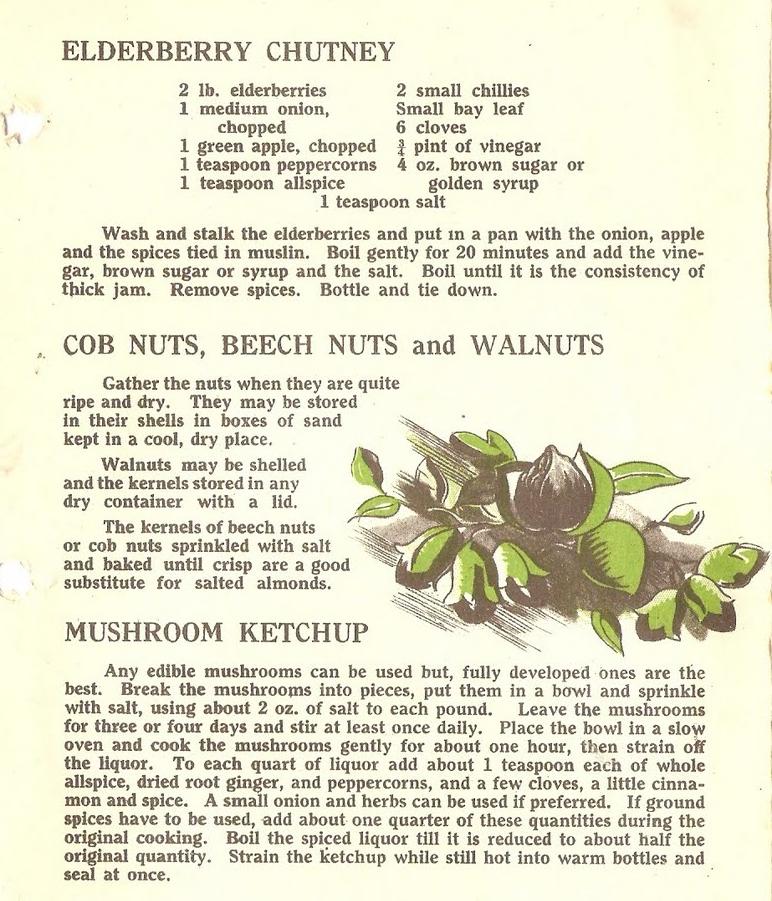
News from the Ministry of Food.............. July 1946 Hedgerow Harvest

An occasional look at the advice issued by the Ministry of Food in the years directly after the last world war.


Britain continued to ration food and so it made sense for the Government to offer a free advice service on how to plan prepare and cook meals. 

 Here are over the next few days are a selection of the advice issued by the Food Free Advice Service of the Ministry of Food. 

 It is dated July 1946 and was designed to encourage people to gather their own food.


Picture; leaflet from the Food Free Advice Service of the Ministry of Food, from the collection of Vince Piggott

Saturday, 10 February 2024

The way we ate in April 1947


Food and the way we prepare it is one of those instant clues to how we live.

So the rise of the “all in one TV dinner” and Vesta Curries which came in a bag and were just dropped into boiling water take me back to the 1960s.

And so here we are again with the Ministry of Food’s ABC of Cooking issued in the immediate post war period when food was still rationed.

The sheets offer a guide to healthy eating, offer suggestions on how to make food stretch and were also aimed at introducing some people to the idea of cooking at home.

For many the war had meant service in the armed forces or long hours in factories and reliance on canteen food, eaten communally and away from the family.

Now it was different and not only did the ABC offer ideas for a balanced diet but provided a range of recopies which made the best of what there was and reinforced the idea of seasonal eating.

These particular sheets date from March and April 1947.  Some like Cottage soup, sausages and beans along with fish flan and steak and potato pie will be familiar enough, but there are hints of the shortages which could still be encountered.  So there is a reliance on powdered eggs rather than fresh and mashed potato instead of pastry as a stopping for the savoury dishes.

Likewise of the three puddings on offer, one was for the simple raisin crisps which added self raising flour a tablespoon of dried egg, an ounce of sugar and margarine with a few raisins or sultanas.  These were mixed together to make a dough and having been rolled out were cut into 2 inch rounds and baked in the oven for about 20 minutes and produced 24 biscuits.

Even the more filling rhubarb sponge relied on dried egg and rhubarb which was in abundance in March and April.

It is a world that we have by and large left somewhere in the early 1960s, when making good with what you had was superseded by an avalanche of both variety and quantity.

So much so, that even raisin crisps have been transformed with richer ingredients and the addition of buttermilk and honey.  And even the name has been hijacked to include a whole range of fruit and raisin puddings which have moved from the humble biscuit to sumptuous rich dishes with rolled oats or traditional crumble toppings.

All of which however does take me back to the war and the years directly afterwards because that crumble topping was itself a means to save fat by substituting the crumble for pastry.

So a history lesson in a 66 year old recipe.

That said this brave new world of 1947 has still surprised me  with its ARTICHOKES IN CHEESE BATTER.

But perhaps I shouldn't be because artichokes are in season in the spring and so there would have plenty in the shops.

They are not something that I like, even when served the Neapolitan way with good olive oil.  I fear they would have been even less so offered to me in this recipe.

Pictures; from the March April sheet of the ABC of Cooking, Ministry of Food, courtesy of Vince Piggott, whose mother collected them.

Friday, 9 February 2024

Following the recipe from the Ministry of Food ………….. November 1947

Now, always wanting a challenge, yesterday I decided to try again and make some homemade orange curd, and to make it just that bit more interesting, the recipe dated back to 1947, and came from a Ministry of Food leaflet.

These leaflets were issued regularly and covered everything from how best to make rationed food go further, to suggestions on where to forage for free surplus food in the hedgerows, and advice on cooking a range of foods, along with plenty of recipes.

Despite the end of the war two years earlier, there were still food shortages and war time rationing continued, and at times became more stringent.

So, having been given a collection of these leaflets I do from time to time dip into them to reflect on life in post war Britain 70 or so years ago.

And that brings me back to my orange curd, which is something we buy occasionally, spread on toast and even use to make tarts.

What made me curious about the Ministry of Food recipe were the ingredients, which included dried eggs which were common during the war, and clearly lingered on in to 1947, and the quantity of sugar, which was 4oz, when the weekly ration for a person was 4oz.

All of which just left me with recreating that 72 years old mix of oranges, sugar, eggs, and margarine.

And the result?……………. I think the jury is out.

It is perhaps too sweet, and the after taste of orange is all too powerful, but it is my bit of rescue archaeology, even if we are talking about a moment still within the lifetime of many of my friends.

Location; 1947 & 2019

Pictures; my 1947 orange curd from the collection of Andrew Simpson and Ministry of Food Cookery Calendar, December- January, 1946-47

Friday, 8 September 2023

The way we lived in 1949 Part 9


An occasional series showing adverts in the year I was born.

It was ten years since the last world war began and only 4 years since it ended.  And reflecting on that decade Picture Post issued a special edition in which this advert appeared.

I can’t remember Silmos Lollies but I ate myself through enough similar ones.  And like the best memories thinking about Silmos took me back to a tiny sweet shop outside my secondary school where Kay the owner would sell ice cream and if money was tight it was a penny worth of lemon flavoured ice which I think came in some sort of shinny paper bag.

Silmos Lollies were made by Batger who seemed to have started in the 18th century with a sugar millhouse and in the years before the Second World War had two factories in Cable Street Stepney with their own wharfs and shipped their raw materials along the Thames. "The main factory at 566 Cable Street manufactured jams, bakery sundries and confectionary; best known products being 'Chinese Figs', 'Silmos Lollies', 'Jersey Caramels', and 'John Peel marmalade'. The employees at the other factory manufactured 'Harlequin Christmas Crackers', and all forms of cake decorations for the bakery industry.” John Hearle from BATGER - Before & After - Bryan Mawer / John Hearle, http://www.mawer.clara.net/batger.html

 Picture; from the collection of Andrew Simpson


Thursday, 7 September 2023

Saving the copper ........ a 5/- bag from sometime in the 1940s

Saving the copper, date unknown
Now there will be those who mutter this is not really much to do with history.

But there I would disagree, because it is one of those small everyday objects which are so part of our lives that we give them no significance.

I came across this one in a collection of material from my dad.

It is a paper money bag for the National Provincial Bank and would have been used to bag pennies, halfpenny and farthings.

Now I don’t have a date but it will be before 1971 when we went decimal and adopted a new set of coins junking the old pounds shillings and pence.

Before 1971 the pound was made up of 240 pennies with 12 pennies making a shilling and 20 shillings making a pound.

All very bewildering for any one born after 1971 but pretty clear to me and those who can also remember Five Boys chocolate bars,  drinking Kia-Ora orange at the pictures, and Rin Tin Tin.

The National Provincial Bank had a long history starting up in 1833 before becoming the National Westminster Bank in 1970.

All of which gives little clue to a date for the bag except for the request “IN VIEW OF THE APPEALS MADE FOR THE ECONOMY OF PAPER WILL CUSTOMERS KINDLY RETURN ALL THESE BAGS TO THE BANK FOR RE-USE.”

Hotel Regina, Venice, circa 1950s
Of course such appeals I guess have come at regular intervals but I suspect this may date the bag to the Second World War or the years directly afterwards.

Now given the sort of chap my dad was it would not surprise me that this money bag had been sitting amongst his stuff from that time, before coming north to us.

It had been used to hold a series of hotel suitcase labels from the 1950s and these too in the fullness of time will come out to feature as stories for the blog.

In the meantime my 70 year old money bag will return to its place of safe storage, and I shall go rummaging for some pennies, and haipeni’s and may even turn up the odd three penny bit and sixpence.

And who knows may well come across more stories of the trivial kind.

Pictures; money bag, date unknown and hotel suitcase label, circa 1950s,  from the collection of Andrew Simpson

Wednesday, 30 August 2023

Charting a tempestous time ......... the cartoons of David Low 1945-53

Low Visibility, 1953
A political cartoon has a short life.

What was relevant, funny and to the point will quickly become quite incomprehensible and unless you have the historical knowledge to unlock it, the  message will just be an image with no meaning.

Now I was reminded of this when I came back across a copy of Low Visibility which is a collection of cartons produced by David Low between 1945 and 1953.

The book contains 149 cartoons mainly focusing on foreign affairs and covering everything from the immediate post war period to the growing tensions between the Soviet Union and the West and taking in conflicts in the Middle East, and the Far East as well as Britain’s response  to the demands for colonial independence.

Some are completely lost to me and will only offer up their message through serious research.

The Verdict, October 1 1946
Others I do understand even if the subtle nuisances of what was being said are still vague and a few leap out of the page and make complete sense.

Of these last few the ones on the future of a defeated Germany and plight of the millions of displaced people are very clear, as does the powerful comment on the Nuremberg Trials.

Verdict was published on October 1 1946 after the Nazi leadership had been found guilty and sentenced to be hanged, and while today it might be difficult to identify each of the condemned men their bowed heads in front of those they murdered is a powerful comment now as it was back them.

Pictures; cover from Low Visibility, 1953 and Verdict, 1946

* Low Visibility A Cartoon History, 1945-53, David Low, 1953

Tuesday, 8 August 2023

The way we lived in 1949 Part 5


An occasional series showing adverts in the year I was born.

It was ten years since the last world war began and only 4 years since it ended.

And reflecting on that decade Picture Post issued a special edition in which this advert appeared.

Who now would dare advertise a bucket of lavatory cleaner and then suggest that the empty container could be a play toy for children?

 Another of those adverts from a time of mend and use again.


In our house it was old tins of National Dried Milk, which Dad stored everything from assorted screws to hinge brackets. I don’t remember eating the stuff but there is a site where you can read all about the product.*


Pictures; advert from the collection of Andrew Simpson, and the tin of National Dried milk by Oxfordian Kissuth, Photographer and columnist, Germany and England. And available at WIKIMEDIA Commons, http://commons.wikimedia.org/wiki/User:Oxfordian_Kissuth


 *http://futuremuseum.co.uk/Collection.aspx/the_home_front_civil_defence_rationing/Object/tin_of_national_dried_milk

Monday, 7 August 2023

The way we lived in 1949 Part 8


An occasional series showing adverts in the year I was born.

It was ten years since the last world war began and only 4 years since it ended.  And reflecting on that decade Picture Post issued a special edition in which this advert appeared.

Now I am old enough to remember Bronco and similar products which were a step up from the collection of torn up newspaper which hung behind the door in the lavatory, in the yard of my grandparent’s home. It was as the Science Museum observed

“Rough on one side, shiny on the other and seemingly non-absorbent,.....[and] ...  at one time advertised with the slogan Bronco, for the bigger wipe.  Now there is a whole history attached to lavatory paper. “The continuous roll of toilet tissue with sheets we use today was patented in 1870 by the Scott Brothers in Philadelphia. The British Patent Perforated Company was one of the first British firms to produce this type of toilet tissue. Previously, toilet tissue was only sold in boxes of interleaved separate sheets. This roll has approximately 700 smooth sheets of strong paper.” http://www.sciencemuseum.org.uk/broughttolife/objects/display.aspx?id=1790
Apparently Bronco only ceased making the hard stuff in 1989 which surprised me given the soft alternative.  But then schools and colleges persisted in using the hard variety which was always bad news.
I have to say that reading the copy on this advert is to go back to a different way of selling a product when it was still thought that its merits would shine through with no recourse to gimmicks or catchy phrase.
Picture; from the collection of Andrew Simpson


Sunday, 6 August 2023

The way we lived in 1949 Part 7


An occasional series showing adverts in the year I was born.
It was ten years since the last world war began and only 4 years since it ended. And reflecting on that decade Picture Post issued a special edition in which this advert appeared.
And perhaps because I have no need for such a product I thought I would finish this little series with this delightful advert from that September.
More adverts from the 1950s later in the month.

Picture; from the collection of Andrew Simpson

Saturday, 5 August 2023

The way we lived in 1949 Part 6


An occasional series showing adverts in the year I was born.
It was ten years since the last world war began and only 4 years since it ended. And reflecting on that decade Picture Post issued a special edition in which this advert appeared.

Today it would be the computer with a printer which “would make for an ambitious man a lucrative living.” I rather think you may have had to be a little too ambitious to think that the “Adana Printing Machines [were ] for profitable pleasure,” and yet according to Wikipedia they have had a long history, “Adana Printing Machines were manufactured from 1922–1999, in Twickenham . Although most of the printing presses produced by Adana were aimed at hobby printers, they were frequently put to commercial use. Adanas are still to be found throughout the world in the hands of colleges, enthusiasts and professional printers." So there you have it my rather cyncical throwaway comment has come back to bite me.

And reminds me of my years producing work sheets information packs for students on the old spirit banda machines and the slightly more complicated gestetner printers.

Picture from the collection of Andrew Simpson

Thursday, 3 August 2023

The way we lived in 1949 Part 3


An occasional series showing adverts in the year I was born.
It was ten years since the last world war began and only 4 years since it ended. And reflecting on that decade Picture Post issued a special edition in which this advert appeared.
Mr Therm was an advertising figure created by the old Gas Board and appeared in newspapers, magazines and even in the Eagle comic.
Picture; from the collection of Andrew Simpson

Wednesday, 2 August 2023

The way we lived in 1949 Part 2


An occasional series showing adverts in the year I was born.
It was ten years since the last world war began and only 4 years since it ended. And reflecting on that decade Picture Post issued a special edition in which this advert appeared.
Now my father continued to add rubber soles and heals to our shoes well into the early 1960s and somewhere we still have the old last he used. Now the rubber often had to be cut to shape and the glue had a distinctive smell which I can still remember. There was even a special type of round heel which was screwed into the shoe and in theory would turn ever so slightly allowing an even wear. All of which was fine but sometimes led to the screw coming loose and falling off. This was an event that usually happened when he was working away and it fell to me to attempt repairs.
Either way it reminds me that there was a time when make and mend was still a real and common practice.
Picture; from the collection of Andrew Simpson
Adverts

Tuesday, 1 August 2023

The way we lived in 1949


An occasional series showing adverts in the year I was born.

It was ten years since the last world war began and only 4 years since it ended.

And reflecting on that decade Picture Post issued a special edition in which this advert appeared.

 In 1949 washing machines were still an item which few could afford or obtain. I don’t think we were to get our first one for another five years and when we did it was one of those Service machines which included an electric mangle.

 And to celebrate that it was the year I was born I shall be posting more adverts from 1949.

Picture; from the collection of Andrew Simpson

Sunday, 30 July 2023

How we used to live …….. 1947 ……… beating the shortages and living with food rationing

Now jam making is one of those activities that opens you up to ridicule and all too often is associated with people of a certain age who have too much time to fill.


All of which is a bit unfair, given that it remains a very useful way of using up a surplus fruit.

Of course, with plentiful jam in the supermarkets and the presence of a freezer somewhere in the house, the faff of making the stuff seems a rural pastime too far.

And yet over the centuries jam making was an essential part of domestic life.

So much so that in 1947 it was one of the leaflets produced by the Ministry of Food, to inform families of how to make the best of food at a time when the country was still enduring rationing.

The leaflets included “Making the most of the Fat Ration”, the delights of food that could be found for free in the hedgerows and instructions on how to make short pastry as well how to cook cabbage.

Like the chef Delia Smith in the 1970s, the Ministry set off from the position that not everyone knew how to cook, which the last world war may have had a part to play.

During those six years lives had been disrupted with many people on the Home Front relying on canteen food served up in the factories where they worked or at communal food centres.

Added to which many children had spent part of the war away from home as evacuees, and so rarely got the opportunity to lean from their parents about cooking a meal.

Each leaflet was awash with recipes, from tradition ones to those inspired by rationing and shortages, like Barley Mince, Dresden Patties and Cheese and onion turnovers.

And that brings me back to our leaflet on Jam making and Fruit Bottling, which was issued by the British Gas Council with the approval of the Ministry of Agriculture.

Now, I am not tempted to bottle the pile of strawberries, but my fancy has settled on Orange or Lemon Curd, which given this was 1947 includes the choice of either 2 fresh eggs of the dried variety.

We shall see.

Location; 1947

Pictures; Jam making and Fruit Bottling, leaflet issued by the British Gas Council with the approval of the Ministry of Agriculture, 1947

Thursday, 27 July 2023

News from the Ministry of Food.............. December 1946 Making the most of the FAT RATION

An occasional look at the advice issued by the Ministry of Food in the years directly after the last world war.


Britain continued to ration food and so it made sense for the Government to offer a free advice service on how to plan, prepare and cook meals. 


Here are over the next few days are a selection of the advice issued by the Food Free Advice Service of the Ministry of Food. It is dated December 1946 and gave advice on how best to use rationed food in the run up to Christmas.

Here were suggestions for Butter Extenders which involved adding a tablespoon of flour, some salt and ½ a pint of milk to either 6oz of margarine of butter and mixing to a paste which was then heated in a saucepan with 2oz of melted butter till it was smooth and thick and then left to cool.

It also advised that "roasting potatoes round the joint uses more fat than if the potatoes are cooked separately." 

One method was to slice the potatoes and place them in a greased tin "and they will brown without added fat" 

Or cook thinly sliced potatoes in a "roasting tin with water and salt. There should be enough room for them to lie comfortably without touching and there should be enough water to half fill the roasting tin. Put the tin into a hot oven and bake for one and ½ hours. The water evaporates and leaves shiny golden balls with floury insides."

Picture; from a leaflet issued by the Ministry of Food, December 1946 in the collection of Vince Piggott


Wednesday, 26 July 2023

News from the Ministry of Food.............. Suggestions for breakfast.

An occasional look at the advice issued by the Ministry of Food in the years directly after the last world war.


Britain continued to ration food and so it made sense for the Government to offer a free advice service on how to plan, prepare and cook meals. Here over the next few days are a selection of the advice issued by the Food Free Advice Service of the Ministry of Food.


It is perhaps refreshing that at a time when the media continues to worry that “there may be two generations of parents who have grown up without the basic knowledge of how to cook” * that a Government agency would promote these skills and that the leaflets would be collected and carefully stored. 
  
The ABC of Cookery which gave "suggestions and methods of cooking and preparing food were obtainable from H.M Stationary Office or through any Bookseller. Price 1/- or ½ by post."


Today it is the turn of breakfast from a 1946 leaflet on Suggestions for Breakfast which along with porridge, were ideas using National or Wholemeal Bread for potato puffs, cheese and vegetable cutlets, fried cheese sandwiches, potato fadge with fried bacon, fried herrings and poached kippers. 

It is a rich diet for a morning meal. The potato puffs were supplied with fillings of cooked sausage meat, root vegetables or cheese. But as the leaflet emphasised, “a good breakfast every day is the first rule in the Book of Health,” and this was a time when far more of our population were engaged in heavy manual occupations.

Picture; from the ABC of Cooking, issued by the Ministry of Food, in the collection of Vince Pig


* During a discussion on You and Yours BBC Radio 4, transmitted January 5th 2012