Showing posts with label Heaton Mersey. Show all posts

Friday, 10 April 2026

The twisty, turny tale of Elizabeth Jane Dean …….. Didsbury, Manchester and Heaton Mersey

If there were  ever any pictures of the people who lived in Warburton Street at the beginning of the last century they have all been lost, or at best sit in an album, or cupboard, unlikely ever to see daylight.

No. 4 Warburton Street, 2020
And that is a shame because we know who they were, and something of their lives and families.

By extension it is possible to uncover many of the residents of the five cottages on the south side of the street back to 1845, along with the man who built and owned them.

The question as ever, is who to pick, and just what their stories might tell us about Didsbury.

I started with 1911, partly because I had the street directory for that year in front of me, and because the 1911 census was the most detailed of the eight census returns for the years 1841-1911.

Of the five, number 2 was occupied by John Crompton and Sons, and was listed as “paint stores”, no, 4 was William Richardson, plate layer, and no.6 was Mrs. Emma Smith who described herself as “Householder, but who I know was a “launderess”.

To which I can add that later in 1911, no 8, was home to the Schofield family, and that Mr. Walter Schofield was a “night soil man", and at no. 10 were the Blomileys, two of who worked as labourers, one was a charwoman and the youngest member of the family was a “gardener’s apprentice”.

And to complete the picture, while Mrs. Smith lived alone in her four roomed cottage, the six members of the Schofields has to manage in their two up two down, and the Blomiley’s to squeeze their lot into just three rooms.

The occupations of our residents might seem at variance with the popular image of Didsbury as a well healed and comfortably prosperous suburb of Manchester, but amongst the professionals, and wealthy business families there were still many who made their living from servicing “the better off”.

Barlow Moor, 1854
Mrs. Smith would have washed their linen, young Jane Blomiley cleaned their houses, and Mr. Schofield and one of the Blomiley’s were engaged as night soil men removing the contents of the privies of the rich.

And that left Mr. William Richardson a platelayer who ensured that the tracks on the stretch of line from Didsbury Railway Station to Manchester  Central were up to the scratch.

But instead of these families it is the story of Miss Elizabeth Jane Dean who captured my interest.

In the January of 1911 she was living on the opposite side of street, by the April had moved to Countess Road, of Hardman Street and earlier had lived at both no. 4, as well as no. 1 Warburton Street.

Added to which she spent her early years in the heart of the city in the space between the Rochdale and Ashton Canals behind Great Ancoats Street.

She was born in Didsbury in 1860 and was living on Warburton Street by the following year with her mother and sister. Over the next few years, the family moved to Hardman Street, but are lost to the records after 1866, until Elizabeth Jane turned up in Ancoats on Lees Street in 1871, living with her grandmother.

Elizabeth Jane's Manchester, 1881
Just where her mother was living is unclear, and a decade later Elizabeth Jane is just a few streets away, staying with her uncle and aunt, and described herself as a “Winder”, before reappearing in Didsbury, back with her mother on Warburton Street in 1891.

Trying to unpick the story underneath the census return is complicated, open to speculation and may just not be my business.

But her mother at some point had married a Mr. Blomiley, but by 1891 was a widow.

She shared the house with a son who carried the name Blomiley, and Elizabeth Jane, and a grandson aged two, whose surname was Dean.

It would be easy to leap to the conclusion that the young grandson was Elizabeth Jane’s, and certainly a decade later Elizabeth Jane acknowledged that this was her son and records a second one born in 1896 when she would have been 36.

All of which is rather murky and leaves me reflecting on what Elizabeth Jane might have made of her life in the city, in an area sandwiched between those two canals, and surrounded by textile factories, iron works and coal yards.

It goes without saying that this new world of noise, steam, and  drab streets would have been a world away from Didsbury which in the 1870s still had the appearance of a rural community even if it was filling up with houses and people.

I cannot be sure just when Elizabeth Jane gave up the factory and the house on the street by the canal, but her eldest son was born in Didsbury in the summer of 1888, which gives us a possible date.

Her later life was spent as a “tailoress”, and the last reference to her so far comes from the 1911 census which records her living on Countess Street, just minutes away from where she began life in 1860, living with her eldest son, and an Elizabeth Ann Woods aged 31.

A decade earlier Miss Woods was described as the foster sister of our Elizabeth Jane, which raises some intriguing questions about who her parents were given that she lived at no. 4  Warburton Street with Mary Blomiley and Elizabeth Jane.

Heaton Bank House, 1851
So that is about it.

We began on Warburton Street, and have pretty much ended up there, having travelled into the city and back out again, explored the occupations of some of the residents and along the way discovered a little of the life of one Didsbury resident.

But not quite, because just as I was finishing, I came across Mary Dean, who had been born in 1828, baptized in St James Parish Church, and at the age of 32 had given birth to Elizabeth Jane. Her father was a handloom weaver, and in 1841 the family lived in Barlow Moor.

Ten years later and Mary was a employed as a house servant at Mersey Bank House in Heaton Norris, whose owner was the grand Sir Ralph Pendlebury, who proudly recorded on his census return that he was not only a Knight but a factory owner, “employing 170 hands”.

All of which I think will takes us off on a new journey.

But before I do, I am adding a comment from John S Horton, "Sir- regarding the gentleman engaged as a plate layer, being an ex railwayman born in Didsbury but growing up in Kent, 'platelayers' worked on and were allocated 'patches' of line for which they were responsible for maintaining, not only the track but also the vegetation on the embankments and drainage, but the 'patch' was only 2 miles long, and therefore the gentleman would not have been responsible nor would it be possible for him to maintain the line as far as Manchester Central. Such a distance would have engaged several Plate layers or even gangs to maintain however I am happy to be corrected if my understanding is incorrect".

Adding, "sorry to have disrupted your wonderful tale, - the platelayer would have been under the authority of the “District Engineer” . Said platelayer would notify the signalman of his “direction of work” be it towards “Withington and Albert Park” Station ( Down Line) or towards the bridge over the track carrying “Kingsway”., (Up Line). 

The signalman would notify the platelayer of any reported track issues by train crew, be it “wet patch” caused by blocked drainage, making the train bounce as it went over and if at line speed could cause a derailment, engaging the platelayer having to “dig out the offending patch and re pack with fresh ballast” or by simply jacking up the track with his portable bottle jack and placing a simple soup tin full or less of small stones/ gravel to level the track up. I could go on and on but don’t want to bore you lo
".

Location; Didsbury, Manchester, and Heaton Mersey

Pictures; No. 4 Warburton Street, 2020, from the collection of Andrew Simpson, Barlow Moor, 1854, & Heaton Mersey, 1854, from the OS map of Lancashire, 1854, Elizabeth Janes’ Manchester between the two canals, 1894 from the OS map of South Lancashire, courtesy of Digital Archives Association,  http://digitalarchives.co.uk/

Thursday, 14 November 2024

“75p a pint …. Holt’s Mild ….. cheapest beer in Britain”………….

Now you do have to go back to 1990 and the Griffin in Heaton Mersey to experience such a bargain.

Not that I like Mild, and I only ever went in the Griffin once which would have been in the late 1970s.

That said this is one of those rare pictures of the inside of a pub.

And it is odd that despite the vast number of photographs of the exterior of pubs there are a lot less of the insides.

I am guessing that if you are inside, and having fun, the carefully rehearsed picture is not uppermost in your mind.

And while there will be plenty of “snaps” taken by the likes of aunt Eddie of Sid’s birthday party, few of these very personal photos ever gets published.

At which point a host of people will prove me wrong and send in a collection of snaps of birthday and , wedding celebrations along with the  odd anniversary dos.

And in doing so will offer up a vast store of images of how pubs used to be, with their small smoky rooms,  beer stained tables and faded calendars of the local football teams, with adverts for Pork Scratchings and Smith’s Crisps.

So that is it, the photograph was taken by Howard Barlow and published by the Sunday Telegraph in the February of 1992.

Of course I can do better than 75p, because back in 1968 a pint cost one shilling [5p], but that was London prices. 

A year later in Manchester I could dine out on a three course businessman's lunch for 3 shillings [15p].

Leaving someone to ask ... and how much did you get paid?

I have David Harrop to thank for sharing the picture with me.

Location Heaton Mersey

Picture; the Griffin, where Mild was 75p in 1990, Howard Barlow, Sunday Telegraph from the collection of David Harrop

Sunday, 18 June 2023

A Didsbury weaver, a housemaid and lots more …………………

This was to be the story of Mary Dean of Didsbury and her time as a housemaid in the very big house of Sir Ralph Pendlebury, who lived at Heaton Bank in Heaton Mersey.

Mersey Bank House, Heaton Mersey, 1854
Sir Ralph described himself as the employer of 75 hands, and his house was recognized as a grand one, with a large “spacious entrance hall, with stone staircase, and dome light, a dinning room, breakfast room and study, five bedrooms, water closet and bathroom fitted up with a bath and hot and cold water”.


Added to which there was a wash house and laundry, sundry outhouses “with an excellent coach house and good stabling for five horses harness room and hayloft …… and a large conservatory heated by hot water”  and finally a large south facing garden, well stocked with fruit trees, [and] commands a delightful and picturesque view of a great part of the county of Chester”.*

All of which meant that Mary Dean who along with a cook was the only domestic servant, must have had her work cut out.

Sadly, we will never know what she thought of the job, as the only reference to her time there comes from the 1851 census, which had been taken in the April of that year.

Just when she started and indeed when she left is unclear, but I know she was back in Didsbury by 1860 for the birth of her daughter, Elizabeth Jane.

The sale of Mersey Bank House, 1843
Back then “service in a big house” remained one of the prime means for a young woman to earn a living, and it was usual for employers to recruit from outside the district, which ensured that the secrets of the family were less likely to become common gossip.

I doubt we will ever get to know how she got the job, but there was an informal arrangement by which clergy would write to neighouring parish churches, alerting them of vacancies in the big houses.

Barlow Moor, Didsbury, 1854, with the cottages stretching north
And for Mary, Heaton Mersey was close enough to her family in Didsbury to mean that the occasional visits home were easy enough.

I suspect she would have walked, although there were always itinerant traders and even carriers plying the route from Manchester through Didsbury and the Heatons to Stockport who might have offered her a lift and perhaps even for free.

I would like to know more of her time as a housemaid, but as sometimes happens, there is no more.

Not that this is the end of the story of Mary, who I know was born in 1826, and spent her early life in Barlow Moor.

And at this point the story takes a surprising turn, because at her baptism in the parish church, her father gave his occupation as a weaver, a job he had been pursuing since at least 1821 when he married Mary Thompson.

Barlow Moor, pre 1880
Even using the rate Books and census returns it is difficult to pinpoint exactly where in Barlow Moor he lived, but I rather think it will have been one of the cottages which stretched north along Wilmslow Road from the junction with Barlow Moor Road.

I do know that he was paying three shillings a week, and his may be one the cottages which appear in a series of photographs, taken before 1880.

His name was Henry, and he is one of only a handful of Didsbury weavers that appear in the official records.

And his was a declining industry.

Handloom weaving was conducted in a wide arc both north and south of Manchester and in the areas bordering on northern Cheshire, Derbyshire, and the West Riding of Yorkshire.

By the mid-18th century cotton had replaced wool as the main textile material and across the county areas specialized in such things as cambrics, muslins and ginghams. Just over 5 miles to the east near Gatley they had been growing flax and weaving linen from at least the mid-17th century.

Possible cottages lived in by the Dean family, pre 1880
But exactly what and how it was produced in the township is unclear. It may be that Henry and his family delivered each of the processes from carding and spinning to weaving but it is more likely with the mechanization of spinning and its concentration in the factories of Manchester that he may have been involved just in weaving.

At one stage our weavers may also have been involved in dyeing, because there are large numbers of crocuses that grow locally. In the past they were used for dyeing clothes alongside their culinary and medical uses.

In Stretford in 1826 there were 302 looms providing employment for 780 workers supporting 151 families,**  and as late as the 1840s there were still seven, while in Withington there were nineteen cotton weavers, mostly concentrated in Lady Barn and Fallowfield where they specialized in “weaving checked handkerchiefs and ginghams.”  ***

Nationally weavers had been the largest single group of industrial workers, and at any one time during 1820s, 30s and 40s, and they came third in the list of occupations after agricultural labourers and domestic servants.

Possible cottages lived in by the Dean family, pre 1880
The estimate of the Select Committee of 1834-5 reckoned that 800,000 to 840,000 were wholly dependent on one of the branches of weaving.****

But the onward march of mechanization and factory production in al three processes of making textile, meant that Henry and his fellow weavers were on borrowed time.

And so while we find him listing his occupation as a weaver during the 1820s through to 1841, in the following decade he described himself as a “Porter” and by 1861 as a “labourer”, while the numbers of weavers across Burnage and Didsbury fell between 1841 to 1851.

All of which points to the very personal tragedy of the collapse of weaving locally, and leaving me with just the observation that his granddaughter worked briefly in a Manchester cotton factory before returning to Didsbury and becoming a tailoress, which I suppose is the closest we get to her grandfather’s trade.

Location; Didsbury, Heaton Mersey

Pictures; Heaton Mersey and Barlow Moor, 1854, from the OS map of Lancashire, courtesy of Digital Archives Association, http://digitalarchives.co.uk/

*Sale by Auction, The Manchester Guardian, December 16th, 1843

** Leach, Sir Bosdin, Old Stretford, Privately Printed, 1910, page 23

***Williamson, C, Sketches of Fallowfield, John Heywood, Manchester, 1888 page 34

**** Thompson, E.P., The Making of the English Working Class, Pelican Books edition 1968 page344


Tuesday, 5 January 2021

The subscription .... a final request and the Hospital for Incurables

 I am looking at a request to renew an annual subscription.


It is dated 1894 and was for £1. 1/- and was addressed to the “Trustees of the late Earl of Stamford”.

Now there is nothing unusual about such a request, although it was dated October and came with an additional comment in red that “As our financial years closes on the 31st inst., the favour of a remittance during the early part of the month will greatly facilitate the making of our books for the audit”, which would suggest that the Trustees were more than a little late in paying up.

And this would be a particular concern to the secretary a Mr. James Ferguson who was charged with administration of the Hospital for Incurables, whose head office was at 7 St Peter’s Square, and who ran a “Home For In Patients,  Mauldeth Heaton Mersey”, a “Branch For Females Only, Walmersley House, near Bury” and a “Dispensary for Out patients, Ardwick Green”.


All of which is a reminder that before the NHS, hospitals relied heavily on donations and almost all medical care came with a charge.

In the case of the Hospital for Incurables, which had been established in  1872 at Ardwick Green, it “'aimed to give permanent relief 'to such persons as are hopelessly disqualified for the duties of life by disease, accident or deformity'. 

The hospital would not take patients who would be taken elsewhere, for example lunatics, blind people or paupers. As its name suggests, the hospital was a regional charity, aimed at all the Northern Counties. However, as the only other hospital of its type was in London, the Northern Counties Hospital took patients from all over England”*.


And here I have to declare that the full history of the hospital is drawn from Archives Hub, which aims to assist “All UK researchers interested in using primary source material” and "brings together descriptions of thousands of the UK’s archive collections. Representing over 330 institutions across the country, the Archives Hub is an effective way to discover unique and often little-known sources to support your research. New descriptions are added every week, often representing collections being made available for the first time”.**

I could just lift the whole of their description of the charity and the hospital but instead suggest you visit the site by following the link.


Instead I will explore this particular document which was acquired this week by old friend David Harrop, who lives in Heaton Mersey and was drawn to the subscription request because of the charity’s hospital in Heaton Mersey.

This was Mauldeth House, a building which has a long history and which has been researched in some detail by Allan Russell.***

 And for those who want to follow up on the Hospital, the archive recotrds are held at the University of Manchester Library, Reference, GB 133 MMC/9/14, formerly GB 133 J b 10 and consist of 9 items covering the years 1872-1934.

Location; Greater Manchester

Pictures; subscription request for Hospital for Incurables, 1894, and Mauldeth House, date unknown, from the collection of David Harrop

* Hospital for Incurables, https://archiveshub.jisc.ac.uk/search/archives/b489e047-e6b1-3992-aaa3-5e40e2147729?component=f9012991-d61a-38aa-b4eb-889fee33e835

** Archives Hub, https://archiveshub.jisc.ac.uk/introduction/

*** Mauldeth Home for Incurables, https://thehistoryofstockportin100halls.wordpress.com/tag/mauldeth-home-for-incurables/?fbclid=IwAR2yBUgR1Tm57OCXAgwW72jKsXJtMGkyG19yR3ypELSZWqxLRcLP1Hpoqa8


Tuesday, 21 July 2020

Lost in Gorton …… part one on coming across a canal

Now Andy is nothing but dedicated, and yesterday he set off to Gorton in search of adventure.

The lost canal, 2020
He had “got up early and went to Gorton. First snap at 7.15 am”.

And I am guessing that sometime around 8.30 he happened on the canal that runs under Abbey Hey Lane.

Today it is just a scenic footpath, but at the back end of the 18th century and through the next, it was the Stockport branch of the Ashton Under Lyne Canal, which ran from Manchester to Ashton and on to Oldham.

According to Mr. Priestley’s Guide,* Royal ascent was granted in June 1792, and the year after permission was also given to “to extend the said Canal from a place called Clayton Demesne, in the township of Droylsden, in the parish of Manchester aforesaid to a place on the turnpike-road in Heaton Norris, leading between Manchester and Stockport, opposite the house known by the sign of the Three Boars’ Head, and from , or nearly from, a place called Taylor’s Barn, in the township of Reddish to Denton to a place called Beat Bank, adjoining the turnpike-road leading between Stockport and Ashton-Under-Lyne …..”**

The canal, 1830
The canal and branches “were made 31 feet wide at top and 15 at the bottom and in a depth of 5 feet.  The locks are 70 feet long and 7 feet wide”.***

And for those with an interest in recreating the business model, in 1792 the company advertised its rates as ½d per ton per mile for lime, lime stone, dung, manure, clay, sand, and gravel, and 1d for coals, cannel coal, stone, and other minerals and timber.  Three years later the rates had risen from ½d per ton per mile to 1d and 3d for all other goods.

The walk, 2020
The Stockport branch was constructed in 1793, and opened for business four years later.

It left the main canal at the Stockport Junction between locks 10 and 11 at Clayton and terminated at Stockport Basin.

It carried a mixed cargo, supplying cotton to the mills along its route as well finished textiles, as well as coal and grain.  In its earliest days it also carried passengers between Manchester and Stockport.

But like so many of our inland waterways it suffered from railway competition, and commercial carrying ceased in the 1930s, and by the 1950s was barely navigable.****

Location; Gorton

Pictures the lost canal at Abbey Hey Lane, 2020, from the collection of Andy Robertson, and the Stockport branch of the Ashton-Under-Lyne Canal, 1830, from The Inland Navigation of England and Wales, George Bradshaw, 1830, courtesy of Digital Archives Association, Digital Archives Association, http://www.digitalarchives.co.uk/


*Map of the Inland Navigation and Railways of Great Britain, Joseph Priestly, 1830

**ibid Priestly page 39

***ibid Priestly, page 40

****Stockport Branch Canal, https://en.wikipedia.org/wiki/Stockport_Branch_Canal

Tuesday, 16 June 2020

A little bit of our lost railway architecture ………….. in Heaton Mersey

Now I know that if you live in Heaton Mersey this bit of our railway heritage is not lost but is there for all to see.

But for me it was a surprise to come across it and reignite my interest in all thing’s railway.

That said I bet most people will not value these old viaducts and embankments, in the same historic way they might treat one of those castles “Cromwell knocked about” or the remnants of a Roman aqueduct or Egyptian pyramid.

So it was left to Andy Robertson to celebrate this bit of the old railway line, by taking a series of pictures, adding that, “Inspired by Barbarella Bonvento's picture on the blog, I went to clock the other bits of ex railway. Considering how many railway lines Heaton Mersey had there is not much left”. *

But I like them, and more than that they do offer up a memory of when the country was cross crossed by railway track from the great main lines down to quiet, sleepy branch lines, which ran a few passenger trains a day along with early the milk train.

I shall leave it to others to wade in with the history of this particular track, but I will dig out my copy of Mile By Mile on Britain’s Railways, which was published in in 1947 with “the object ……. to encourage the passenger to anticipate his progress, and to enable him to know to a nicety, what he next will see from the window at any and every stage of the journey.  

It is such a pity to sacrifice this experience to idle slumber, or to concentration on a magazine that would be better enjoyed at home.” *

Now this seems a pretty neat idea to me, and I have to say it is one that I try to practice, whether I am on a train, tram or the bus.

But I rather think it is an ambitious project that few would undertake, especially when what is being described is nothing less than the routes of the main railway companies in 1947.

But this is what Mr Pike set out to do in a series of little books just as the railways became nationalized.

The publications covered the L.N.E.R, the LMS, and Southern Railways but for reasons which have never been established he failed to keep his promise of one on the G.W.R. **

Nevertheless, for the other three there were details of “the gradients of the lines, speed tests and mileages, viaducts, bridges and embankments, along with tunnels, cuttings, crossovers and streams, rivers and roads.  

For good measure there were also lists of towns, villages, churches and mines, factories and works and an account of features of interest and beauty to be seen from the trains.”

It was all of the information which made a train journey worthwhile.

And of course, with the passage of time and the end of both steam locomotives as well as many of the branch lines his guides have become a piece of history.

So, lots to do before more of Andy’s pictures appear here.

Pictures; bits of railway architecture in Heaton Mersey, 2020, from the collection of Andy Robertson and the cover of MILE BY MILE ON BRITAIN’S RAILWAYS, S.N.PIKE, published by Aurum Press Ltd, and original Mile by Mile on the L.M.S. 1947

* Relics of our industrial past …….. doing the essential walk and making it historic .... no. 23, https://chorltonhistory.blogspot.com/2020/05/relics-of-our-industrial-past-doing.html

** MILE BY MILE ON BRITAIN’S RAILWAYS, S.N. PIKE, 1947, published by Aurum Press Ltd, 2011.

Saturday, 6 June 2020

Down on Didsbury Road on Heaton Mersey

Now here is one of those pictures which will fascinate loads of people and may start off umpteen conversations in the bars and newsagents of Heaton Mersey.

This is Didsbury Road.  I can’t be sure when but judging by the car and the clothes we will be in the 1920s into the 30s and we are on that stretch of the road with Greenbank Avenue to our left and some at least will ask the obvious question why take a picture of this bit of Heaton Mersey?

To which the answer is simply “where ever I rest my camera tripod that’s my picture.”

Commercial photographers were forever on the look out for a scene which would convert into cash, and so having taken the standard half dozen images of the area, sold them onto a postcard company there was also the option of offering them up to the residents along the road.

Of course I have no idea who might have bought this one but often you come across a postcard with an X above a house with the message on the back that “this is where we live.”

And so back to Heaton Mersey and anyone familiar with this bit of the road will instantly recognise the house on the corner of Greenbank and the outline of the shops beyond what is now a medical practice, but may well ponder on when the shop and row of terraced houses on the opposite side were demolished.

I am fully confident someone will know and in the fullness of time will tell me.

For now I will just reflect as many others will do on the lack of cars and the horse drawn cart on that sunny day almost ninety years ago.

It comes from the collection of David Harrop and was one of the images that he passed over to me when I first started researching the new book on Manchester and the Great War.*

I think it had slipped into the pack by accident but it was one I knew I would want to use.

So here it is, with a special thank you to David.

Location; Heaton Mersey, Greater Manchester

Picture; Didsbury Road, Heaton Mersey, circa 1920s-30s, from the collection of David Harrop

* Manchester and the Great War, Andrew Simpson, due out at the end of 2016, http://chorltonhistory.blogspot.co.uk/search/label/A%20new%20book%20on%20Manchester%20and%20the%20Great%20War

Tuesday, 19 May 2020

A park ...... some cottages ...... and a bleach works …...

Now I discovered Heaton Mersey’s industrial past quite by chance, when my old friend Andy Robertson sent over a collection of pictures of Park Row a few years ago, which were quickly followed by some fascinating archive material from David Harrop.

And the rest as they say was a series of stories which I recently revisited, which in turn prompted Andy to dig out some more, including one of Heaton Mersey Park, which I have never visited.*

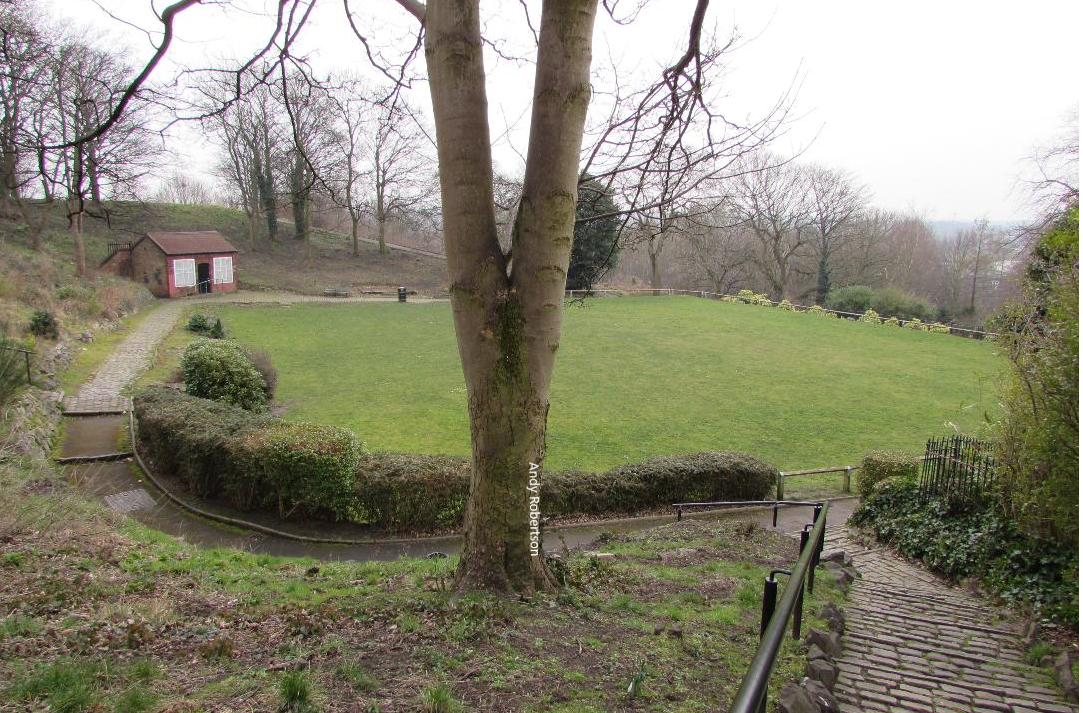
To those who live in Heaton Mersey the park will not be a surprise but for those of us who didn’t know it existed it looks a gem.

Stockport’s Park page describes it as “Situated within the Heaton Mersey Village Conservation Area this park is split over two levels.

The higher level has a good quality play facility.

From here there is a striking viewing across the Cheshire Plain. The lower level has a play area with a slide and swings.

The park offers a tranquil moment away from the hurly-burly of the working day.”**

Enough said

Location; Heaton Mersey

Pictures; Heaton Mersey Park, Park Row, 2015, from the collection of Andy Robertson

*Heaton Mersey; https://chorltonhistory.blogspot.com/search/label/Heaton%20Mersey

**Stockport Parks, https://www.stockport.gov.uk/heaton-mersey-park


Sunday, 17 May 2020

Taking a walk along Didsbury Road in Heaton Mersey with Mr Crawley in the summer of 1848

Today I went walking the lanes of Heaton Mersey in the summer of 1848.

Now as daft as that might sound it is possible to recreate such a walk using the census returns the OS map for the period and the tithe documents.

And it is the tithe document and more especially the tithe map which has helped me with this imaginary stroll along the Didsbury Road, past St John’s and down to the bleach works.

It was based on a survey undertaken by Charles Crawley in 1848 and details the ownership of the land, the tenants who worked it and the use the land was put to.

In total the township of Heaton Mersey consisted of 2108 acres of which only 1840 were subject to a tithe payment to the church.

And of this 1840 acres, 670 were farmed as arable, 980 was meadow and pasture, leaving 100 acres occupied by buildings, 50 for roads and 40 for railways.

Moreover the map describes the size of each field and its rateable value along with who owned or rented the properties spread out across the township.

So armed with the map I know that as I made my way east along Didsbury Road I would have passed a mix of meadow and arable land with the odd little orchard before reaching St John’s which was still in the process of being built as Mr Crawley compiled his map.

And then if I so chose I could have wandered off down the lane to the assorted bleach works.
Later I may return with stories of some of the people who lived along Didsbury Road, but that will be for another time.

Location; Heaton Mersey Stockport


Picture; detail of the 1848 tithe map of Heaton Mersey, compiled by Charles Crawley, 1848 and redrawn by Frank and Teretta Mitchell, 1978

Friday, 15 May 2020

Park Row in Heaton Mersey gives up a few of its secrets

Now until a few days ago I was totally unaware of Park Row in Heaton Mersey or for that matter that there was once a bleach works close by.

But this tiny picturesque group of houses has drawn me in.

According to Pevsner they are “attractive early-mid Victorian terraces” and that I think is a good starting point, although in time I might also become interested in neighbouring Vale Close which “is probably 17th century.”*

It took me a bit of time to locate them on the census record and I have yet to find them in a street directory but after about half an hour of wandering across Lancashire I found them for 1911 and that revealed the entire records back to 1841.

Any one of those census records will be a wonderful insight into who lived in Park Row and how many of the residents owed their livelihood to that bleach works which was just minutes away from the houses.

And they will also tell us much about the people themselves, including where they came from, how many children they had and the degree to which people moved out of Park Row.

All of which will shed light on social mobility, overcrowding and much more.

But for now it is the 1901 census which offers up a picture of what was going on at Park Row.

In all there were 99 people living in the 17 houses of which 41 were working in the April of 1901 when the census was taken.

As you would expect over 50% worked with textiles, either as weavers, spinner’s dyers or at that bleach works.

That said only four of the forty-one would have made their way to the Upper Bleach works and it may even be that some or all of them worked at the neighbouring one.

And then there is the location of the cotton mill which employed another thirteen of our residents including nine weavers, three spinners and Mr Jackson of nu 17 Park Row who was a "weaver overseer."

Those works might also have employed  seven from the Row who described themselves variously as electricians, engineers, messengers and a carter.

In time I might even be able to discover where our three gardeners, domestic servant and housekeeper were employed.

All of which suggests that Park Row has much more to reveal.

Pictures, Park Row, 2015 and from a picture postcard date unknown, from the collection of David Harrop

*Lancashire: Manchester and the South East; Clare Hartwell, Matthew Hyde, Nikolause Pevsner, 2004

Wednesday, 13 May 2020

The sign above the door ....... doing the essential walk and making it historic .... no. 19

Now I blame  that fashion in pub sinage, which aimed for simplicity.

Out went the old hand painted pub signs for a corporate logo and with it came a rebranding which saw the centuries old name discarded for a themed name.

But at least the Ploughon Heaton on Moor Road has retained its carved stone above the door and the inscription below it.

And that dear read is the story ... gaze and appreciate.

Location; Heaton Moor


Picture; The Plough, 2020, from the collection of Andy Robertson

Sunday, 10 May 2020

Down in Heaton Mersey with that lost bleach works

The Bleach Works, date unknown
Now the thing about industrial archaeology is that it can turn up in the most unexpected places and be a surprise to many who have lived nearby for ages.

Sites which once hummed with purpose, employing hundreds of people with a history stretching back centuries can vanish leaving almost nothing while relatively new ventures also disappear and are lost forever.

The site in 2015
What they all have in common is that once gone pretty soon they are forgotten and their rediscovery can be a revelation.

What helps is to have someone in the know.

David Harrop is one of those people.  On an expedition around Heaton Mersey he came across that mystery bell which may have belonged to the bleach works.

And here I show my ignorance for I never knew that there were bleach works in Heaton Mersey.

An invoice rom the bleach works, circa 1890s
That said unless you knew of the existence of the Upper Bleach Works it is hard to picture what must have been a noisy and perhaps smelly industrial enterprise.

Today standing beside the cottages of Park Row and Park View it is hard to think that here was a little bit of the industrial revolution.

The bleach works were doing their bit by 1844 and I have no doubt that with a bit of research it should be possible to push this date back.

But the buildings and reservoir are gone and the site has grown back with a mix of bushes and trees.
Dig a little and I bet things will turn up.

The site today
In the meantime I was fascinated by this invoice from the Upper Bleach Works which along with David’s picture postcard from offers up a bit of its history.

Now there will be plenty who remember it as a going concern and some who may even have memories of working there and with luck they will come forward to tell a story.

All of which matters especially given the onward creep of new development which in time will cover the site with new buildings, but also because the stories of those who worked there and carried out a process which can be traced back to at least the start of the 19th deserve to be retained.

Of course some of those accounts may already exist safely and so my first port of call will be Stockport Heritage Centre.*

Pictures; postcard of the Bleach Works, date unknown, invoice from Upper Bleach works and the site today from the collection of David Harrop


*Stockport Heritage Centre, stockportheritage@gmail.com

Friday, 30 August 2019

When the picture becomes the story ....... the Police Station on Didsbury Road

Sometimes, it is enough to post the picture.


This is the old police station on Didsbury Road, in Heaton Mersey.

I have no idea when it was built, and no idea when it was decommissioned.

But here it is, courtesy of David Harrop who sent it over this morning and I suspect took the picture before breakfast.

From the series on Police Stations.

Location; Heaton Mersey


Picture; the Police Station on Didsbury Road, 2018, from the collection of David Harrop

Wednesday, 28 August 2019

Walking down Didsbury Road in Heaton Mersey with Mr Crawley in the summer of 1848

Today I went walking the lanes of Heaton Mersey in the summer of 1848.

Now as daft as that might sound it is possible to recreate such a walk using the census returns the OS map for the period and the tithe documents.

And it is the tithe document and more especially the tithe map which has helped me with this imaginary stroll along the Didsbury Road, past St John’s and down to the bleach works.

It was based on a survey undertaken by Charles Crawley in 1848 and details the ownership of the land, the tenants who worked it and the use the land was put to.

In total the township of Heaton Mersey consisted of 2108 acres of which only 1840 were subject to a tithe payment to the church.

And of this 1840 acres, 670 were farmed as arable, 980 was meadow and pasture, leaving 100 acres occupied by buildings, 50 for roads and 40 for railways.

Moreover the map describes the size of each field and its rateable value along with who owned or rented the properties spread out across the township.

So armed with the map I know that as I made my way east along Didsbury Road I would have passed a mix of meadow and arable land with the odd little orchard before reaching St John’s which was still in the process of being built as Mr Crawley compiled his map.

And then if I so chose I could have wandered off down the lane to the assorted bleach works.
Later I may return with stories of some of the people who lived along Didsbury Road, but that will be for another time.

Location; Heaton Mersey Stockport

Picture; detail of the 1848 tithe map of Heaton Mersey, compiled by Charles Crawley, 1848 and redrawn by Frank and Teretta Mitchell, 1978

Tuesday, 27 August 2019

Miss May Winifred Wareham .............. part 2 Red Cross Nurse

I think I am a little closer to knowing a lot more about Miss May Winifred Wareham.

She had been born in 1888 in Oldham, spent her adult life in Heaton Mersey and first came to my attention through a collection of picture postcards she received from friends and family during the early decades of the 20th century.*

They are a fascinating insight into the travelling habits of middle class Edwardians and range from comic postcards to stunning landscapes of the Black Forest and Monte Carlo.

They now belong to David Harrop who in an effort to find out more about Miss Wareham took the collection to a meeting of the local church she attended and in the course of the conversation one woman remembered that May had worked as a Red Cross nurse during the Great War in Heaton Mersey.

This was one of the temporary hospitals set up during the conflict often in public buildings or private homes.**

They lasted for the duration of the war and then closed and within a generation had been largely forgotten by the communities that supported them.

The beds, blankets and all the other things needed to maintain the hospitals were auctioned off and the buildings returned to their former use, but there are reminders of their existence from a picture postcards taken at the time to a contemporary account of the hospitals in Greater Manchester.***

And now the Red Cross has begun to put online the records of those who served in the hospitals.****

It is a gigantic task given that 90,000 volunteered. The personnel records for surnames starting with A through to R are currently available and volunteers are updating the site with more names every few weeks.

So we shall have a little longer to wait for Miss Wareham but we are close.

So in the meantime I fall back on those picture postcards, which were made in their thousands and offer up a vivid record of the wards, the patients and nurses and the buildings.

But this is the first one I have seen which went behind the scenes and showed the kitchens which  makes it unique.

Here is the doing bit, from the big range, the pots and pans to the food being prepared and unlike others I have seen some at least of those standing in the kitchen will not be nurses but the equally important volunteers who undertook the cooking, the cleaning and the washing of sheets and clothes.

Nor is that all for it also reveals the name of the photographer who was T Everett-Innes of Stockport, and a search of the directories revealed that “Innes-Thomas Everett [of] 108 Wellington Road Heaton Chapel" was listed in Kelly’s 1902 Cheshire Directory as a Photographer.

It is an intriguing thought that Miss Wareham may well have bought some of his postcards to send to her friends and family in return for those scenes of Wales, the Black Forest and Monte Carlo.

I guess we will never know but with a bit of patience and careful research we may discover more about Thomas Everett Innes and more importantly the hospital where Miss Wareham worked because there is an entry on the 1916 Red Cross book on the Heaton Mersey establishment.

Well we shall see.

Picture; the kitchens, the Red Cross Hospital, Heaton Mersey circ 1914, T Everett-Innes, from the collection of David Harrop

Additional material courtesy of the archivist of the Red Cross Society http://www.redcross.org.uk/

*The Wareham Family, http://chorltonhistory.blogspot.co.uk/search/label/The%20Wareham%20family

**Red Cross Hospitals, http://chorltonhistory.blogspot.co.uk/search/label/Red%20Cross%20Hospitals

***East Lancashire Branch - An illustrated account of the work of the Branch during the first year of the war, 1916

****First World War volunteers, The Red Cross, http://www.redcross.org.uk/About-us/Who-we-are/History-and-origin/First-World-War


Additional material courtesy of the archivist of the Red Cross Society http://www.redcross.org.uk/

Sunday, 25 August 2019

That faded ghost sign on Didsbury Road and a question

As ghost signs go it doesn’t have the fancy artwork of some or the name of a business or product which might give you a story but this one on Didsbury Road in Heaton Mersey intrigues me.

The faded letters proclaim “DAILY BUSINESS AS” which I can only assume finished with the word “USUAL” but what that business was and why it was painted on the side of building is lost.

It was seen by my old friend David Harrop who knowing my fascination for ghost signs passed it on with the comment that “the word supper is on the wall adjacent to the doorway of the property but I don’t remember it being a chippy.”

And as a way of confirmation someone else has said it was a wool shop, but I wouldn’t be surprised if at some point in the past it did indeed deal in chips, fried fish and mushy peas and the clue might be the bricked up entrance at the side.

In keeping with the rest of the block there is a front door to the left of the window which I guess will be part of the original design but at some point in the past the front room was converted into a shop with a separate entrance.

Such conversions were common enough and more recently with the demise of the corner shop many have returned to residential use.

Not that this helps with why the sign was put up, but I bet someone knows and in the fullness of time will offer the answer.

Failing that the alternative is the simple one of trawling the directories for Didsbury Road.

Alas these I don’t have access to which leaves me hoping that someone with a long memory will come forward.

Picture; ghost sign Didsbury Road, October 2015, courtesy of David Harrop

Friday, 23 August 2019

A little mystery down in Heaton Mersey

The Wardle bell, 2015
Now here in lies a mystery.

The bell in the picture was discovered by David Harrop on one of his recent walks exploring the industrial archaeology of Heaton Moor.

The trip took him  from Didsbury Road down the side of the Crown Hotel along Vale Close to the cottages of Park Row and Park View.

It is a picturesque spot which belies its past, for here just to the north of those cottages was the Upper Bleach Works.

The works were in full swing by 1844 and I guess with a bit of digging I should be able to discover when they were opened and when they finally closed.


Park Row, the Bleach Works in Heaton Mersey, 1844
But for the meantime it’s that bell which according to David sits on its own along the footpath with no explanation for why it is there.

David assumes it may have come from the Bleach Works.

The name on bell is “Wardle Manchester” which is not much to go on but in 1911 there was an “Ernest Wardle & Co, Iron and Church Roof builders" who operated from the Derby Street Works in Cheetham.

It doesn’t appear to be a big concern and of course the date may all be wrong added to which it may have no
Park Row and Park Place, 2015
connection with the bleach works and instead just be one of those random objects that turns up for no apparent reason other than sheer chance.

That said the hunt for the bell led me to a wonderful site on “Walking from Stockport to Sale” along with more of David’s pictures.

And it precedes earlier  that trips taken by Andy Robertson highlight how little I knew about Heaton Moor and how much more there to discover.


Looking across to the site of the Bleach Works, 2015


Pictures; Wardle’s Bell & Park Row, 2015 courtesy of David Harrop, and detail of Heaton Mersey from the OS for Lancashire, 1844, courtesy of Digital Archives Association, http://www.digitalarchives.co.uk/

* Walking the Mersey: from Stockport to Sale, August 15, 2012, https://gerryco23.wordpress.com/2012/08/15/walking-the-mersey-from-stockport-to-sale/