Showing posts with label Alexandra Park. Show all posts

Monday, 16 February 2026

The forgotten story ………. a little bit of squatter history in Alexandra Park

Now the story of how the military buildings in Alexandra Park were taken over by squatters in 1946 has faded from memory.

The squatter movement was a direct response to the shortage of accommodation after the war much of which was because of war damage but also because some properties had been deliberately left unoccupied by their owners.

The campaign was nationwide and in London was co-ordinated by the Communist Party.

Here in Manchester the first successful squat was at “the gun site near Alexandra Park which housed one family at 8 p.m., but by the following day contained a community of over 20 families and all available huts were occupied.  

Among the first to arrive was Mr. E. Brent, a Dunkirk veteran and survivor of the sinking of the Lancastrian.  

Like Mr Herbert Pendleton, who was first on the field he had brought his wife and child from lodgings and was delighted to be in a place of his own.”*

Within a day the occupants "were visited by a butcher and a milkman and while conditions were primitive and the buildings lacked electricity” two huts have running water, one even boasts a bath and for the others there is a tap in the grounds.”

By the following week the occupants had elected a committee to look after the interests of community and collect money against future demands for rates and other charges, preparation were being made to bring in electricity and just eleven days after the squat began the residents were paying the Corporation rent.

For Mrs S. Middleton this amounted “to eight shillings a week for the hut where she lives with her husband now a clerk and their six year-old daughter, Jean.”**

In the great sweep of the park’s history the story of Mr and Mrs Middleton, and the Brent and Pendleton families may not amount to much, but they remain a forgotten episode which may now provoke a series of memories about that event.

And that would be something given that to date all we have are four newspaper reports and three pictures of a family and their home.


Pictures; outside one of the homes, 1946, Walters, m07247, inside the home, 1946, Walters, m07249 and m07248, courtesy of Manchester Libraries, Information and Archives, Manchester City Council, http://images.manchester.gov.uk/index.php?session=pass

*A Sergeant Major ‘scares’ Salford Squatters, Manchester Guardian, August 17, 1946

** Another Squatters ‘ Victory', Manchester Guardian, August 28, 1946

Sunday, 14 December 2025

Two parks .....a recreation ground ..... the stolen village green ..... and the Mersey Valley ... now that's our new book

 The story of Chorlton’s open spaces has yet to be told, and with that story will come heaps of memories.

Alexandra Park, 1937

And prompted by those two thoughts, Peter and I have embarked on the our next book which will explore the stories of all our open spaces from the Rec on Beech Road, to Chorlton Park, Alexandra Park and that large open piece of land out by the Mersey.

Chorlton Park, circa 1930s

Along the way we will take in Chorlton Green which was stolen by Sam Wilton sometime in the early 19th century, and only returned to the village after the death of his last daughter in the 1890s..

Added to this we will include a chapter on the bowling greens as well as the fields and market gardens when Chorlton was still a rural community.

We are particulary pleased that my old friend David Bishop has agreed to write the chapter on the Meadows.  

The Meadows, 2019

David is a well known botanist who regularly is asked to speak on a range of topics related to his work and recently addressed an American University.  

He was in at the beginning of the project to turn the neglected area of land by the river into the Mersey Valley, and in fact started exploring the area soon after the sewage works had closed down in the 1970s.

There will be those who question the inclusion of Alexandra Park, but both our families have used the facility over the years, and I bet lots of Chorlton people also have fond memories, so it’s in the book.

Nor will we stop there because we could also include people's gardens, providing of course they would be happy to show them off, once a year when Chorlton proud gardeners open their gardens to the public.

The Meadows, 1979
And that just brings me to the request because there will be lots of people with their own stories, and pictures which we would like to include., and of course those gardens. 

These can be sent as a comment to the blog, or to the Facebook sites, Chorlton History, and Glad to be in Chorlton, or by phone to me on 0161 861 0105.

So to start you all off.  There was a barrage balloon of the Recreational Ground, Chorlton Green once had a drinking fountain, The Meadows regularly hosted winter skating and Chorlton Park was built with a civic theatre.

The lost drinking fountain, Chorlton Green, circa 1900

Location; Chorlton and a few bits beyond

Picture; Sunday in Alexandra Park, 1937, from Manchester, heart of the Industrial North, Manchester Chamber of Commerce, 1937, Chorlton Park circa 1930s, and the lost water fountain on Chorlton Green, circa 1900, the Lloyd Collection, and the Meadows in 2019, and 1979, from the collection of Andrew Simpson


Monday, 25 August 2025

Alex Park ......... the people’s park ........ remembering a century and bit of protest

It was Keir Hardie who called Alex Park “the people’s park” in 1893 and I rather think that remains a pretty good alternative name for the place.*

Expressing free speech, 1980
On any day of the week at any time of the year there will loads of people doing something in the park, from walking the dog, to watching the sun glint on the lake or kicking a ball and of course once the weather gets just a little like summer out will come the picnic baskets, the old rugs and a heap of interesting sandwiches.

All of which fulfils Keir Hardie’s reference to the people’s park.

But Mr Hardie’s description was less about the park’s recreational opportunities and more about its place as a forum for debate, and on that day in May 1893 he wasn’t alone in addressing the crowds.

There were according to the newspaper reports a number of platforms each with speakers but all united by the issue of demanding an eight hour working day summed up by the slogan “work for all out work for none.”

But like some many demonstrations down the centuries it was also about free speech with Mr Hardie condemning “the authorities in refusing the legitimate demand of the citizens to the free use of the people's park, and regards that refusal as an overt attempt to crush the right of free meeting and free speech.”*

Mrs Annot Robinson, date unknown
And that has intrigued me. For almost a century one of the popular meeting places had been Stevenson Square, and long before that peaceful assembly gathered in St Peter’s Field the centre of much popular unrest had been New Cross at the junction of Oldham Street and Great Ancoats Street.

But now increasingly protest marches would finish with a rally in the park.

It was here that Mrs Annot Robinson spoke in 1908 spoke to a crowd of thousands on “Votes for Women” and was undeterred by a section of the crowd “of young fellows inclined to be hostile [and] frequently hostile.”

Now I have great admiration for Annot Robinson juggled the demands of being a single parent and played an important part in the politics of the labour movement here in Manchester.***

And two years later she was back, speaking from the Women Workers' platform, she argued “that women were ‘too cheap@ in the home and in the labour market. ...........The best step that could be taken to raise the position of women in society was to allow them to have some share of political power. 

There were cases in Manchester, Mrs. Robinson went on, of girls who worked long hours for six, seven, or eight shillings a week. In the mackintosh trade wages sank even below that. It was this underpayment of girls that incited them to evil living. If women were given an opportunity of influencing the laws of the land matters would be mended.”****

Nor was she alone because during the period after her first meeting there were a whole series of political rallies in support of extending the vote to women.

Busy with the business of protest, 1980
It was a tradition of political protest which has continued.

There will be many like me who remember finishing marches in the park in the 1970s and 80s and I even came across a reference to the veteran fascist Oswald Mosley attempting to peddle his bankrupt ideas.

So there you have it ........... the people’s park more than just a place for a picnic.

At which point I just have to say that the banner of the Moss Side Constituency Labour Party often appeared in the park but not in this picture which was taken in Liverpool in 1980 on another demonstration.

So if anyone has a picture of a demonstration in the park I would love to see it.

Location; Alexandra Park

Picture; popular protest, the Moss Side CLP banner, Liverpool, 1980 from the collection of Andrew Simpson

* The Alexandra Park Labour Demonstration, Manchester Guardian, May 8 1893


**Annot Robinson, http://chorltonhistory.blogspot.co.uk/search/label/Annot%20Robinson

*** Votes for Women, Interruption in Alexandra Park, Manchester Guardian, July 13 1908

**** Women's Suffrage, The Conciliation Bill, Meeting in Alexandra Park, Manchester Guardian, October 10 1910

Friday, 12 April 2024

Snapshots of the Great War nu 4 .............. the Gala in Alexandra Park that never happened and thoughts on the “massacres” yet to come

It was going to be the third of a series of Galas “to be held under the auspices of the Educational Committee” of the Manchester & Salford Co-op and was planned for August 15 1914 in Alexandra Park.

M&S Co-operative Herald, July 1914
There had been two earlier events one at Yates’ Field in Fallowfield and the other in Broadheath with “RACES, MAYPOLE DANCES, SPOON AND BOOT CLEANING COMPETITIONS”  as  well as a “FANCY DRESS COMPEITION” with tickets for refreshments at 3d for adults and 2d for children.

The earlier two had been scheduled of July 11 and July 25, but the Alex Park gala was planned for August 15 just eleven days after Britain became involved in the Great War.

The secretary of the Educational Committee wrote that “at their first meeting, held 10th August, [it was] "most regretfully decided to postpone the gala.

All arrangements had been completed, but it was felt not to be a time for festivities when the nation, without the slightest warning was involved in a Continental War.

Had we not lived through the few days which have just elapsed it would have been discredited that so much could have transpired in so short a time.  August 1914 has become a landmark in history.  

We knew that on the Continent of Europe things were not quite comfortable owing to the assassination of the heir to the Austrian throne, but that by the fourth day Britain would be involved in war was unthinkable.  
M&S Co-operative Herald, September 1914

We went on our holidays and gave ourselves to to the enjoyment, for was it not the last bank holiday before the winter?”

The letter is revealing in so many ways not least because the Co-op movement was founded on the principles of co-operation which extended across national borders and yet here was the secretary reflecting on how unthinkable it was for Britain to be involved in a general war but matching much of the nation in believing that

Britain has had this unholy war thrust upon her, and since it must be, the nation, a whole and undivided nation, has risen as one man to bear the burden, whether to face the enemy on the field of battle, or to minister to the wants of those left behind.”

Of course not all in the Labour Movement shared that view.   Kier Hardie argued against the war and continued to do so till his death in 1915.  Nor was he alone.

Unknown unit, date unknown
But the mood of the country was more with the secretary of the Educational Committee who concluded that “Let us all hope and pray that never again shall it be possible for such an atrocity as war to be embarked upon by any nation, and to that end let every aid and encouragement be extended to our rulers when the end has arrived and saner councils can be held.

No country should ever again have such a preponderance of power to plunge nations into war.  

Horrible as the massacres are to contemplate, if war is ever to be abolished good will have come out of evil.  God save the Allies.”

This is not the often paraded pro war sentiment of the early months of the conflict but a more measured and sober approach as befitting an organisation based on co-operation.

Pictures; of the Manchester and Salford Co-operative Hearld, July & September 1914, courtesy of the National Co-op archive, and unkown unit from the collection of David Harrop

The National Co-op Archive, http://www.archive.coop/
 Located in central Manchester, the National Co-operative Archive is home to a wide array of records relating to the history of the worldwide co-operative movement. The collections include rare books, periodicals, manuscripts, films, photographs and oral histories, and provide researchers with an unrivalled resource for the development of the co-operative movement, from the initial ideas of the eighteenth century to the present day.

Saturday, 19 November 2022

What we did in Alexandra Park in 1906, nu 5 ......... admiring the Clock Tower

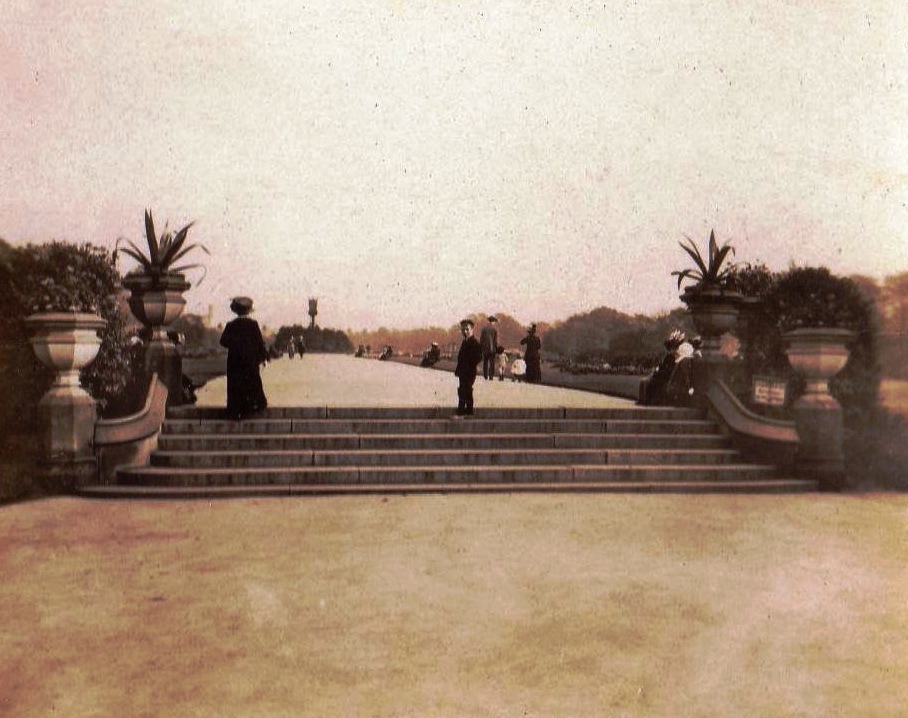
A short series of how we used Alexandra Park in 1906, from a collection Valentine’s Snapshots of Alexandra Park.

And no sooner had I posted this when Dave Hulson shared this, 

"Hi Andrew, I know the tower clocking Alexandra park was a gift from the market traders of Sheudehill Manchester as they didn't want or need it.

When it was erected at Alexandra Park it's clock faces never kept the correct time

This is where it gets a bit strange it was removed from the park ( date not known) and reappeared at Belle Vue on an island , but I don't know what happened to it after that or the date it was removed."

Well Dave that should set the memories going.

Location; Alexandra Park

Pictures; the Clock Tower, Alexandra Park, from Valentine’s Snapshots of Alexandra Park, date unknown, courtesy of Ann Love


Friday, 18 November 2022

What we did in Alexandra Park in 1906, nu 4 ........ at the bowling green

A short series of how we used Alexandra Park in 1906, from a collection Valentine’s Snapshots of Alexandra Park.


Pictures; The bowling green, Alexandra Park, from Valentine’s Snapshots of Alexandra Park, date unknown, courtesy of Ann Love

Thursday, 17 November 2022

What we did in Alexandra Park in 1906, nu 3 ..... at the lake


A short series of how we used Alexandra Park in 1906, from a collection Valentine’s Snapshots of Alexandra Park.


Pictures; the lake, Alexandra Park, from Valentine’s Snapshots of Alexandra Park, date unknown, courtesy of Ann Love

Wednesday, 16 November 2022

Walking in Alexandra Park in the November of 2014 part 2

The thing about Alexandra Park is that it looks good pretty much all the year round and so here are a series of pictures from Andy Robertson taken at the end of November on a day when the sun shone and the last of the leaves had yet to fall.

I thought I would start with the lake not least because it will allow me to include one of almost the same spot taken over a century ago.


The earlier shots come from a delightful little collection marketed by the Valentine company under the simple title of “VALENTINE SNAPSHOTS, 12 REAL PHOTOGRAPHS FOR YOUR ALBUM 1/-.”

They date from 1906 and perfectly capture what the park once looked like.

Not that I want to short change Andy’s pictures which make me wish I had wandered down there myself.

The makeover has recreated a stunning place to walk and take time out from the usual busy demands of everyday life.

And of course there is much more to the park for not only has it given untold pleasure to countless generations of people but has a rich history, including demonstrations and events stretching back into the 19th century.

Pictures; walking in the park in November 20114, from the collection of Andy Robertson and the lake, Alexandra Park, from Valentine’s Snapshots of Alexandra Park, date unknown, courtesy of Ann Love

Tuesday, 15 November 2022

Walking in Alexandra Park in the November of 2014 part 1

The thing about Alexandra Park is that it looks good pretty much all the year round and so here are a series of pictures from Andy Robertson taken at the end of November on a day when the sun shone and the last of the leaves had yet to fall.

I thought I would start with the lake not least because it will allow me to include one of almost the same spot taken over a century ago.

The earlier shots come from a delightful little collection marketed by the Valentine company under the simple title of “VALENTINE SNAPSHOTS, 12 REAL PHOTOGRAPHS FOR YOUR ALBUM 1/-.”

They date from 1906 and perfectly capture what the park once looked like.

Not that I want to short change Andy’s pictures which make me wish I had wandered down there myself.

And of course there is much more to the park for not only has it given untold pleasure to countless generations of people but has a rich history, including demonstrations and events stretching back into the 19th century.

Pictures; walking in the park in November 20114, from the collection of Andy Robertson and the lake, Alexandra Park, from Valentine’s Snapshots of Alexandra Park, date unknown, courtesy of Ann Love

Wednesday, 6 July 2022

Walking in Alexandra Park sometime around 1906 courtesy of Valentine's Snapshots

Now like many people I have fond memories of Alexandra Park.

The entrance
And so I was pleased my friend old Ann sent me a pack of pictures dating from sometime in the early 20th century.

They cover pretty much the whole of the park including the lake, bowling green, clock tower, terrace and entrance.

There will be similar images from the same period but what makes these particularly interesting is that the pack is complete, includes the carton they came in and the name of the person they were sent to.

Added to this we have the name of the company which distributed them.

The cover
This was the Valentine Company of Dundee who began selling “topographical view photographs” from the 1860s, along with “a great variety of photographic goods from single framed images, to albums, view books and booklets, pictorial greetings cards and a wide range of photographic novelties including their innovative children's cut-out books.”**

All of which makes Ann’s pictures quite a find.

They were sent to Mark Brewer who was living at 25 Graswood Road, Fallowfield, and the hunt is on to find more, although so far he does seem to have evaded the historical record.

The lake
But no matter I shall continue to post more of his pictures of the park during the next few weeks.

For those who are also fans of the park I invite you to post your own pictures which could be taken from the same angle or just a scene you enjoy.

And just after this was posted Ann told me that "Mark Brewer was one of Howard's pupils at Wilbraham, in the early 70's. 

He gave the pictures to Howard."

All of which opens up a whole new raft of questions, for the pictures are nearly a full 70 years older.

So watch this space.

Pictures; The entrance and lake, Alexandra Park, from Valentine’s Snapshots of Alexandra Park, circa 1906, courtesy of Ann Love

*VALENTINE COLLECTION, St Andrews University Library, 1999

Wednesday, 7 July 2021

One hundred years of one house in Chorlton …. part 122 ....... Totò Looks For A House

The continuing story of the house Joe and Mary Ann Scott lived in for over 50 years and the families that have lived here since. *


Now I doubt that Joe and Mary Ann watched Italian films, but yesterday was Totò night in the house.

Rosa had arrived over from Milan on Friday, and we had bought in several films by Totò, who like Rosa was from Naples.

He is someone I have written about before, and over the years I have become quite a fan.**

Last night we chose Totò Cerca Casa, or Totò Looks For A House, which was made in 1949 and was the second most popular film of the year.

The sets were pretty basic, the humour fairly slapstick and some at least of the actors might have been better enrolling in acting school, but given all of that it was funny.

And while the plot was at best fairly implausible it did hold some truths.

Like most of post war Europe there was a severe housing shortage and Totò and his family end up in a number of different properties, each more unsuitable than the one before, including a school, a cemetery caretaker's house, the studio of an artist, a large luxury apartment and even the Colosseum before ending up in a psychiatric hospital.


Each location offers up comic possibilities, from a student rebellion led by Totò, to an apparent ghost at the cemetery, and the discovery that the luxury apartment has also been rented out to another family at the same time. 

Behind the humour of course is the very real hardship of people with no where to live.  

Naples was already a hard city to live in and the war made it harder.

Here in Britain there was the same lack of properties, which in turn led to the squatter movement was a direct response tin part to the shortage of accommodation because of war damage but also because some properties had been deliberately left unoccupied by their owners.

The campaign was nationwide and in London was coordinated by the Communist Party.

Here in Manchester the first successful squat was at the gun site near Alexandra Park which housed one family at 8 p.m., but by the following day contained a community of over 20 families and all available huts were occupied. It is a fascinating story and ended with the Corporation accepting the squatters as tenants.*** 


Joe and Mary Ann will I suspect have known about the Alexandra Park squat, and taken a keen interest given that they built decent and affordable houses across Chorlton.


But I have no idea whether they would have enjoyed Totò Cerca Casa or the selection of foods Rosa cooked up that evening, which included peppers, a selection of greens in olive oil and may favourite, a salad made from oranges and dressed with garlic, olive l and chillies.

 Pictures, Totò Cerca Casa, 1949 and a selection of Neapolitan dishes.

*The story of a house, https://chorltonhistory.blogspot.co.uk/search/label/The%20story%20of%20a%20house

Walking the streets of Naples with a comic genius ........ Totò, https://chorltonhistory.blogspot.com/2020/01/walking-streets-of-naples-with-comic.html

Totò 

***The forgotten story ………. a little bit of squatter history in Alexandra Park, https://chorltonhistory.blogspot.com/2020/07/the-forgotten-story-little-bit-of.html


Thursday, 11 April 2019

So who did try to blow up the Cactus House in Alexandra Park?

Now I have to say the story of the Cactus House in the Park and the bomb passed me by.

Viewing the damage, November 11 1913
But back in the early hours of Tuesday November 11th 1913 someone or some group placed a pipe bomb
at the back entrance of the building which when detonated “a considerable portion of the Cactus-house .... was blown away and much damage was done.”*

The Cactus House had been opened in 1906 and contained the collection of Mr Charles Darrah which had been left to the Park by his widow.

Despite the absence of any evidence the police suspected it was the work of the suffragettes and part of the campaign to damage property in support of the demand of the extension of the vote to women which had been going on throughout the year.

According to the Manchester Guardian, “though there was nothing to indicate that the outrage was the work of militant suffragists the police entertain the belief that they are responsible for it.  

The Chief Constable, Mr R Peacock, who lives on the other side of the park, was early on the scene.  

He stated that although none of the literature usually found where outrages are perpetrated by violent women was discovered, he had no doubt on the subject.”*

Broken windows
All of which may have fed the prejudices of certain parts of the community but I doubt was enough on its own to point the finger.

Although just over twenty years later the Manchester Guardian returned to the story on the retirement of Mr Cobbold who had been Curator of the Cactus House since it was built, reporting that “in the days of the militant suffragettes [he] had to guard the cactus house from violence, and one occasion an attempt was actually made to blow it up.”**

That said I am off to trawl the records for any reports of arrests or convictions but may be pipped at the post by someone who can quote chapter and verse.

And with the confidence that my work might be done for me I went looking instead for the Cactus House but alas it is no more.

Despite being repaired and being a visitor draw, the collection the Coporation planned moving it to a new Cactus House in Wythenshawe Park in 1936.

The Manchester Guardian, 1913


Location, Alexandra Park, Manchester


Picture; Cactus House, Alexandra Park, Moss Side, Chief Constable and some of his staff early on the spot after attack by Suffragettes Date 1913, m57683 , and extract from the Manchester Guardian, courtesy of Manchester Libraries, Information and Archives, Manchester City Council, http://images.manchester.gov.uk/index.php?session=pass

*Early Morning Outrage, Explosion at Manchester cactus House, Senseless Piece of Work, Manchester Guardian November 12 1913

**In Manchester, Keeper of the Cacti, Manchester Guardian, January 31, 1934

Monday, 8 April 2019

Back in Alex Park demanding …….. “the Parliamentary franchise for women.”

In the early years of the last century many of the bog public meetings held in Alexandra Park were dominated by the demand for votes for women.


Alexandra Park, 1908
The press reported on a series of such rallies from 1908 through to 1912 with speakers ranging from Mrs Emmeline Pankhurst, to Margaret Ashton and Mrs Annot Robinson.

One of the best documented was that held on October 24 1908 with a list of speakers which pretty much covered all the leading lights in the campaign both locally and nationally.*

There had been a public meeting the night before at the Free Trade Hall and on the Saturday the march set off from Albert Square and by degree made its way along Market Street, Deansgate, Peter Street, Oxford Street and then by way of Stretford Road, Upper Jackson Street to Upper Moss Lane and Alexandra Park.

Such was the distance and the expected numbers that the organisers planned for the march to start at 2.30 and enter the park by 4 o’clock.

Nothing had been left to chance. “A robbing room had been provided at 9 Albert Square where a maid will be in attendance between the hours of 1.p.m and 6.p.m., to take charge of hats &coats etc., for those who are walking in academic dress.”

 Emmeline Pankhurst and Emily Wolstenholme, date unknown

On reaching the park there was provision in the shop to store the banners but societies wishing to take their banners in to the park were at liberty to do so with that ever so modern warning the “the Joint Demonstration Committee will not be responsible for their safety in any event.”

Today over a century and a bit since the demonstrators arrived at the park it is possible to create something of what happened.

Annie Briggs, Evelyn Manestra, Lillian Forrester, 1913
The march had been orderly and in the bright sunshine attracted a large audience of spectators and the “walkers acted on the crowd of watchers like a perpetual provoker of argument.  From Albert Square to the Park there were two miles of debaters for an and against the suffrage.  As one hurried one caught queer fragments of speech – ‘....they’ll never get it; If they pay rates, I say it’s only fair ....’ ‘What’ll they do wiv  it.’***

At the entrance to the park the first half of the procession entered by the man gate beside Hulme Lodge, while the second half made its way down Alexandra Road and entered by the side gate.

Both sections then converged on the large expanse of grassland to the north of the lake where there was the choice of those 35 speakers.

These were arranged on ten different platforms each with a theme, and with the help of the organisers map we can stand in that expanse of open space and choose who to listen to.

Platform one was given over to Housing and Health, two was Prison Reform, three Temperance, four Peace, and five Education.  The remaining platforms were devoted to the Protection of Children at number six, Social Ethics at seven, the Poor Law at eight and the remaining two were Labour Legislation at nine and Co-operation at ten.

Some of the people wandered between the platforms while others loyally stayed with their first choice and largest of all was the audience for Mrs Despard speaking from the Social Ethics platform.

I have a sneaking feeling I might have tarried for a while in front of platform number ten to listen to Professor Weis speaking on Peace more because of his involvement with the Cactus House and his support for women’s suffrage.

But despite the plan to keep the platforms far enough away from each other it would have been possible to pick out snatches of other themes.

Speaking on Prison Reform Miss Robertson “showed how great an influence women had had in securing prison reforms,” while Margaret Ashton on the Poor Law platform also spoke on the contribution of women on the boards of guardians [and] claimed the vote so that women may have more influence on the making of the Poor Laws, so that those laws really may be made by the people for the people.”

The speeches lasted just an hour and at the stroke of five announced by the sound of a bugle all ten platforms presented the same resolution to the listeners “calling on the Government to incorporate in their promised Reform Bill a clause granting the Parliamentary franchise to women.”

After which for those who had not yet availed themselves of the opportunity there was tea at the Refreshment rooms, price 4d., 6d., and 9d.

Sadly I have no idea what you got for the different prices but I might just have opted for the economy offer at 4d and spent another penny on one of the scarlet and white badges promoting the cause which were on sale in the park and no doubt also picked up a leaflet or two on the “rights of the women’s just claim to the vote.”

Location; Manchester

Pictures; Alexandra Park, 1908, from the collection of Andrew Simpson, group of Suffragettes including Emmeline Pankhurst and Emily Wolstenholme, date unknown, m08239, and Annie Briggs, Evelyn Manestra, Lillian Forrester, 1913,m08224 courtesy of Manchester Libraries, Information and Archives, Manchester City Council, http://images.manchester.gov.uk/index.php?session=pass

*The 35 speakers included Miss Margaret Ashton, Mrs Despard, Mrs Swanwick, Professor Weiss, and Mr Pollit,

**Women’s Suffrage.  Procession in the Manchester Streets; Manchester Guardian, October 26, 1908

Sunday, 7 April 2019

Down at Alex Park making the point and demanding change

Now there will be many who remember the Rock Against Racism event Alexandra Park in the July of 1978.

The assembly point was Strangeways and after a short number of speeches the march set off through the city streets to Alexandra Park where perhaps a total 40,000 people listened to the music of Steel Pulse, the Buzzcocks, China Street and the local Moss Side reggae band Exodus.

It was a memorable moment and a very successful one which reaffirmed the multi cultural nature of the city and the need to challenge racism. 

But taking the longer historical view it was only one in a line of similar popular marches and demonstrations which began with Keir Hardie and a rally eighty-five years earlier.

That march had started off at Stevenson Square and by degree had travelled via Portland Street and Oxford Street through to “Stretford Road, Great Jackson Street and the other thoroughfares that led to the park.”*

Back then the right to assemble in any of the city’s parks was still prohibited and it was not until 1897 that the Corporation relented and allowed meetings in four of the parks of which Alexandra Park was the only one in the south of the city.

The campaign to establish that freedom is not really part of our story but as Keir Hardie had made the appeal for the right of assembly and free speech in our park it is worth taking a few minutes to record that the campaign had been won by the actions of the Labour Movement and in particular the Independent Labour Party and the Manchester & Salford Trades and Labour Council.

As support grew large meetings were addressed by people like Mrs Emmeline Pankhurst, and Keir Hardie. 

In 1897 the Corporation accepted the principle which as an editorial in the Manchester Guardian observed was recognition of the “reasonable demand for facilities for public meetings in the parks.”**

What followed were a series of meetings in the park some of which were preceded by marches from the city centre and later during the Great War a number of pro peace gatherings at the park gates.

In 1908 one demonstration had called for the State to provide aid for the blind, and at a meeting in the park “several thousands of people interested in the welfare of the blind gathered [with] the desire to impress upon the public the belief that State aid, not private charity, is necessary to make the life of the blind at all worth living..”***

But the early years of meetings in the park were dominated by the demand for votes for women.

The press reported on a series of such rallies from 1908 through to 1912 with speakers ranging from Mrs Emmeline Pankhurst, to Margaret Ashton and Mrs Annot Robinson.

One of the best documented was that held on October 24 1908 with a list of speakers which pretty much covered all the leading lights in the campaign both locally and nationally. ****

There had been a public meeting the night before at the Free Trade Hall and on the Saturday the march set off from Albert Square and by degree made its way along Market Street, Deansgate, Peter Street, Oxford Street and then by way of Stretford Road, Upper Jackson Street to Upper Moss Lane and Alexandra Park.

Such was the distance and the expected numbers that the organisers planned for the march to start at 2.30 and enter the park by 4 o’clock.

Nothing had been left to chance. “A robbing room had been provided at 9 Albert Square where a maid will be in attendance between the hours of 1.p.m and 6.p.m., to take charge of hats &coats etc., for those who are walking in academic dress.”

On reaching the park there was provision in the shop to store the banners but societies wishing to take their banners in to the park were at liberty to do so with that ever so modern warning the “the Joint Demonstration Committee will not be responsible for their safety in any event.”

Today over a century and a bit since the demonstrators arrived at the park it is possible to create something of what happened.

The march had been orderly and in the bright sunshine attracted a large audience of spectators and the “walkers acted on the crowd of watchers like a perpetual provoker of argument.  From Albert Square to the Park there were two miles of debaters for an and against the suffrage.  As one hurried one caught queer fragments of speech – ‘....they’ll never get it; If they pay rates, I say it’s only fair ....’ ‘What’ll they do wiv  it.’ "*****

At the entrance to the park the first half of the procession entered by the man gate beside Hulme Lodge, while the second half made its way down Alexandra Road and entered by the side gate.

Both sections then converged on the large expanse of grassland to the north of the lake where there was the choice of those 35 speakers.

These were arranged on ten different platforms each with a theme, and with the help of the organisers map we can stand in that expanse of open space and choose who to listen to.
Platform one was given over to Housing and Health, two was Prison Reform, three Temperance, four Peace, and five Education. 

The remaining platforms were devoted to the Protection of Children at number six, Social Ethics at seven, the Poor Law at eight and the remaining two were Labour Legislation at nine and Co-operation at ten.

Location; Alexandra Park

 Pictures; Salford Labour Party banner, 1980, Badge, 1979, Aleandra Park, 1908, from the collection of Andrew Simpson, Women marching with police escort, date unknown, m08238, courtesy of Manchester Libraries, Information and Archives, Manchester City Council, http://images.manchester.gov.uk/index.php?session=pass

*Alexandra Park, Labour Demonstration, Manchester Guardian, May 8 1893

**Editorial article 2, Manchester Guardian, January 4, 189 

***State Aid for the Blind, Demonstration at Alexandra Park, Manchester Guardian, July 27, 1908

****The 35 speakers included Miss Margaret Ashton, Mrs Despard, Mrs Swanwick, Professor Weiss, and Mr Pollit,

****Women’s Suffrage.  Procession in the Manchester Streets; Manchester Guardian, October 26, 1908

Next; the debates on that day in Alexandra Park

Monday, 12 March 2018

The new Manchester ....... Owen Street ....... scenes from a development no.8

Now the onward rise to the sky of the Owen Street development continues apace.

Soon, if not already they will be visible from vantage points across Greater Manchester.

But for now Andy, contented himself with a picture from Alexandra Park.

Location; Manchester, 2018

Picture; looking out from Alexandra Park at the Owen Street development, 2018, from the collection of Andy Robertson

Thursday, 3 August 2017

What were the 3rd Battalion of the Manchester Pals doing at Alex Park in the September of 1914? ........... stories behind the book nu 10

An occasional series on the stories behind the new book on Manchester and the Great War.*

The entrance to Alexandra Park, 1907
Now this is one of those stories that started off full of promise with just a chance that I would uncover a lost part of the Park’s history.

The 3rd Battalion were one of the eight Pals’ Battalions raised in the first few months of the Great War.

The authorities had not quite been prepared for the rush of recruits.

The first two battalions had been raised in a matter of days and by the time the 3rd and 4th were complete there were still no where to put them.

So while the first and second fairly quickly moved to a tent city at Heaton Park, the 3rd was accommodated at White City and the 4th were billeted at home.

And that brings me to the 3rd Battalion and Alexandra Park.

The definitive book on the Manchester Pals* describes how the battalion had been recruited in just three days between Saturday September 5 and Monday the 7th but “unlike the first two companion battalions [it was] initially trained at White City, a sports and racing stadium in the Old Trafford area, and accommodated  there in hastily  erected and draughty constructions.  Before those huts at the White City became available this battalion’s parades were undertaken in the City Hall with route marches to and from Alexandra Park.”**

Heaton Park, 1914
As late as September 26 the Manchester Guardian reported that “the recruiting authorities have in mind the undoubted convenience of being able to billet the men on themselves, in which case they would be in the same position as the men who were recently posted to reserve, though of course their full time would be required in training.”***

Which nicely brings us back to those route marches to Alexandra Park.

I have to confess I had misread the original newspaper entries and made the assumption that they had camped out in the park but no evidence has come forward to support this and so I can only assume that on arriving at the park gates and after a suitable rest they marched away to White City where they were still to be found two month later.

Pictures; entrance to Alexandra Park, circa 1907 courtesy of Ann Love, and Heaton Park, 1914 from the collection of David Harrop

*Manchester and the Great War, Andrew Simpson, was published in 2017, http://chorltonhistory.blogspot.co.uk/search/label/A%20new%20book%20on%20Manchester%20and%20the%20Great%20War

**Manchester Pals A History of the two Manchester Brigades, Michael Stedman, 1994

***ibid, page 25

****City Battalion and Winter Quarters, Manchester Guardian, September 24 1914

Tuesday, 5 May 2015

Alexandra Park ........ celebrating the restoration of an old Municipal friend

Well the makeover of Alexandra Park has been a success.

Earlier in the week there were lots of people taking in the sun from kids out playing to couples taking a stroll amongst the trees.

So I can think of no better way of celebrating the park than including Peter’s painting of Chorlton Lodge, which for years lay empty but has been restored for the community and stands as a beacon of that success.

The plans for its restoration along with those for the whole park are available* and that is pretty much all I want to say.

Painting;  Chorlton Lodge, Alexandra Park,  © 2014 Peter Topping
Web: www.paintingsfrompictures.co.uk
Facebook: Paintings from Pictures https://www.facebook.com/paintingsfrompictures

*Alexandra Park Regeneration Project,
http://www.manchester.gov.uk/downloads/download/4620/alexandra_park_regeneration_project_downloads

Wednesday, 10 September 2014

Walking in Alexandra Park in the summer of 2014

Now yesterday I was reflecting on Alexandra Park and the Whalley Hotel.

And as promised I have decided to post some of Andy Robertson’s pictures of the park during its recent make over.

Some of the money went to restoring the lodge, and some on clearing back overgrown bushes and trees as well as improving the lake.

There are now more benches throughout the park as well as new play area, and tennis courts.*

And as ever in the run up to the parks grand reopening at the end of August Andy was there to record the transformation.

So over the next few weeks as we go into that mellow part of the year with warm sunny days I shall post a series of his pictures of the a work in progress.


All of which just leaves a visit to see the finished work before too many of the leaves have fallen.


Pictures; from the collection of Andy Robertson

*Alexandra Park to fully reopen after £4.5m revamp, July 28 2014, Amy Glendinning
http://www.manchestereveningnews.co.uk/news/greater-manchester-news/alexandra-park-whalley-range-fully-7519767