Showing posts with label Wilmslow Road. Show all posts

Tuesday, 7 April 2026

Coffee…… a bag of coal ….. and a new TV channel ………. Didsbury 1967

I think this might be the last in the series of Didsbury in the 1960s.

I say that but I am sure it’s a promise I won’t keep.

This picture from 1967 is one of my favourites from the collection and features a building whose story I keep coming back to.*

For now I shall reflect that I doubt many of those sipping their coffee on Costa will know that the corner plot was once occupied by the National Coal Board, or that the distinctive ghost sign on the gable end was hidden under a layer of black paint.

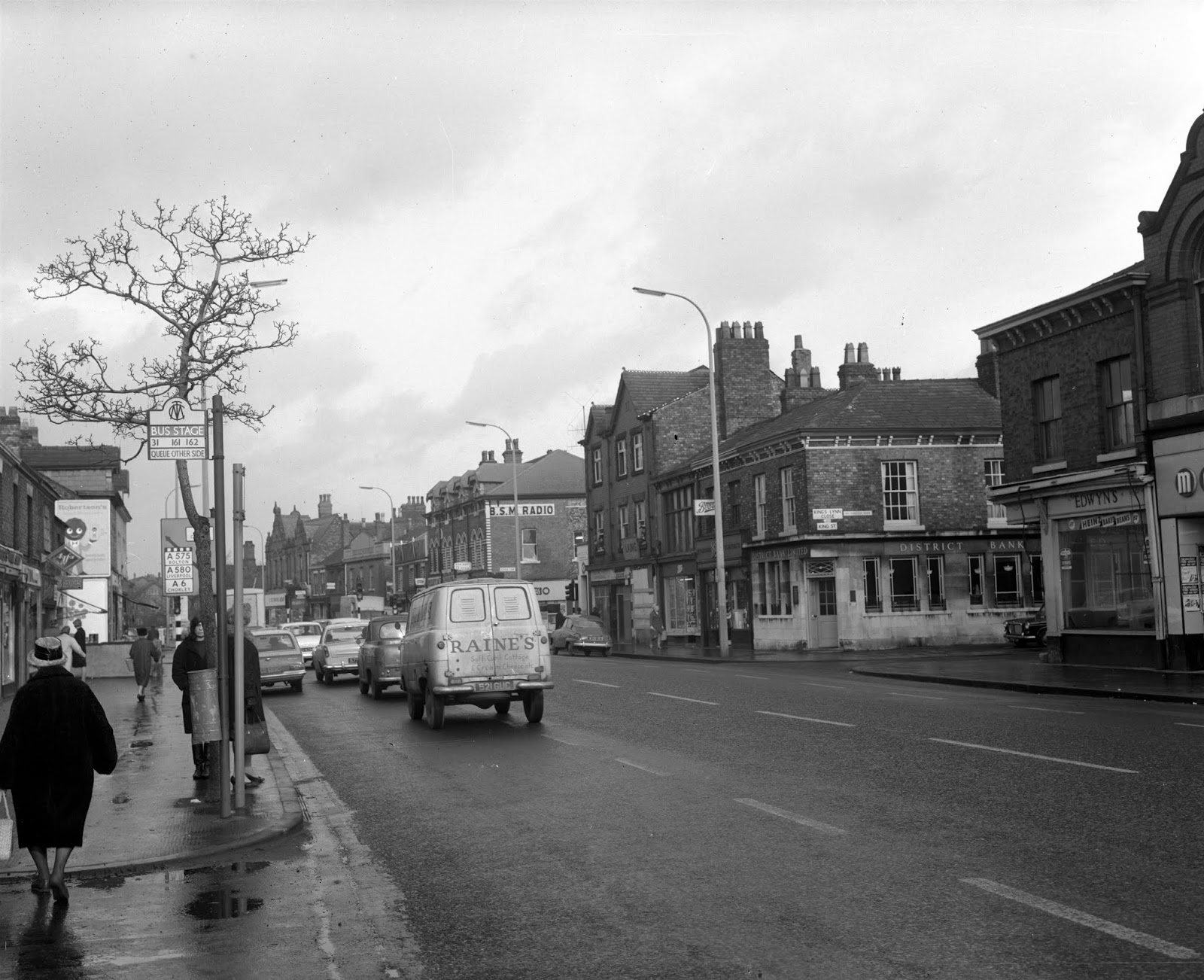
What really caught mu interest was BSM Radio with its advert for BBC 2.

This was after all 1967, and until the arrival of BBC 2, we had just the two channels, which were black and white.

The first colour transmission I saw weas the following year, when in London at least BBC 2 broadcast live coverage of Wimbledon in colour.

Just how many of those passing along Wilmslow Road on that winter’s day had BBC 2 is unknown, but I doubt it will have been that many.

And in the same vein I wonder just who remembers Price’s the bakery shop, BSM Radio or Distinctive Fashions, which is now also part of Costa Coffee?

Location; Didsbury

Picture; Wilmslow Road, 1967, Courtesy of Manchester Archives+ Town Hall Photographers' Collectionhttps://www.flickr.com/photos/manchesterarchiveplus/albums/72157684413651581?fbclid=IwAR35NR9v6lzJfkiSsHgHdQyL2CCuQUHuCuVr8xnd403q534MNgY5g1nAZfY

Monday, 6 April 2026

Admiring the simplicity of Didsbury Library ……… 1963

It’s been a while since I have been in the library and had quite forgotten the simplicity of the design.


It was built in fulfilment of a promise made when Didsbury, along with Burnage, Chorlton, and Withington, voted to join the City in 1904.

That said it would be another 11 years before Didsbury’s residents got their new Library, but when it was finished it was a brand-new Library, fit for a new century and replaced a small municipal library which had opened in 1908.

While it’s outside was in the words of its architect “'designed in the fifteenth century gothic style with tracery windows and emblems of Science, Knowledge, Literature, Music and Arts and Crafts in stone distributed over the building.” *

Internally it belonged to the 20th century with electric light which “was designed to allow the public free access to the shelves, browsing and reading areas. The walls were tiled to dado height, the floor cork carpeted and the oak furniture, fittings and partitions cost £600”.

But it wasn’t the first library, because back in the May of 1854, a more modest venture was opened in the National School.

It was the work of a group of wealthy residents and “the inauguration meeting was held in the schoolroom, which is to be used for the library and reading room and is well adapted for the purpose being lighted with gas and well ventilated.  The stock of books in the library at present is not large, but they are well selected, and there are ample funds for the purchase of more when needed”. **

The subscription had been “fixed as low as possible, - a penny a week, - in order to diffuse the benefits of the institution as widely as possible”.

And as befitted the age, more than a few speakers at the opening meeting took the moral high ground, with one asserting that the library would act as a counter to the “the public house which was the resort only of those who had no other enjoyment”.

While another “referred with regret to the fact that ‘Roderick Random’ was the most read book in the noble Free Library of Manchester and while admiring the humour of the author he feared the book was perused for its  objectionable features, and he advised them to purge their library of anything injurious to the morals of the people”.

Location; Didsbury

Picture; Didsbury Library, 1967, "Courtesy of Manchester Archives+ Town Hall Photographers' Collection", https://www.flickr.com/photos/manchesterarchiveplus/albums/72157684413651581?fbclid=IwAR0t6qAJ0-XOmfUDDqk9DJlgkcNbMlxN38CZUlHeYY4Uc45EsSMmy9C1YCk

*The Didsbury Library, Manchester Guardian May 17th, 1915

**Opening of Didsbury Library and Institution, Manchester Guardian, May 17th, 1854

Sunday, 29 March 2026

Don't get me on the subject of wool shops ...........

Now I belong to a generation that was dragged round wool shops as a child.

My mum, her friend and later my sisters all knitted and so the trip to the shop was a regular part of my Saturdays.

It started with the knitting pattern, went on to an endless discussion about the colour of the wool and finished with walking home with loads of the stuff.

Then there was the smell.

Wool shops had a distinctive smell, which was a sort of warm perfume smell which followed you home and stayed where ever mother was knitting.

There was something else about the wool shop which for years I couldn’t quite work out what it was, and then recently it came to me, it was always so very quiet, as if there were secrets about knitting that could only be uttered in a low almost conspiratorial way.

Ours was a traditional wool shop. The wooden shelves which reached to the ceiling were made of a deep dark wood which shone in the sunlight and were heaped high with wool.

 And then there were the wooden and glass counters which today you only see in shops pretending to be old. Through the glass top you could see more wool and all sizes of knitting needles.

So the day Mrs Rogers announced that she was going to try out a knitting machine it was if she had admitted to multiple affairs over the preceding twenty years.

I wouldn’t mind but it wasn’t even that she was going to buy one; all she wanted to do was try it out.

 But that marked her out as a flighty thing who would soon be buying a Christmas cake instead of making one and no doubt had already used custard powder and meat spread.

Nor did the torture of the wool shop stop there. Once home the wool had to be wound into balls, which could be only done using the back of a chair but usually involved me having to stand with my arms outstretched and the wool was pulled from me and went into balls.

So I suppose I chose to ignore the wool shop on Wilmslow Road, and then it had gone.

And in memory of that wool shop and many others I shall leave you with this classic pattern from our Jillian who collects them, in the hope that she will knit me a balaclava.

Location; Wilmslow Road,

Picture; Wilmslow Road, 1967, Courtesy of Manchester Archives+ Town Hall Photographers' Collection, https://www.flickr.com/photos/manchesterarchiveplus/albums/72157684413651581?fbclid=IwAR35NR9v6lzJfkiSsHgHdQyL2CCuQUHuCuVr8xnd403q534MNgY5g1nAZfY
and knitting patterns, 1930-1970 from the collection of Jillian Goldsmith

Monday, 3 November 2025

A bit of co-operative history in Didsbury and a picture of how we shopped in 1935

It is easy to miss the stone with its initials M&S high up on the building which includes Expo Lounge, and  Holland &Barrett.

The M&S sign, 2020
A few who do spot it might ponder on how long Marks and Spencer were located here on Wilmslow Road, before moving to their brand-new store just along from the old Police Station.

But that would be to miss that this is a bit of our co-operative past, because this block was one of the chain of shops run by the Manchester and Salford Equitable Co-operative

It was opened on November 29th, 1929, and was one of the eight they opened that year, marking a huge expansion in the idea of co-operative trading across south Manchester, and was a response to the growth in both social and private housing which characterized the years after the Great War.*

And no doubt our store was part of the new look in co-operative retail, which the Manchester Guardian reported, was “something like a revolution in the shop-fitting of Co-operative stores”.**

Out went the “heavy mouldings [and] expanses of somber mahogany”, and instead “the greengrocers radiate attraction from stainless steel baskets on white marble bases [while] the butter and bacon gain a reflected splendour from a background of white vitroline branded with green, and the counter is smooth and shining coloured glass and stainless steel”.  Added to which the refrigerator counter is “lit from outside by lights above the glass.”.

The Manchester & Salford Co-op, 2020
It all reads very familiar but must have been an eye-catching departure from what had gone before.

And in other ways the co-op shops in south Manchester along with shopping in general was markedly different when compared to other parts of the city.

A survey conducted in 1934, across six Manchester local government wards, showed very different retail experiences.  The six were, Withington, Didsbury, Blackley, Levenshulme,  Miles Platting and Medlock Street.

Didsbury retailing, 2020
They were chosen for their very different profiles, so while Withington and Didsbury were judged, “mainly residential and middle class”; Blackley and Levenshulme  were “lower middle class and artisan” and  Miles Platting and Medlock Street were seen as “mainly working class or slum, thickly populated and intersected by busy main roads, with industrial property amongst houses and tenements.”***

Not surprising “another difference between the rough divisions is that in the first the average is one house [often big], one family; the second, one house [often small], one family; the third, one house to one, two, or three families”.

The total number of shops in the six wards  was 2,869, with a higher proportion of shops in the “poorer areas”, and these often had a limited range of products when compared to Didsbury and Withington, and had a lower ratable value.

How we ate, 1935
The same shops were likely to be closer to their customers than in the more prosperous areas, and very much like today there was a greater number of fast food or convenience outlets.

So, across the six wards there were 144 shops selling “fried fish and chips, cooled meats and tripe” with the highest number in Medlock Street and Miles Platting.

Likewise second hand furniture dealers and licensed pawnbrokers which are a measure of poverty, were “not found in Withington or Didsbury, and Blackley and Levenshulme  could only produce seven, [compared] to Medlock Street where there was 18 second-hand dealers and 29 brokers and Miles Platting has 5 dealers and 17 brokers”.

But on a lighter note the survey discovered that while hairdressers and barbers were more evenly distributed, with the highest proportionate number in Medlock Street with one to every 850 people, compared to Withington which “has one to every 3,000”.

Fresh food in Didsbury, 2019
Make of that what you will.****

Location; Didsbury, and Manchester in 1935

Pictures;  The M&S shop and Oxfam Shop, Wilmlsow Road, 2020, from the collection of Andrew Simpson


*Ayres Road, Old Trafford, Green End, Burnage, Parrs Wood Road North, Burnage, Warwick Road South, Firswood, Park Estate West, Timperley, Hardy Lane, Chorlton, School Road, Sale

**The Modern Shop, In Manchester, the Manchester Guardian, June 24, 1935

***Manchester Shops, Six Ward Survey Private Trader Predominant, Striking Contrasts, Dorothy Hodge, Manchester Guardian, February 16th, 1934

***To which Dorothy Hodge concluded “the residents of Withington uses the city barber to a considerable extent.”

Wednesday, 26 March 2025

A history of Didsbury in just 20 objects ... number 18 ……. the charity shop

The story of Didsbury in just twenty objects, chosen at random and delivered in a paragraph or more.

Now it is stating the obvious to say that the charity shop has come to be one of the main players on most of our high streets.

The demise of the traditional shops like hardware stores, grocers, and haberdasheries, has been filled by a range of charities which vie with estate agents and bars as the dominant business most of us will visit.

And there is nothing wrong in that.

Of course, the continued presence of that virus, and restrictions on how we shop, may prove fatal for some.

But I suspect they are here to stay.

Location Didsbury

Picture; Barnardo's on Wilmslow Road, 2019, from the collection of Andrew Simpson


Monday, 15 April 2024

Platt Fields House … another story from Tony Goulding

A good friend has just moved to an apartment opposite Platt Fields Park and consequently I have been moved to write a story centred on the park. 
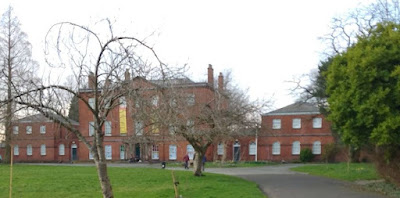
Platt Hall, Platt Fields Park, Rusholme, Manchester April 2024
As is my wont, however, it was not the magnificent Platt Hall (1) which piqued my interest, but the building facing Wilmslow Road, situated in the park, a little way from the Hall.

Its address now is 182, Wilmslow Road, Rusholme, Manchester but in the 1901 census it was recorded as “Butlers House”, (118, Wilmslow Road). 

It was then occupied by Henry Charnley who was acting as the butler to Mrs. Ellizabeth Tindal-Carrill-Worsley, the last “Worsley” to reside in Platt Hall.

182, Wilmslow Road, “The Butler’s House" April 2024

In the two previous censuses of 1881 and 1891 Mr. Charnley was, although still recorded as a butler, was residing at 30, Duke Street, Rusholme, Manchester, at which address he was also included in the area’s rate book for 1896. It seems likely therefore, that the house was built to accommodate him in the closing years of the 19th century.

 Henry Charnley was born in Torrisholme, a village near Morecombe, Lancashire in 1849, the son of a small farmer of 3 acres, also a Henry, and his wife Hannah. He started work initially as an agricultural labourer but soon entered domestic service and in the 1871 census he is recorded working as a footman for a retired calico printer Thomas Chippendale at 46, King Street, Lancaster, Lancashire.

 On 8th July 1880 Henry married Hannah Kennerley, the daughter of William, a coal agent at the parish church of Wilmslow, Cheshire. By this time, he had already obtained his position as a butler.

The couple had four children, three sons and a daughter, all of whom survived to adulthood. Their youngest son, Walter Beardwood was killed in action on 24th October 1917 while serving as a gunner in the 330 brigade, Royal Field Artillery during the Third Battle of Ypres (a.k.a. Passchendaele). In civilian life he had been a grocer’s assistant and a salesman for hairdresser’s products. The other two sons, Henry Kennerley and William Roskill both became chartered accountants. Henry and Hannah’s youngest child and only daughter, Maud Mary suffered from mental illness and was in 1921’s census a patient at a private asylum in Greta Bank, Burton-in-Lonsdale, North Yorkshire. She died, during the December quarter of 1948, in the Newton-le-Willows registration district likely whilst she was still a patient at the County Mental Asylum, Winwick, Warrington, Lancashire in which institution she was recorded in the !939 register,

 Henry remained Elizabeth Tindal-Carill-Worsley's butler after the sale of the hall and estate to Manchester City Council in 1907. In the 1911 census he is recorded living in her House, 54, Kensington Park Road, Notting Hill, West London where he managed a staff of two footmen, two housemaids, a cook and a kitchen maid.

 Henry’s wife, Hannah remained in Manchester, moving to Lorne Grove, Fallowfield, Manchester with her 3 unmarried adult children. The family occupying no. 42, “Chevy Chase” one of two adjacent properties owned by her husband

The Charnley family grave 
This is the Charnley family grave in The Church of England section of Southern Cemetery, Manchester: grave A.241. In it are interred, Henry’s wife Hannah (died on 6th April 1922), Henry himself (died 3rd November 1929) one of their sons, William Roskill, (died 26th June 1939), their other son’s wife Agnes Emery née Boswell (died 27th November 1929) and their little grandson Harry Boswell Charnley who died aged just 2 years 6 months in March 1915. 


Opening day Platt Fields Lake, Saturday 28th May 1910
Following its purchase of the estate in December 1907 and after some intense lobbying Manchester City Council agreed to use the land for a municipal park. Two and a half years later with work on the provision of a boating lake, tennis courts, a bowling green and other attractions completed, the park was due to be officially opened on 7th May 1910. Unfortunately, with the death of King Edward VII on the previous day the ceremony had to be postponed until Saturday 28th May 1910. The two events almost coinciding almost led to the new park being named King Edward Park to honour the late king, however following much local opposition the ancient name for the area “Platt Fields” was retained for the new park.  

Ideally placed for the purpose, the “Butler’s House” now became home to a succession of the park’s head gardeners / superintendents. The first of these being Mr. Thomas George Farrington who was born on 11th January 1860 in Chester, Cheshire. Also in the household, in the 1911 census, were his wife Mary (née Lloyd), two daughters Elsie Ann and Nellie, and a lodger Miss Doris Winifred Cook who was teacher of “housewifery”.

 Thomas George had travelled widely in his gardening career, before arriving in Manchester. This is evidenced by the fact his marriage took place in Wigan, while his daughters were born in Wickford, Essex and Ruabon, Denbighshire, North Wales. He remained at Platt Fields until he reached retirement age in 1925. Interestingly he was replaced by John Henry Wilkinson, who was the head gardener of Cringle Fields Park, whose house at 3, George Street, Levenshulme, Manchester Mr. Farrington moved into. 

Thomas George Farrington died on 2nd June 1941 leaving an estate of £458-3s-4d. His wife pre-deceased him in April 1919. They are both interred in Manchester’s Southern Cemetery together with their eldest daughter Elsie Ann and her husband Ernest Moss; Grave P. 347 in the Church of England section.

John Henry Wilkinson was a Manchester man born in Levenshulme during January 1888. In the 1921 census he was residing at the George Street address with his wife Lilian May (née Bates) who he married in the June quarter of 1914 at the Methodist Mission Hall, Chapel Street, Levenshulme. He remained in charge of Platt Fields for more than two decades. 

His successor was Frederick Simpson who took over shortly after the second world war, confirmed by his entry in the 1948 street directory, having previously been the head gardener of Birch Park (more commonly known as Birchfields Park). The 1939 census shows him living at that park’s lodge with his wife, and two children. Other records reveal that he was born John Thomas Frederick Simpson in Carrington Moss on 10th May 1903 one of twin boys (2); the last born of the five children of George Simpson and his wife Elizabeth (née Dorsett). The family were living according to the census of 1901 in the “Corporation cottages” which appears to indicate that George Simpson was employed by Manchester Corporation working in their sewage farm which occupied the site. By 1911 the family had moved to Manchester and settled in the Levenshulme district at 12, Ducie Grove, with the head of the household then working for Manchester Corporation as a carter. (Ten years later he was a road sweeper).     

     “Frederick” Simpson married Dorothy Evelyn Walton at Christ Church, Moss Side, Manchester during the June quarter of 1928. In turn Mr. Simpson remained at Platt Fields until he reached retirement age in 1968 when he was replaced by Horace Edgar Cobbold. 

 Mr. Cobbold was born in Cork, Ireland on 22nd September 1914 by which time his father Sergeant Alfred Cobbold, a regular in the British Army was serving with his regiment The Rifle Brigade (Prince Consort’s Own) in the British Expeditionary Force in France / Belgium. (3) He was one of 9 children having 4 brothers and 4 sisters In the June quarter of 1939 Horace married Miss Dora Morris at St. Luke’s Church, Benchill, Wythenshawe, Manchester.     

   Ongoing cuts to the council’s budgets and the consequent cuts to its services has meant that parks no longer have a resident “Park Keeper” and the house at 182, Wilmslow Road is now boarded up and unoccupied. 

  Pictures: - Opening day Platt Fields Park, 28th May 1910 J. Jackson (m 58490) Courtesy of Manchester Libraries Information and Archives, http://images.manchester.gov.uk/index.php?session=pass, others from the collection of Tony Goulding.

Notes: -

1)  Platt Hall was designed by John Carr, a renowned architect from York, and dates from 1764.

2) The twin brother was Albert Edward. There was also an older brother George Clifford Dorsett and two sisters Violet May and Ellen Perina.

3) Although he was wounded and invalided home Alfred survived the war and died aged 58 in February 1937. However, his four brothers all died while on active service. Charles died of sickness at Modder River, Cape Colony, South Africa on 6th February 1900 while serving in the 2nd battalion. Kings Own Yorkshire Light Infantry during the 2nd Boer War. Frederick and William both died within days of each other, killed in action during the 2nd battle of Ypres in 1915. Frederick, a Corporal in the East Surrey regiment’s 2nd battalion, on 25th April and William, a private in the Suffolk Regiment’s 1st battalion, on 8th May. Neither brother has a known grave, and both are commemorated on the Menin Gate Memorial. Finally, Arthur, who was serving in the same regiment as his brother, Alfred also with the same rank – Company Quartermaster Serjeant died of illness while stationed in Greece on 19th August 1916. He too has no known grave and is one of 2,175 names inscribed on the Doiran Memorial in Northern Greece.


Monday, 1 April 2024

Sharing a fine meal with a bit of history ..... in Didsbury at 4 Of Us .... part 1

Now if like me you have knocked around in Didsbury for over 40 years you will know that restaurant beside the Old Cock.

In its time it has had different names and was variously a “streak house” and more recently a companion to Dimitris’s the Greek Taverna on Deansgate.

Today it is called 4 Of Us, was opened nine months ago by four friends and is also a wine shop with an impressive range of wines on offer.*

Some of these we were treated to as samples by our host Magda, who chose two English wines and ones from Austria and Slovakia.

Of the five we sampled it was the two English wines we preferred, and one of these accompanied the meal.  

I could of course at this point list the food on the menu, but where would the fun be in that when by following the link, you can discover it for yourself along with the all the wines on offer.

That said I do have to mention my dish which the menus describes as “roasted cauliflower fricassee, curried aubergine, baby spinach and chick peas”.

As a vegetarian who tends to go for the “same stuff”, this was a wonderful blend of some simple ingredients with a fine light sauce.

All of which just leaves the history of the building which over the next few days I will endeavour to research.

Back in the 1970s I can’t remember even clocking the building on the odd visit to the Old Cock when we would miss the odd lecture, preferring a pint of Badger’s Surprise to an hour on the Philosophy of Education.

Years later and in front of a classroom in Poundswick High School in Wythenshawe I  sometimes reflected how the pub had been the better choice.

But we were post grads doing the year course for a Cert Ed, and had the arrogance of graduates who had made a career of missing lectures during the previous three years.


Suffice to say I know that in 1901 the building which is home to 4 of Us was a “pastry and confectioner’s” run by a Mary Sharp.

And that leaves Martha Dimond also a confectioner and Arthur Garret  Gibons  who described himself as "Baker and confectioner", all of whom occupied the place in the decades either side of 1911.

So more to uncover.

Location; Didsbury

Pictures, at the 4 Of Us, from the collection of Andrew Simpson, 2024

*4 Of Us, https://fourofus.co.uk/


Thursday, 22 February 2024

That spot on the corner of Wilmslow Road ……….

I have always taken the small garden area on the corner of Wilmlsow Road and Grange Road pretty much for granted.


And couldn’t tell you exactly when it turned from open space to an attractive landscaped area which is  just suited to sit and watch Wilmlsow Road hurry past.

But someone will know, and I hope tell me.

Location; Didsbury

Picture; That spot on the corner of Wilmslow Road, 2020, from the collection of Andrew Simpson

Monday, 19 February 2024

Sunday, 18 February 2024

Saturday, 17 February 2024

It’s what they do in Didsbury ............

Saturday on a Leap Day in Didsbury


Location; Didsbury

Pictures; Wilmslow Road, 2020, from the collection of Andrew Simpson

Friday, 16 February 2024

Somewhere to go ……….

On passing the Mad Giant and thinking of going in.


Location Didsbury

Picture; Passing the Mad Giant, 2020 from the collection of Andrew Simpson

Thursday, 15 February 2024

A little bit of the story of that public garden on Grange Lane. ……

How easy it is to take bits of Didsbury for granted.

I recently passed that small bit of public garden on the corner of Wilmslow Road and Grange Lane and for the first time ever took a picture of the space which a few days later appeared on the blog.

And as you do I pondered on the origin of the spot, which I assumed had once been something else.

But as hard as I tried I couldn’t remember what might have been here before the garden.

Opposite, the site of the garage had once been the grounds of Manor House which in 1911 was home to Mr. and Mrs. Mason, and their seven servants. He was the owner of a cotton mill, which may have been in Ashton-Under-Lyne.

But however, adapt he was at managing a factory, he seems to have got a little confused at completing the census return. All nine of the people at the house were described as British subject by parentage and he recorded that the house had 31 rooms.

Now there were some big houses in Didsbury, but 31 rooms seem a tad too many.  That said some one in the know, steeped in Didsbury history will put me right

And they may also offer a history of a little public garden.

The OS maps for the late 19th and early 20th centuries  show it as open land with trees, as do the photographs from the same period.

Up till the 1950s and maybe into the following decade there was a low wall around the area, and in one picture there were giant flower tubs beside the trees, while in earlier photographs there was a picket fence running alongside facing the shops.

So that is it.

The bit of Didsbury I took for granted.

Although having said that ….. you did get a bit  on Mr. Sidney Mason.

My friend Barbarella told me the shop on the corner was once a Post Office, and I can confirm that in 1911 it was indeed “The Post Money and Telegraph Office” and Mr. George Edward Scott was the Post Master, while those who like contrasting facts, a big chunk of Grange Lane consisted of three, four and five roomed properties.

And that really is it.

Location; Didsbury

Pictures; that public garden on Grange Lane, in the 1950s, the 1900s, from picture postcards, and in 2020, from the collection of Andrew Simpson


Wednesday, 14 February 2024

Casa Italia ….. a jar of Brylcream, and a row of cottages …….. Didsbury across a century

The great fun of historical research is you never quite know what you will turn up.

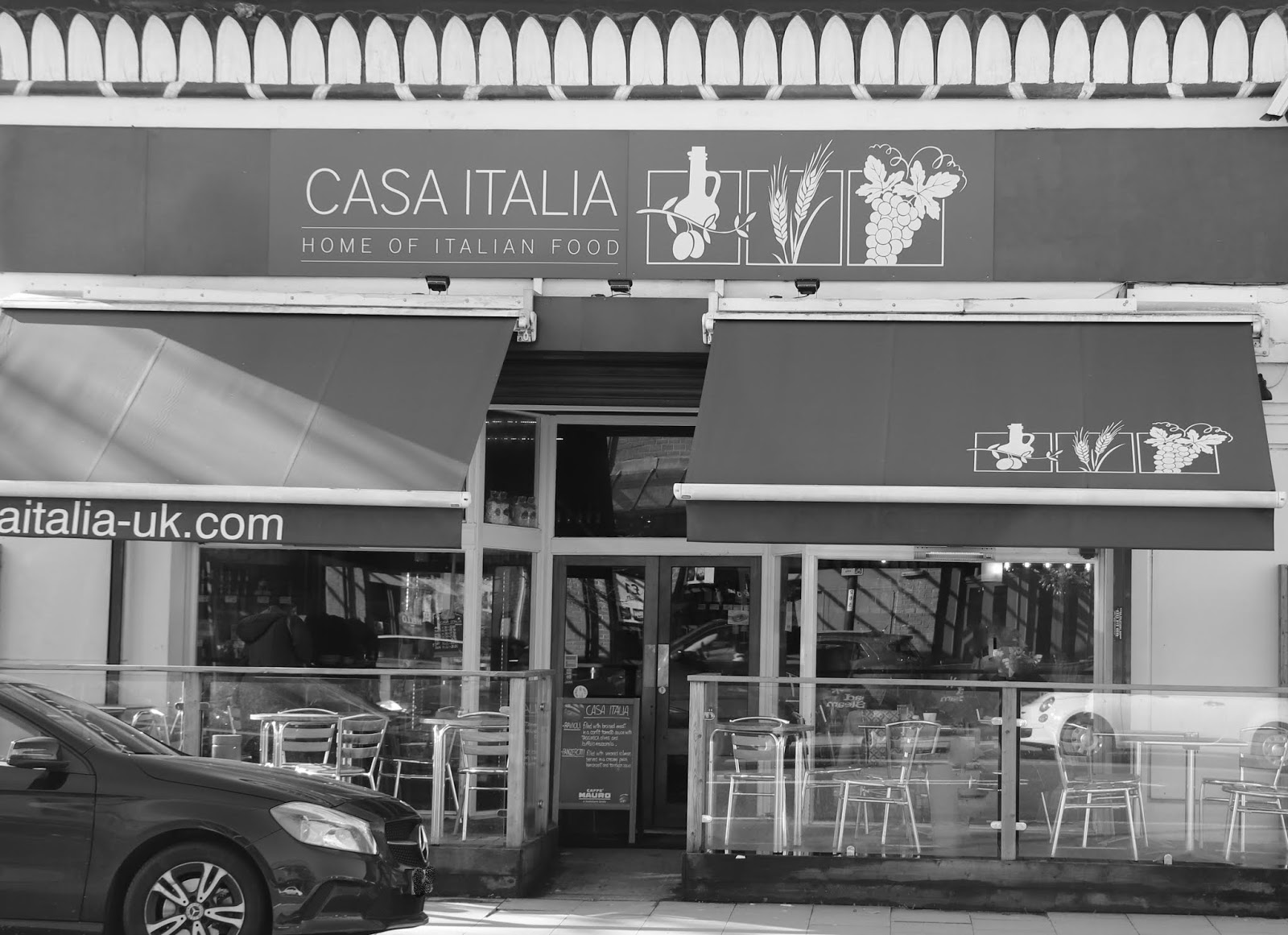
Casa Italia 2020
So here I was last Saturday back in Didsbury trying to get a picture of Casa Italia without a car getting in the way, and failed yet again.

Why Casa Italia? Well I like I the restuaraunt, and it has proved to be the only place locally that stocks Nocino.*

But enough of such stuff, and instead it is the history of the building I want to explore.
Just when it stopped being a Carrington’s and became the Casa Italia I have yet to find out but I know that back in 2014 I might just have been able to get my Nocino here from this branch of the Carrington empire.

Chritian Reading Room, 1959
I will have passed the building countless times during the 1970s and 80s, and I gave it little attention.

I do remember that one side was a Christian Science Reading Room, while the other half was a Gents Hairdressing Saloon, which as well cutting hair and selling that certain package “for the evening sir”, had jars of Brylcream.

Now you have to be of a certain generation to remember Brylcream, with its distinctive smell and its ability to hold hair in place.  It was one of those products that was a bit of a right of passage, because you only started to use it  in your teens.  Out had gone the toy trains, comic annuals and instead there was the full tilt pursuit of fashion, music, and going on a date.

My flirtation with the stuff didn’t last long, but for a short while it and Old Spice were part of getting ready to go out.  The downside was the smell and the greasy marks it left on furniture, and in my case the comments of one early girlfriend, appalled at what it did to her hands after fondly running her fingers through my hair.

Hair curs and Brylcream, 1959
It was I now know an emulsion of water and mineral oil stabilised with beeswax and it  is still available today.  Alas those who know me, will smile at the thought that I once had hair and might choose to use the stuff.

Back in 1969 the owner of the hairdressers was a Mr. T Smith and the shop had been dispensing Brylcream, hair cuts and much more a decade earlier.

In time I will go looking for just when it ceased to do Brylcream, haircuts, and for that matter when the building was constructed.

At the turn of the century the site had been a row of cottages which were still there in the 1920s.

But at some point these were replaced with our building, which is quite distinctive with that frieze at roof level.  Look very closely and it is just possible to pick out that the design is a series of identical flowers in full bloom.

F. Lees, bird seed and Spratt's
Decades of paint have now obscured the finer details but they are still there.

And what is even more fascinating is that there was another block further north along Wilmslow Road, on the corner with what is now North Street.

It was not as substantial as ours but it had the same design below the foor and may have been by the same architect.  In 1959 it was occupied by F. Lees who described himself as a “Seed Dealer” in the directories but whose shop front announced that here was Didsbury Pet & Garden Stores ….. The Shop for Spratt’s.”  Offering dog food and bird seed in “packets and Bags”

Those cottages, 1906
All of which just leaves me to plunge into the census returns and explore the occupants of those cottages who in 1901 included a certain Mr. William Wrightman who described himself as a cab driver and ten years later was running the Station Hotel on the corner of Wilmslow Road and what is now North Road.

As ever, there is more , but that is for another time.  In the meantime I shall book my time into Central Ref to trawl the directories to discover just when our floral adorned shops were built.

And a thank you to andy Robertson who trawled his copy of the 1969 Directory.

Location; Didsbury

Pictures; Casa Italia, 2020, from the collection of Andrew Simpson, the same block in 1959, J.F. Harris, m42647, and that other block on the corner of what is now North Street, in 1959, J.F. Harris, m42644, courtesy of Manchester Libraries, Information and Archives, Manchester City Council, http://images.manchester.gov.uk/index.php?session=pass, and the row of cottages circa 1906

*Nocino is a wonderful liqueur from the Emilia-Romagna region in northern Italy, and is made from unripe green walnuts, rivaled only by Lemoncello.

Tuesday, 29 August 2023

Who moved that bus stop? …………. and other challenges to my memory ….Didsbury …. 1967

It started with a conversation with my friend Barbarella about the lost shops of Didsbury, and in particular, the stretch from M&S to the Santander Bank.

I casually mentioned the photo shop close to the bank and then doubt set in as to whether it had been there back in the 1970s, when I waited for a bus, or indeed if it was still there a few decades later.

Now, I know there is one there today, but thought it might have moved from where I remembered it.
 So as you do I checked out the site on street google and while there is a photo shop, there is no bus stop, and there hangs my dilemma, because for years I stood at that bus stop and would often give up on the bus and go in and buy some film.

These were the decades when I still used smelly film, developing them and printing them at home, along with a sideline in colour slides, which with trial and error led me to prefer Agfar film.

But as so often happens the absence of that bus stop led me to question my memory.

And then  Barbarella restored my memory with “Now it’s opposite the Coop and the next one just passed Saints and Scholars”, which was confirmed almost immediately afterwards when I came across another picture from 1967.


There was the bus stop, and more importantly there was the camera shop, complete with Agfa sign.

I did then go looking at the bus routes on the destination board, which even I thought points to me really needing to get out more, but if you want to give the full flavor of Didsbury in the 1960s, you must dig deep.

That said my guide to bus routes for 1969, shows that none of the three services were running by then, which make me wonder if there was a second bus stop with more services and which of the three went into town, and which headed towards Barlow Moor.

Someone will know, and they may also be prompted to share their memories, sparked perhaps by the picture of Wilmslow Road in 1969.

We shall see.

Location; Didsbury

Picture; Wilmslow Road, 1967, "Courtesy of Manchester Archives+ Town Hall Photographers' Collection", https://www.flickr.com/photos/manchesterarchiveplus/albums/72157684413651581?fbclid=IwAR35NR9v6lzJfkiSsHgHdQyL2CCuQUHuCuVr8xnd403q534MNgY5g1nAZfY

Friday, 30 June 2023

The bits of Withington you don’t normally see…….

Never one to pick the obvious, here for no other reason than I can are a selection of pictures I took while wandering around Withington on a wet grim Monday.


No history, other than The Red Lion was a regular haunt in the 1980s and I was pleased I accepted the invitation of Cate and Elizabeth to take tea and cake in St Paul’s church which led to some fascinating stories.

Location; Withington


Pictures; The Red Lion and St Paul’s Withington, 2023, from the collection of Andrew Simpson

Wednesday, 15 February 2023

All that Didsbury can offer…… February in Didsbury


Location; Wilmslow Road, Didsbury

Picture; All that Didsbury can offer, 2023, from the collection of Andrew Simpson


Sunday, 12 February 2023

Thursday, 24 March 2022

A ghost sign and a Didsbury family

The Spann family whose ghost sign still adorns this building were part of Didsbury’s history from the early part of the last century.*

The Didsbury ghost sign, 2022
Thomas Spann described himself variously as a “cabinet maker", “joiner" and finally a “master builder”, who occupied 35 & 37 Wilmslow Road from at least 1907 and possibly from the year before when this fine building was constructed.

By the late 1920s the business was listed as specialising in “House Furnishings” and no doubt Mr. Spann made some of the products sold in the shop assisted by his wife Laura who described her occupation as a “Curtain Specialist”.  

All of which was proudly advertised on the gable end of the building, which originally read “TEL, 234 DIDSBURY, SPANN'S, BLINDS, REMOVING, CARPET LINOLEUM & BEDDING WAREHOUSE”.

Added to this they also owned property in the area which they rented out.

So, they were a notable Didsbury family who are also remembered in other ways.

"BLINDS, REMOVING, CARPET LINOLEUM & BEDDING WAREHOUSE” 2022
Mrs Spann, volunteered as a Red Cross nurse in the December of 1914, just months after the outbreak of the Great War and worked at Lawnhurst on Wilmslow Road.

The building was owned by the Simon family and was turned over to the Red Cross as an auxiliary hospital for wounded soldiers. **

The work of the Red Cross volunteers was varied as well as vital, and while some were nurses, others worked in the kitchens, performed clerical and cleaning duties, and many also raised donations across the community providing extra comforts for the recovering servicemen.

And in the case of Mrs. Spann we also know that in the September of 1914 she was one of the “Didsbury Ladies” raising money for the Relief Funds.

The Didsbury Ladies, 1914
The Manchester Courier carried the story under the caption “Didsbury Ladies are making a special two days’ efforts to raise money for the Relief Fund.  

The photo shows Mrs. Braithwaite, Mrs. Spann, Mrs. McWilliam, and Mrs. W. Merrill, with their organ”, outside Didsbury Railway Station.

A National Relief Fund had been launched a month earlier and within a week had received a £1 million in donations, which by the end of the war would total over £7 million.

Here in Manchester just a week after the launch contributions amounted to £7,854 ranging from Rylands and Sons Ltd who had given £5000 down to Mr. Thomas Parker who donated £10.***

These were matched by sums coming from factories and other workplaces, leading the secretary of the Manchester Relief Fund to record his thanks to the workers in Didsbury, West Didsbury and Withington for their kindness in assisting in raising locally the “magnificent sum” of £162 2s. 5d.****

Lawnhurst, 2022
By 1939 Mr. and Mrs. Spann had moved to Cheadle and appear to have been still active in the business. Their eldest son had followed them into the furniture trade but is best remembered as Tommy Spann who was a motorcyclist racer during the 1920s and 30s, notably competing in the TT Races on the Isle of Mann and part of AJS racing team.

Another son was a respected academic who worked first at Manchester University, and later in the USA before settling in Australia.

And at 81, Laura Spann sailed first class to Australia in the October of 1957.  

She had recently become a widow and it would seem she chose to make Australia her home, where she lived until her death in 1960.

In the next few decades her children had settled outside the city, and now I doubt there is any permanent record in Didsbury of the family’s life here and their contribution to the community other than the ghost sign.

So, it is perhaps fitting that the Didsbury Civic Society has been active in the preservation of the sign.

Location; Didsbury

Pictures; Manchester Courier, September 1914, courtesy of Sally Dervan, the ghost sign, 2022, and Lawnhurst, 2022 from the collection of Andrew Simpson

*Ghost signs are the names of companies or products most of which no longer exist.  In a simpler age they were painted or picked out in coloured brick on the sides of buildings and date back well into the past.

**100 Halls Around Manchester Part 69: Lawnhurst, Didsbury, https://100hallsaroundmanchester.wordpress.com/2021/10/22/100-halls-around-manchester-part-69-lawnhurst-didsbury/

*** Manchester Donations, Manchester Guardian, August 13, 1914

**** Mr. H H Bowden, Correspondence, Manchester Guardian, October 8, 1914

Research on the family, and their business by Carol Wilkinson

Tuesday, 22 June 2021