Thursday, 4 October 2018

Remembering those from the Great War ........ at Central Ref

An occasional series featuring material from the exhibition In Flanders Fields which runs till the end of November at Central Ref

Like all good ideas, David Harrop’s exhibition is a simple one which is to remember those from the Great War.

And it is quite unique in that everything in the ten display cabinets comes from his collection and much of it relates to men, women and children from Greater Manchester.

The original idea was to create a chronological display, but the very nature of the material and the sheer size of what his collection led him to create themed cases.

Some are dedicated to an individual like George Davison, others, to events like the shelling of Scarborough by the German Navy.

And while there is a core theme, each cabinet includes a wealth of memorabilia, like the crested porcelain china, each of which has a patriotic connection or the picture postcards from the battle fronts.

For the first of this series David has nominated the cabinet dedicated to “Travis Taylor of Oldham and Sub Lieutenant Hanway Cooper who was lost along with all hands on H M S Monmouth”.

On display in the cabinet is a short biography of Travis Taylor who was with the Royal Field Artillery along with his medals.  He died aged 22 on May 27, 1918.

Four years earlier the mother of Sub Lieutenant Hanway Cooper compiled a Remembrance book which is on show along his dress sword.

And the juxtaposition of personalized items sitting beside more general material from the period works well.

I doubt that the two bits of wartime crested china were actually held by Mr Travis but he would have ones like these and that adds to the scope of the exhibition.

In Flanders Fields will run till the end of November.

Location; Central Ref


Pictures; from the collection of David Harrop

Wednesday, 3 October 2018

Travels with my cancer ....... in praise of the NHS

In the four and bit months since I was diagnosed with cancer, I have been tested, advised on what was to happen, operated on and sent home from hospital.

I won’t say that my feet didn’t touch the ground but it was a roller coaster of activity which now just awaits the results to see if it has spread and review the options.

All of us deal with the news and the subsequent period of adjustment in different ways.

We chose to tell just the family and close friends, not out of any shame or desire to be secret but just because that fitted how I felt.

That said I was not averse to friends telling friends, and reflected that at some point I would write about it.

Of course what I would say remained to be carefully worked out.

There are some very moving and illuminating contributions about experiencing cancer, from blogs to Radio Four conversations and in that well tried practice, that if someone has done it and done it well I see no reason to repeat the process.

Instead, I am reflecting on the care and the continued care I am receiving from the NHS, which is not to depreciate other health services in other places.

I have family and friends who have and continue to receive the most excellent care from Italian and French hospitals but I was here in Manchester and it was the NHS who looked after me.

The speed with which I was fast tracked by my GP to the series of tests, the preliminary conversation with the specialist, and the eventual operation and after care cannot be faulted and underlines that basic principle that at a time when the individual is in crisis, the principle of free medical care at the point of need remains paramount and the measure of a civilized and just country.

We all know that the NHS creeks at times and in places, but to anyone faced with an illness it is there.

At which point I could start singling out people to thank, but to do so would be a very long list and not fair, because while I know the name of my consultant, and Macmillan nurses, the remaining team of doctors, nurses, technicians and cleaners along with kitchen staff, are pretty much unknown to me.

The important thing was that they were there, did their bit and for that Tina,  my family and friends will be thankful.

So ....... less the historical account of the NHS, or a detailed personal description of my cancer, and instead just that simple observation, that 70 years after its inception the NHS continues to offer first rate care, continuing to deliver its three core principles to meet the needs of everyone, to be free at the point of delivery, and based on clinical need, not ability to pay.

And that must continue to be defended against all who would look at the cost, or try to promote an increase in the scale of a private medical service.

Pictures; logos from the NHS, and for once I have not sought copyright

On Zetland Road with a postcard and an odd message in the March of 1905

I have looked at this postcard of “Draycott” a dozen times over the last few years and not given it much thought.

It is on Zetland Road and was sent by Edmund Holmes to his daughter Mabel in March 1905.

It was a Monday, and it was posted in Chorlton sometime before 10 in the morning.

Mr Holmes was a chartered accountant, had been born in Derby in 1849, was married to Julia and they had three girls of which Mabel was the youngest.*

Now we will never know why Edmund sent his 17 year old daughter the post card or whether the others also got one.

Perhaps the clue is on the message on the back which just says “Puzzle: Find yourself.  This is Draycott.  Love from father”

Now I am not going down the route of idle speculation.  It may have been the result of some profound discussion about how Mabel was feeling on that day or just that he saw the card on sale and decided to send it on a whim.

Commercial postcards such as this were regularly available and were often an opportunist move on the part of the photographer who would take a series of shots of houses to sell to the residents with surplus copies making their way into the local shops and station kiosk.

Edmund was part of the partnership of accountants of Morris, Gregory, Holmes and Hansford who had offices at 32 York Street, which may have meant he caught the train from the station to Central and walked the short distance along Mosley Street past St Peter’s Church and on to York Street.

Now there will have been many other routes and no doubt someone will suggest a quicker or more scenic journey but as the offices were at the junction of York and Faulkner Streets I will stick with my mine.

And before someone questions his choice of the train over the tram I have to point out that the tram service was not extended from West Point until 1907, and so on that March day I rather think he would have walked down what was then Holland Road [now Zetland Road] to Cavendish Road [now Corkland Road] and across to the station.

He may have bought the card at Mrs Burt’s stationary shop on Wilbraham Road but more likely from the kiosk on the platform.

At this point dear reader you either mutter something very rude at the degree to which I can show off with the knowledge or sit back impressed.

Either way it is a little lesson in how a postcard can with the help of the 1901 census, Slater’s Directory and the odd OS map get behind the message sent on that Monday morning.

Picture; from the Lloyd collection

*Edmund Holmes, born in 1849, Derby, Julia, 1850, Manchester, and Alice, 1880, Gertrude, 1883, Mabel, 1888

Lost on Thomas Street with the ghosts

Now I don’t pretend this is the best picture of a window, but gaze on it with interest, because soon it will be gone and with it the history, stories and ghosts of all the people who have lived and worked here back into the early decades of the 19th century.

We are on Thomas Street between John Street and Kelvin Street in a row of properties of which only the popular Al-Faisel still trades.

But soon they will move out for another site on Thomas Street, because the remaining buildings are unsafe.

A recent City Council survey showed that numbers 56 down to Kelvin Street were damaged in recent storms and some interior walls were bowed.

Not that this should surprise anyone given that for over a decade and maybe more, they have been unoccupied, with the their fading shop signs announcing that one business had been “Established in 1861”, another had traded “Cash and Carry” and the last carried the sign "Wearhouse" hinting at its final activity.

Occasionally the fronts are hijacked by posters advertising events in the Northern Quarter, or for businesses which are thriving.

Go back to 1911 and Al-Faisel’s was Lord’s Restaurant with the remaining strip occupied by Tap & Co “ticket writers”, Mr William Freeman, hairdresser and George Clegg, stationers.

Sixty years earlier and they were home to a baker, glass merchant, a blacksmith and an umbrella manufacturer, and with a bit of further research we should be able to push back to the date they were built.

This will involve a trawl of the maps, census returns and rate books which will fasten that date and give us a comprehensive record of those who worked in this block and called it home for two centuries.

But for now I will finish with Peter’s painting of Al-Faisel, made in 2014, which will soon, like that window become a piece of our history.

Well I had but then I came across Steven Marland's excellent blog on the Al-Faisal and the history of Thomas Street which added more than a few puzzels I had been too lazy to go looking for.*

And so I commend Al Faisal – Thomas Street Manchester from Mooch.*

*Al Faisal – Thomas Street Manchester from Mooch, https://modernmooch.com/2018/10/03/al-faisal-thomas-street-manchester/


Location; Thomas Street, the Northern Quarter

Picture; 56 7 58 Thomas Street, 2018, and 2014 from the collection of Andrew Simpson

Painting;  Al-Faisel ©2014 Peter Topping Paintings from Pictures
Web: www.paintingsfrompictures.co.uk
facebook: www.facebook.com/paintings frompictures

Tuesday, 2 October 2018

Another beginning ....... stories of developments to come .... close to Chester Road

Now all stories need a beginning and this is the start of Andy Robertson’s new one.

We are on Cornbrook Park Road which is sandwiched between Chester Road and City Road.

Once a place of houses, and small industrial units, it stood just minutes away from the old Cavalry Barracks.

I can’t remember it as anything more than a patch of open land with a few old buildings past their sell by date, where you got a sense that here something was about to happen, but perhaps not just yet.

Well now it is, and when I go looking for the plans I guess it will be another tall block of flats which scrape the sky.

Andy is convinced it is, because he headed up the pictures with the simple title, “More blocks”.

And like his other projects, Andy will continue to return to this one till the site is finished.

Location; Cornbrook Park Road

Pictures; Cornbrook Park Road, 2018, from the collection of Andy Robertson

Monday, 1 October 2018

To your good health ! ....... turning points in the story of medical care ..... the talk

Now, if you were to stop ten people in the street and ask them what has advanced public health over the last century, the answers will be varied.

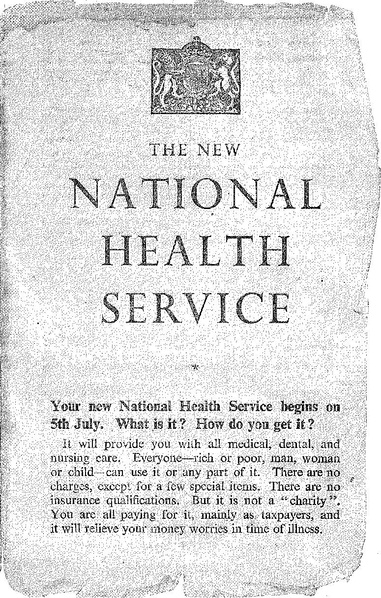
Top of the list I guess will be the creation of the National Health Service.

It is 70 years old and while it creaks in places, it is still a byword for all that a country should do for it’s sick, offering free care at the point of delivery.

For others it will be the mix of technology and spectacular new surgical approaches which allow us to transplant organs, and perform keyhole procedures which were only seen as fantasy just a few decades ago.

These are in direct contrast to operations undertaken without anaesthetics and antiseptics which were the norm before the middle of the 19th century and led to the four minute operation, which aimed to slice open cut out and sew up, before the patient died of shock, loss of blood or contracted an infection.

And in turn, led to the famous “four minuter” with the 300% mortality record, which included the patient, one of the assistants and an observer.

But that is for a story from Tom Grimshaw’s talk on Thursday at Chorlton Good Neighbours in St Ninian’s Church on Wilbraham Road at 1.30pm.

Along with those spectacular advances in surgery, Tom will reflect on the steady advance of public health, which has been delivered through improved sanitation, clean drinking water, the defeat of a battery of infectious diseases, and better nutrition.

So it’s all there and more, on Thursday at Chorlton Good Neighbours in St Ninian’s Church on Wilbraham Road at 1.30pm.

Location; Chorlton

Picture, from an 18th century manual on surgery, and National Health leaflet, 1948, National Health Service Western Isles Health Board

Sunday, 30 September 2018

Be careful of the past you wish for .......

Now, I do feel a bit old when posters I knew have become museum pieces.

I don’t have a date for this one but it was typical of a period of political propaganda dating from the 1930s through to the 1980s.

As a student I had similar ones which decorated the walls of flats I and friends lived in, which I picked up cheaply from left wing book shops.

Back then I believed the propaganda, or if I am honest, wanted to believe it, but it is a view of the world which even then distorted the reality and has all but gone.

This one comes from the museum situated in the old Stasi headquarters in Berlin.

The poster’s slogan runs, “Von den Sowjetmenschen lernen heibt siegen lernen!” which translates as “Learning from the Soviet people means learning to win!”

Peter went round the place yesterday and this is one of the posters he sent back, commenting that “the back story to the poster is that son James’s apartment is in the district where the Stasi headquarters were. His flat is in In the building in front of the Stasi communications building.  All these buildings are still standing. It’s like living in a museum!”

And that last comment got me thinking about what I still had from that period of Soviet propaganda.

The cheap Marxist/Leninist tracts printed in Moscow and Peking vanished a long time ago, as did a fascinating little book of Soviet short stories, but I did come across a book of poetry, and a collection of stories by Soviet Science Fiction writers.

Fifty Soviet Poets, included some like Yevgeni Yevtushenko who were well known in the West, and many who weren’t, and ranged over a variety of different themes, but given that this is a Russian book there is more than a few that are patriotic.

Yevtushenko’s poem, Do the Russians want a War? opens with the lines, “Say do the Russians want a war?- Go ask our land, then ask no more That silence lingering in the air Above the birch and poplar there Beneath those trees lie soldier lads Whose sons will answer for their Dads.  To add to what you have learned before, Say- Do the Russians want a war?”

From the stand point of 1969 when the collection was published, just twenty four years after the end of the Great Patriotic War against Nazi Germany, when the USSR lost 20 million dead, and every community had its own war memorial, it was easy to see the honesty in that poem.

But now, with the Russian Federation flexing its muscles in many different ways, it seems an anachronism, and echoes the comments about Yevtushenko whose poetry is described as “imbued with a sense of civic responsibility” who was “an ardent champion of revolutionary ideas and principles”. *

And looking again at the small collection of Soviet Science Fiction which was published in the early 1970s, is to be reminded that unlike some Western Science Fiction, these stories are all optimistic, focusing on how human beings working together and applying science will create a better world.

Of course we know that that vision of progress as applied across the old Communist bloc was flawed.  It was shot through with technological short cuts which were environmentally disastrous and was achieved at great human cost.

That said, our own Industrial Revolution, driven by the newly emerging capitalistic mode of production which was based on the exploitation of the workforce, assisted by the Slave Trade and conducted a time when only a handful of men had the vote.

At which point someone will mutter ....... and the point is?

To which I can say, there is no point, no lasting message other than that history is messy and sometimes what you thought would be a better way to order the world doesn't quite hack it.

Although the idea of a planet where people are treated equally, are respected and have the material means to live a life of their choice, free from war, tyranny, disease and hunger seems a good one to me.

Location; Stasi Museum, Berlin,

Pictures; from Stasi Museum, Berlin courtesy  of Peter Topping


* Fifty Soviet Poets, 1969, Progress Press, Moscow, page 176