Tuesday, 9 October 2018
Monday, 8 October 2018
When you no longer live in Chorlton .........
I have never been one to slip into nostalgic regret at how places I have known change.
To harp on about how things were “better in my youth” is pretty pointless and while the passing of a shop, favourite pub or an old cinema can be something to note with sadness it sometimes says more about the person than the changes.
So I will miss that open space in front of the Post Office but have to concede it was an under used public place, which did however offer the chance for traders to do a bit of business.
There will be very few people who remember the row of properties that once occupied the site. They were destroyed in the Manchester Blitz of 1940 with three deaths.
Soon the space which had once been the gardens of the three houses will become an extension of the cafe and so Peter thought it fitting that its progress should be recorded.
After all there will be plenty who didn’t even know that part of the Post Office had become a cafe.
Location; Chorlton
Picture; new build on Wilbraham Road, 2018 from the collection of Peter Topping
To harp on about how things were “better in my youth” is pretty pointless and while the passing of a shop, favourite pub or an old cinema can be something to note with sadness it sometimes says more about the person than the changes.
So I will miss that open space in front of the Post Office but have to concede it was an under used public place, which did however offer the chance for traders to do a bit of business.
There will be very few people who remember the row of properties that once occupied the site. They were destroyed in the Manchester Blitz of 1940 with three deaths.
Soon the space which had once been the gardens of the three houses will become an extension of the cafe and so Peter thought it fitting that its progress should be recorded.
After all there will be plenty who didn’t even know that part of the Post Office had become a cafe.
Location; Chorlton
Picture; new build on Wilbraham Road, 2018 from the collection of Peter Topping
Friday, 5 October 2018
Lost Chorlton shops nu 7 ............. the phone shop on Barlow Moor Road
Now it seems that every time I pass that clutch of bars facing the bus station one or more of them is going through a refurbishment.
And with that comes the opportunity to see a little bit of retail history because often the shop signs of previous owners linger on much faded but a clue to the past.
These ghost signs fascinate me and I know fascinate others, so here is the one I spotted last week.
Given the speed of refurbishment it will have gone if you go looking for it.
I can’t remember it being there but sometime possibly in the late 1990s and probably only for a short period the shop offered a service for refurbishing old phones.
Well that is what the sign says.
Of course it is just possible it came from somewhere else and just put up there as a backing platform for another sign.
Someone will know, may even have been in the shop and with luck will tell me.
It points to that simple observation that we all too often ignore our most recent history.
Location; Chorlton
Picture; ghost sign, Barlow Moor Road, 2016, from the collection of Andrew Simpson
And with that comes the opportunity to see a little bit of retail history because often the shop signs of previous owners linger on much faded but a clue to the past.
These ghost signs fascinate me and I know fascinate others, so here is the one I spotted last week.
Given the speed of refurbishment it will have gone if you go looking for it.
I can’t remember it being there but sometime possibly in the late 1990s and probably only for a short period the shop offered a service for refurbishing old phones.
Well that is what the sign says.
Of course it is just possible it came from somewhere else and just put up there as a backing platform for another sign.
Someone will know, may even have been in the shop and with luck will tell me.
It points to that simple observation that we all too often ignore our most recent history.
Location; Chorlton
Picture; ghost sign, Barlow Moor Road, 2016, from the collection of Andrew Simpson
War time Naples, genocide in Brazil and spying in the Balkans, stories from the pen of Norman Lewis
Sometimes without very little effort you get drawn into someone’s life which in the case of Normal Lewis was both a surprise and a pleasure.
In my case it came about in Waterstones which like a lot of people is part of what you do on a Saturday afternoon in between browsing the shops, having a meal and catching a film.
There in the travel section was his book Naples ’44 which describes his year in the city with the allied armies during the Italian Campaign. He was an intelligence officer seconded to the American 5th Army. During the course of the year he kept a diary which became the book.
It is a closely observed description of life after the war has moved on leaving an aftermath of broken buildings, a desperate lack of food and a breakdown of the usual conventions of morality.
Not that the violence is quite over. The Germans continue to bomb the city; there are delayed action mines which have been buried in the cellars of buildings as well as bandits, vendetta’s and the casual acts of barbarity inflicted on the civilian population.
Amongst all this there are vivid accounts of life lived out on the streets, the power of superstition and bravery and generosity of the Neapolitans.
All of which I want to return to but right now it is Mr Lewis who fascinates me, more so because his writing career stretched on in to his 90s, which gives me hope.
So with due deference to his publishers whose account of his life I have lifted directly here is something of the story of this remarkable man.
“Norman Lewis's early childhood, as recalled in Jackdaw Cake (1985), was spent partly with his Welsh spiritualist parents in Enfield, North London, and partly with his eccentric aunts in Wales.
Forgoing a place at university for lack of funds, he used the income from wedding photography and various petty trading to finance travels to Spain, Italy and the Balkans, before being approached by the Colonial Office to spy for them with his camera in Yemen.
He moved to Cuba in 1939, but was recalled for duty in the Intelligence Corps during the Second World War. It was from this that Norman Lewis's masterpiece, Naples '44, emerged, a resurrection of his wartime diary only finally published in 1978.
Before that came a number of novels and travel books, notably A Dragon Apparent (1951) and Golden Earth (1952), both of which were best sellers in their day. His novel The Volcanoes Above Us, based on personal experiences in Central America, sold six million copies in paperback in Russia and The Honoured Society (1964), a non-fiction study of the Sicilian Mafia, was serialised in six instalments by the New Yorker.
Norman Lewis wrote thirteen novels and thirteen works of non-fiction, mostly travel books, but he regarded his life's major achievement to be the reaction to an article written by him entitled Genocide in Brazil, published in the Sunday Times in 1968.
This led to a change in the Brazilian law relating to the treatment of Indians, and to the formation of Survival International, the influential international organisation which campaigns for the rights of tribal peoples.
He later published a very successful book called The Missionaries (1988) which is set amongst the Indians of Central and Latin America.
More recent books included Voices of the Old Sea (1984), Goddess in the Stones: Travels in India (1991), An Empire of the East: Travels in Indonesia (1993), The World the World (1996), which concluded his autobiography, as well as collections of pieces in The Happy Ant Heap (1998) and Voyage by Dhow (2001). With In Sicily (2002) he returned to his much-loved Italy, and in 2003 his last book, A Tomb in Seville, will be published."
Picture; from the covers of Naples ’44, Jackdaw Cake and Voices of the Old Sea, courtesy of Eland Publishing Ltd, http://www.travelbooks.co.uk/
Thursday, 4 October 2018
Salford Pubs ....... the Bulls Head
Now I am always prepared to revisit an old pub even one that I was with yesterday.
And in this case its the Bulls Head which I wrote about recently.
Nor am I alone in rehashing pictures of old pubs because the picture postcard companies were doing it all the time in the late 19th and early 20th centuries.
Often it just extended to reprinting, but sometime they colourised the old image and always one for an opportunity would on occasion over print the card with the message "Merry Christmas".
All of which was fine but in the case of the festive message this sometimes was superimposed on what was clearly a picture taken in high summer.
No matter as my friend Rodney would say if it sells that's the business.
And from Alan Jennings a poscript, " pub with a fascinating history, the cruck end of the pub dates from the 14th century andthe main front of it dates from between 1590 and 1630. the Bulls Head closed in 1930 and the Brewers Groves & Whitnall suggested that the building would make an interesting folk museum,
They offered it to the Corporation and said it would not cost much to run and some old pensioner could be found to look after it, the Corporation declined saying the initial repair bill of £1,500 pounds and estimated running cost of £300 per annum could not be justified, in 1937 there was a fire and in 1938 the Bulls Head was demolished."
Location; Salford
Additional research Alan Jennings
Picture; the Bulls Hrad, Greengate, date unknown, from the collection of Mrs Bishop
And in this case its the Bulls Head which I wrote about recently.
Nor am I alone in rehashing pictures of old pubs because the picture postcard companies were doing it all the time in the late 19th and early 20th centuries.
Often it just extended to reprinting, but sometime they colourised the old image and always one for an opportunity would on occasion over print the card with the message "Merry Christmas".
All of which was fine but in the case of the festive message this sometimes was superimposed on what was clearly a picture taken in high summer.
No matter as my friend Rodney would say if it sells that's the business.
And from Alan Jennings a poscript, " pub with a fascinating history, the cruck end of the pub dates from the 14th century andthe main front of it dates from between 1590 and 1630. the Bulls Head closed in 1930 and the Brewers Groves & Whitnall suggested that the building would make an interesting folk museum,
They offered it to the Corporation and said it would not cost much to run and some old pensioner could be found to look after it, the Corporation declined saying the initial repair bill of £1,500 pounds and estimated running cost of £300 per annum could not be justified, in 1937 there was a fire and in 1938 the Bulls Head was demolished."
Location; Salford
Additional research Alan Jennings
Picture; the Bulls Hrad, Greengate, date unknown, from the collection of Mrs Bishop
Of towers that rise to the sky ....... the new Manchester
The development down at Owen Street has fascinated Andy Robertson ever since the builders broke the ground and began the construction of the two towers.
At the time I had not fully appreciated the scope of what was going to happen, but over the last few years Andy’s pictures and comments have put me right and together the images will be a fascinating record of one of the new generation of property developments.
Location; Manchester
Picture; Owen Street, 2018 from the collection of Andy Robertson
At the time I had not fully appreciated the scope of what was going to happen, but over the last few years Andy’s pictures and comments have put me right and together the images will be a fascinating record of one of the new generation of property developments.
Location; Manchester
Picture; Owen Street, 2018 from the collection of Andy Robertson
Today .......... To your good health ! ....... turning points in the story of medical care .... the talk
Now, if you were to stop ten people in the street and ask them what has advanced public health over the last century, the answers will be varied.
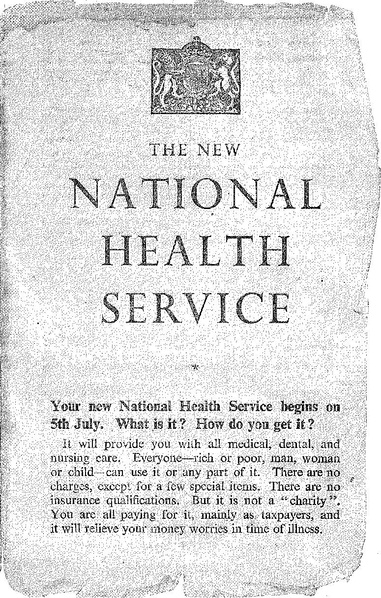
Top of the list I guess will be the creation of the National Health Service.
It is 70 years old and while it creaks in places, it is still a byword for all that a country should do for it’s sick, offering free care at the point of delivery.
For others it will be the mix of technology and spectacular new surgical approaches which allow us to transplant organs, and perform keyhole procedures which were only seen as fantasy just a few decades ago.
These are in direct contrast to operations undertaken without anaesthetics and antiseptics which were the norm before the middle of the 19th century and lead to the four minute operation, which aimed to slice open cut out and sew up, before the patient died of shock, loss of blood or contracted an infection.
And in turn, led to the famous “four minuter” with the 300% mortality record, which included the patient, one of the assistants and an observer.
But that is for a story from Tom Grimshaw’s talk on Thursday at Chorlton Good Neighbours in St Ninian’s Church on Wilbraham Road at 1.30pm.
Along with those spectacular advances in surgery, Tom will reflect on the steady advance of public health, which has been delivered through improved sanitation, clean drinking water, the defeat of a battery of infectious diseases, and better nutrition.
So it’s all there and more, on Thursday at Chorlton Good Neighbours in St Ninian’s Church on Wilbraham Road at 1.30pm.
Location; Chorlton
Picture, from an 18th century manual on surgery, and National Health leaflet, 1948, National Health Service Western Isles Health Board
Top of the list I guess will be the creation of the National Health Service.
It is 70 years old and while it creaks in places, it is still a byword for all that a country should do for it’s sick, offering free care at the point of delivery.
For others it will be the mix of technology and spectacular new surgical approaches which allow us to transplant organs, and perform keyhole procedures which were only seen as fantasy just a few decades ago.
These are in direct contrast to operations undertaken without anaesthetics and antiseptics which were the norm before the middle of the 19th century and lead to the four minute operation, which aimed to slice open cut out and sew up, before the patient died of shock, loss of blood or contracted an infection.
And in turn, led to the famous “four minuter” with the 300% mortality record, which included the patient, one of the assistants and an observer.
But that is for a story from Tom Grimshaw’s talk on Thursday at Chorlton Good Neighbours in St Ninian’s Church on Wilbraham Road at 1.30pm.
Along with those spectacular advances in surgery, Tom will reflect on the steady advance of public health, which has been delivered through improved sanitation, clean drinking water, the defeat of a battery of infectious diseases, and better nutrition.
So it’s all there and more, on Thursday at Chorlton Good Neighbours in St Ninian’s Church on Wilbraham Road at 1.30pm.
Location; Chorlton
Picture, from an 18th century manual on surgery, and National Health leaflet, 1948, National Health Service Western Isles Health Board
Subscribe to:
Posts (Atom)