Friday, 7 September 2012

Central Station, the one I just missed


Central Station was another I just missed.  

It closed in the May of 1969, just a few months before I arrived.  And in the way these things work it was a good few years before I came across it, and by then it had become a car park, which I suppose was the ultimate form of indignity for what had once been a proud example of 19th century public transport, reduced to a storage space for a less glamorous way of travel

Still that I guess saved it and allowed in time for it to be converted into the exhibition centre, which is pretty much how I first came across it.  I had sneaked in during the late 1970s took a few pictures of the place but it was during its conversion that I got to fully explore the building.  Along with my old friend Keith Bradley and the late Labour leader John Smith we were invited to watch the progress of conversion from 19th century railway station to 20th century exhibition hall.

Now I never took any photographs which was a pity, because there was much to see.

It was built between 1875 and 1880 by the  Cheshire Lines Committee, and was officially opened on 1 July 1880. A temporary wooden building was erected at the front of the station to house the ticket offices and waiting rooms.  It was planned that these would be replaced when a much grander building including the offices and a hotel were built.  This would have been similar to the one at St Pancras Station in London, but it never happened.  The Midland Hotel was built opposite and the wooden ticket office remained.

I do have a soft spot for Central, not least because it was where trains from Chorlton would have terminated.   I would have liked to have been one of the thousands who travelled into the place every day arriving under its impressive roof of iron and glass.  These were and still are one of the marvels of the railway age.  Central’s roof was 168 meters in length with a span of 64 meters which at its highest rose 27 meters from the platform floor.

It is a graceful arch of light which must have impressed all who saw it for the first time, and showed off Victorian engineering at its best.  And if you want a contrast just across the road is the old Liverpool Road Railway Station built just 50 years earlier. There the roof of the carriage shed is a simple wooden construction resting on cast iron pillars and would not have been out of place in a building made a hundred years earlier.  Indeed remove the iron supports and substitute wooden posts and you could almost be in a medieval barn.  Not so Central Station. It was the end point in railway engineering and one that sadly I and I suppose many people took for granted.  Shame really because it is a pretty impressive place.

Pictures; from the collection of Andrew Simpson and Courtesy of Manchester Libraries, Information and Archives, Manchester City Council, Central Station in 1955 by H. Milliagan, m62751 and in 1964 by C.E. Poole m 62772,and finally in 1971, by M. Luft, m62772


Thursday, 6 September 2012

Chorlton-cum-Hardy The Story at Albany Road, tomorrow


It’s the story of where we live, from the 16th century to now, spread over an exhibition site on the old Cosgrave Hall site on Albany Road.

Sponsored by the site developer McCarthy and Stone, the exhibition by Peter and I will be opened by Lord Bradley of Withington at mid day.  We have called it the History Wall.

Not only will you be able to follow that story but we have designed it so you can walk it in 80 meters.  You start at Chorlton Green in 1512, travel along Wilbraham Road and Barlow Moor Road during the 19th century taking in the changes featured in the buildings along the route and end close to the modern tram station and the proposed new developments on the old Cosgrove Hall site.

Picture; a preview of one of the 16 panels telling our story, by Peter Topping and Andrew Simpson

On the old road in 1950


This week it is more of the old road,* which snaked from Hardy Lane down past the Brook, round by the parish church and out past the green and across Turn Moss to Stretford.

I have chosen a picture taken in 1950 from what was known as the Briscat.  It was a three acre piece of pasture which back in the 1840s had been part of the land George Whitelegg rented from the Egerton’s.

I don’t suppose that it had changed much in 11o years and the buildings in the distance belong to Turn Moss Farm which had been there from the 18th century.

It is sadly a bit different today.  The farm buildings have gone and the land is a mix of playing fields and woodland.  But you can still walk along the lane and get to the spot where W. Jackson took the photograph.

The houses on Hawthorne Lane run out by the stumps and from here on you could be walking the old road back in the past.  There just beyond the stumps on your right was Sally’s Hole and immediately opposite was meadow land known as the Marsh, and a little further on, on the same side was the Briscat.  Back in the 1840s all of this would have been pasture of meadowland with few trees.  All of which makes this 1950 picture such a valuable record of the continuity of farming which has been lost

* http://chorltonhistory.blogspot.co.uk/search/label/The%20Old%20Road

Picture; W. Jackson from the Lloyd collection

Victoria Station much knocked about but still doing the business since 1844


I don’t think Victoria Station has been best served by what has happened to it over the last few years.

But then it was always a place that grew bit by bit.  It was first opened in 1844 after the old Liverpool Road station proved too small for the volume of passenger traffic and the final phase came in 1909 when the number of platforms was increased to 17 making it one of the largest stations in the country.

Something of the grandeur of the place is still there from the huge stone frontage to the equally impressive wooden ticket office.  My favourite bit is the entrance to the cafe which still has something of that late Victorian and Edwardian period and the huge map detailing all the stations of the Lancashire and Yorkshire Railway.

More sombre is the metal plaque marking the passage of soldiers from the Great War out of the station south to the Western Front and the memorial to all those from the Railway Company who served in the conflict.

But the place has been much knocked about in the last twenty years.  First there is the MEN addition and now the Metro line.  Now I try not to wallow in nostalgia.  Before the arrival of the tram those platforms looked forlorn and neglected and railway stations are practical places but the design of the entrance to the new tram line seems ugly and a little out of keeping.  Still it does allow Victoria to carry on the business of getting people off to other places.

Picture; from the collection of Andrew Simpson

Wednesday, 5 September 2012

Oxford Road Station, places I like


Well yes, it looks like another series of stories and all because I fell across some old pictures of the new Piccadilly Railway Station, and so it’s on to more.

The old front of Oxford Road Station hardly inspired you or lifted the heart that you were about to take off on an adventure.  It was a wooden and brick construction with wooden boards across the top half of the building and from the pictures I haves seen equally grim inside.

But all that changed in the late 1950s when British Rail rebuilt the exterior of the station.  They retained wood as the medium for construction but produced a stunning design which even now I reckon is pretty impressive.  

Back in 1961 the curve of the “Armadillo” roof was matched by a central car park protected by swirling tall concrete walls and surrounded by a gently curving ramp which took you up to the station.

The car park has gone replaced within a decade of the station’s opening by the mound which now has seats and acts as a pleasant enough spot to sit and watch the life of the place.  I would like to have seen it back when there was a car park but have to say it does look ugly and prevented a clear view of that impressive roof.

Picture; from the collection of Andrew Simpson

Looking out of Chorlton, the old road in 1930


I am back on the old road for the last picture in the series, and we are on the border of the township.*

Today this means nothing but back in the 19th century this was where Chorlton ran out.  Looking down the lane to right was Hawthorn Field which was the only arable field along this part of the old road and a little behind us and on our right was Sally’s Hole.  This according to tradition was where Sally had drowned, not that this deterred the young of the village from playing there or their parents from using it as a tip for unwanted items.  This was a state of affairs which finally resulted in it being filled in sometime in the late 1960s.

The date of the picture is 1930 and it is almost impossible today to place this scene along that last stretch of the lane.  Back then it you  look out on the open fields which were still under cultivation.  Now the same view is obscured by trees and bushes behind which are the foot ball pitches of Turn Moss  the managed brush land which is the modern meadows.

But just a little of what it had been like is firmly still planted in living memory.  My old friends Oliver Bailey and Tony Walker remembered bike rides along the lane, looking for berries in the hedgerows and long uninterrupted days with not an adult in sight.

http://chorltonhistory.blogspot.co.uk/search/label/The%20Old%20Road

Picture; by T.Turner the Lloyd collection

Tuesday, 4 September 2012

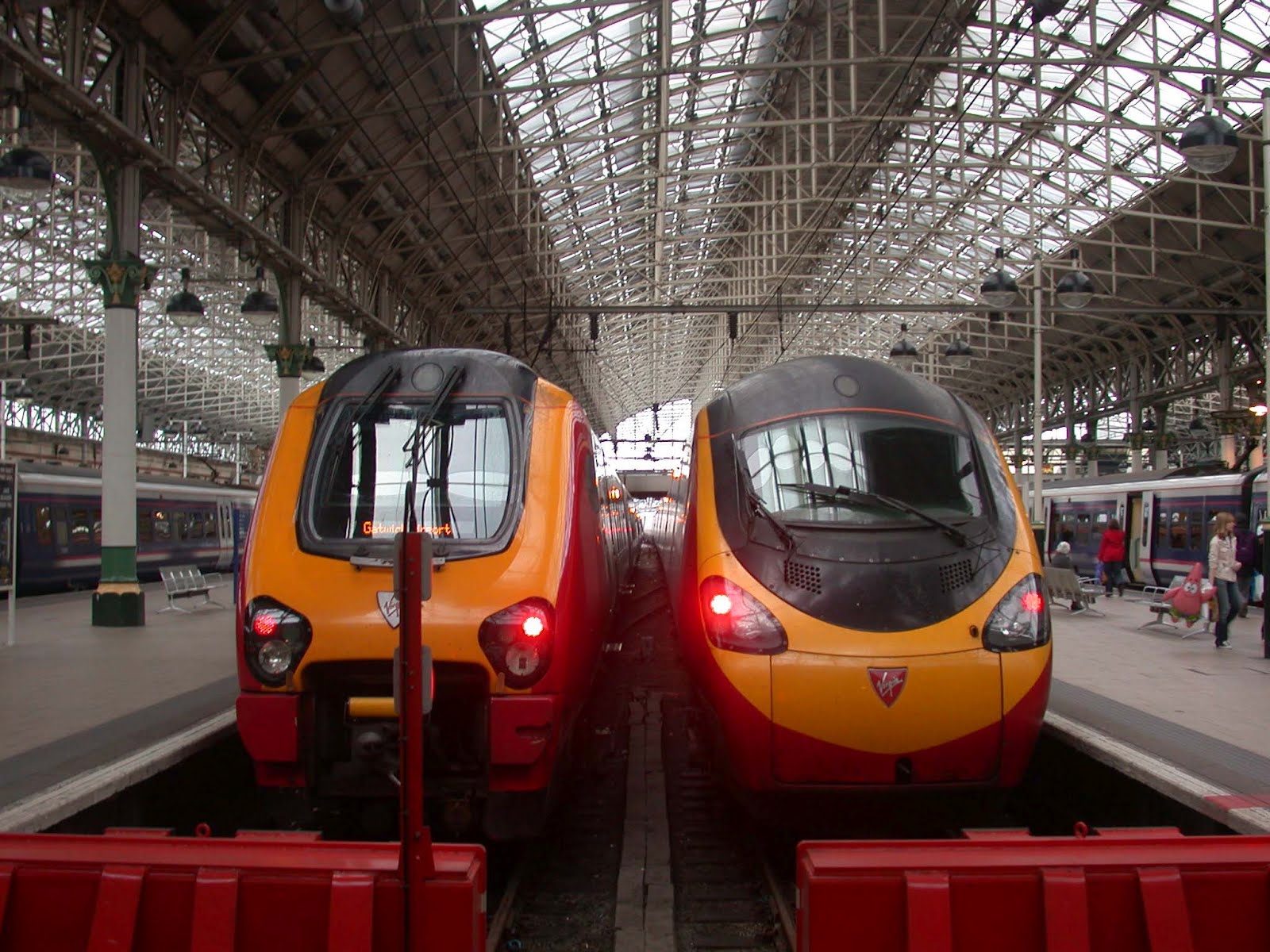
Places I like, ....... Piccadilly Railway Station


I first arrived in Piccadilly Railway Station on a warm September day in 1969 thinking I would be here in Manchester for just three years.

Well that was not going to happen and forty-three years later I reckon it was a pretty clever place to adopt as home.

Even now the sight of the city sky line as the train pulls into the station is something I never cease to enjoy.  I would have liked to see the old station before its facelift in 1960, but had to be contents with its ‘60s look which by the end of that century was looking tired.

So I rather approved of the new design, which I know some friends reckon is just like any one of a dozen airports, but I like it.  And of course then there are the trains.  Even given the cost of a railway ticket, and the bewildering different price options, nothing compares with boarding a train.

On one level it’s because you are still in control.  There are no long tedious waits at a check in and no one makes you pay a shed full of more money because your bag is the wrong size and a tad heavier than you thought when it was packed.

Then there are the trains.  Now I accept some of the small commuter ones can still be dismal in the rush hour But I never tire of the excitement as the big intercity ones slowly slide out of the station gently picking up speed  as they clear the platform and head out past the jumble of warehouses, factories and abandoned industrial sites.

And it is easy to forget that for the Victorian passenger this was not just a new way of travelling it was a new way of seeing the world.  For the first time they could gaze down at the roof tops and in to the gardens, yards and streets which ran alongside the tall viaducts.

It was a whole new way of taking in the city and something of that novelty is all too clear from the words of the writer Edwin Waugh who in the winter of 1857, travelled from the heart of the city out to Stretford on a railway that was just eight years old. It was a journey of contrasts. Leaving ‘the huge manufactories, and the miserable chimney tops of Little Ireland, down by the dirty Medlock; we ran over a web of dingy streets, swarming with dingy people ... left the black stagnant canal, coiled in the hollow, stretching its dark length into the distance, like some slimy snake’. And clearing the ‘cotton mills, and dye works, and chemical manufactories of Cornbrook’, the train entered open countryside before arriving at Stretford station.

You can still get that sense of being that detached observer on that same line today, and a little of that landscape has survived.  But we are a long way from Piccadilly Station, still perhaps I shall continue theme with pictures of other stations and other trains. We shall see.

* Waugh, E., ‘Lancashire Sketches’, Alexander Ireland & Co, 1869

Pictures; from the collection of Andrew Simpson