Saturday, 18 February 2017

Today at Central Ref ............ Manchester Remembering 1914-18

The book launch for Manchester Remembering 1914-18 the story of a city at war.

Join me, along with family members of some of those commemorated in the book.

Also present will be David Harrop and his collection of memorabilia from the Great War some of which appears in the book.

The event begins at 1 and runs through till 4.30.

There will be an opportunity to buy the book and get a signed copy.

Manchester Central Reference Library, St Peter’s Square Manchester M2 5PD.

There is a metro stop directly opposite the library.

Picture; young Clara in military uniform from the collection of David Harrop


Book launch organised by Chorlton Bookshop in association with Manchester City Council

Friday, 17 February 2017

Finally the apology that matters .......... “a sincere apology to the former British Home Children” ....... reflections from a British descendant of a BHC

Now the news is just filtering through over here of the historic vote in the Canadian House of Commons offering a “sincere apology to the former British Home Children who are still living and to the descendants of these 100,000 individuals who were shipped from Great Britain to Canada between 1869 and 1948, and torn from their families to serve mainly as cheap labour once they arrived in Canada.”


Report on Roger Hall 1914 ......our BHC
It is of course long overdue particularly in the light of my Government’s apology back in 2010 and a similar one from the Australian Prime Minister.

But that is a churlish response to what is a most important recognition of the countless broken lives and awful stories which followed from that migration.

All the more so because living in Britain I was unable to sign the petition calling for that apology but as a descendant of a BHC I am so very pleased, and appreciate the hard work that went into the campaign.

St John's River, NB, 2008, along way from Derby
It made me reflect on a story I posted in 2012 soon after discovering that one of my great uncles was a British Home Child.

At the time I reflected, that I had “mixed feelings about the need for Governments to apologise for acts done in their name or on their watch when those events have long since passed from living memory.

The opponents of such apologies tend to distort the argument by citing ancient acts of wrong doing from Herod’s massacre of the Innocents to the murder of the small Jewish community in York in 1190. 

William Henry Hall, circa 1930s
Who after all could be held responsible? Not only is there no one who could in anyway be linked to such acts but the very systems of government around at the time have long since vanished.

More recent crimes are no less easy to deal with. In most cases successor Governments had nothing to do with those past events and apologies do not allow those who suffered to escape from being seen as victims. 

How much better then to follow the South African policy of truth and reconciliation which has been a brave 
way of coming to terms with the years of oppression and apartheid. 

But I think this is to miss the point. It is not so much about saying sorry as allowing those who suffered to feel that their lives and experiences were important and deserve more than a footnote in a history book.”
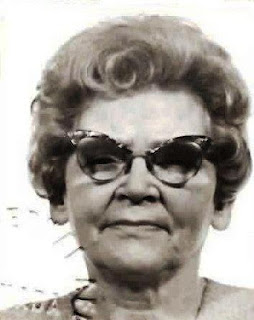
Laura Isadore Pember, nee Hall, 1968
That is why I was pleased that the British and Australian Governments and now the Canadian  House of Commons have apologised for the way that thousands of our children were taken from Britain and placed in Canada and Australia.

Many may have had better lives as a result and made great contributions to their adopted countries, but few had much say in what happened to them. They paid the price for the fact that the biggest and richest world empire could not look after them, and chose instead to let a group of individuals and organisations solve the problem of child poverty by taking them elsewhere.

Now the same people who oppose such apologies will argue that it was a different time and under different rules, except there were plenty of people at the time from socialists and trade unionists to middle class reformers who criticised the way capitalism tolerated such poverty as an essential part of the system.

John  Hall, date unknown
Sadly for my great uncle and most of the children shifted off to Canada it is all too late. The last that went across in the 1940s will be very old. Most of them never talked about their lives as British Home Children and so the stories of who they were, how they got to Canada and their early childhood experiences are in danger of being lost.

Some of us have begun to do our own personal research and storytelling. In my case I have been helped by the growing network of others doing the same thing, and by the Library and Archive of Canada, as well people over here.

Along the way BHC has become a legitimate area of historical research and the apology is another step to a greater understanding of what happened.

So, not that they need me to say so, but well done to the Canadian House of Commons.

And while we have no photographs of our BHC we do have image of his three siblings which will always be as close as we will get.

Location; Canada, Britain & Australia

Pictures; from the collection of Andrew Simpson and the Pember family

Book Launch

You are invited to the launch and book signing of Manchester Remembering 1914-18 at Central Reference Library St Peter's Square February 18 between 1 pm and 4.30

The event will include military en actors in period uniform, and a selection of memorabilia featured in the book from David Harrop’s collection

Manchester Remembering 1914-18*

The book draws on official reports and newspaper accounts as well as letters and photographs and a multitude of other personal items.

Much of this material has never been seen before and some of it is unique in that it allows us to follow families through the whole conflict challenging many of those easy and preconceived views of the war.

So here is the story of George and Nellie Davison of Harpurhey and Hulme, Miss Rebecca Chapman’s first week as a Salford tram clippie, Mrs Fannie Jane Barlow’s, a Red Cross nurse from Chorlton and others from Newton Heath, Didsbury and Fallowfield.

The Author

Andrew Simpson has written several books on Manchester’s history, and is currently writing a book on the history of the Manchester and Salford Boys’ and Girls’ Refuges and Shelters.

Andrew lives in Chorlton.

*Manchester Remembering 1914-18 by Andrew Simpson will be published by the History Press in February 2017

Pre order now from the History Press, http://www.thehistorypress.co.uk/publication/great-war-britain-manchester-remembering-1914-18/9780750978965/

A story within a story

Unknown couple, date unknown
Now I rarely indulge in bouts of self promotion today I will just share a story from the Manchester Evening News with everyone.

And yes it is all about Manchester Remembering 1914-18 and the book launch tomorrow in Central Ref between 1pm and 4.30.

Sadly you don’t make shed loads of money from local history books and this was certainly not the intention with this one.

Rather it was to focus on those men, women and children who lived through the conflict and tell some of their individual stories.

Some of their letters, photographs and memorabilia have been included in the book from the collecyion of David Harrop.

And that just leaves me to direct you to the link for Paul Britton’s story, New book tells the stories of people and places in Manchester during World War One and leave it at that.

Andrew Simpson
Although I shall also share this picture which Paul asked for and say that in the five years that the blog has been running this is the only contemporary picture of me to grace chorltonhistory.

Location; Manchester


Picture; unknown Manchester couple, date unknown from the collection of Ron Stubley, and Andrew Simpson 2012, from the collection

* New book tells the stories of people and places in Manchester during World War One, Paul Britton, MEN February 16, 2017

Thursday, 16 February 2017

Manchester Remembering 1914-18 .......... people behind the book no 2 ..... Matilda, Leah, Emily and Dorothea

Now I don’t know how other authors go about thanking the people who have made a book travel from a vague idea to something on a book shelf, but I think they deserve to be mentioned.

Yesterday I wrote about David Harrop who sourced much of the memorabilia which appears in Manchester, Remembering 1914-18* from his extensive collection and today it is the turn of the staff at the History Press who published the book and Manchester City Council who helped with the book launch in Central Ref on Saturday.

And for anyone who  just thinks that this is another way of promoting the book they may be right but it is also an insight into how it came about.

In my case it began with an invitation from Matilda the Commissioning Editor at the History Press to write for their series Great War Britain, continued with Emily who read the manuscript, suggested changes to the grammar and above all made me think about careless or repetitive passages and has concluded with Leah who has made sure that the publicity for the book and the launch have gone smoothly.

Which brings me nicely to Dorothea who is the Service Development Officer for Manchester Libraries who has helped organise the event on Saturday.

You can become very blasé about a book launch to the point of forgetting just how to make the thing work, and this Dorothea did, pointing to the screen in the room and suggesting a power point presentation.

She also sorted out the basics, like the positioning of tables, and chairs and then handed me over to Jackie and Drew at Archive Plus who publicised the event and Helen who will be there on the day.

So less another stab at outrageous self promotion and more a big thank you.

The book launch for Manchester Remembering 1914-18 will be on Saturday February 18 in Central Ref from 1pm through to 4.30


Picture; Central Ref 2014, from the collection of Andrew Simpson

Manchester Remembering 1914-18 by Andrew Simpson was published by the History Press in February 2017

Order now from the History Press, http://www.thehistorypress.co.uk/publication/great-war-britain-manchester-remembering-1914-18/9780750978965/ or Chorlton Book Shop, info@chorltonbookshop.co.uk 0161 881 6374

*A new book on Manchester and the Great War, http://chorltonhistory.blogspot.co.uk/search/label/A%20new%20book%20on%20Manchester%20and%20the%20Great%20War

When in Rome

It is called the Trattoria al Camoscio D’Abuzzo and is on Via Castelfidardo which is a long narrow street in the San Giovanni neighbourhood of central Rome. We found it quite by chance which in a sense says little for our observational skills. It is directly opposite the hotel we were staying at and after trying a number of expensive, and some indifferent places we ended up here.


It was what I imagined a typical family run restaurant in the centre of Rome would be like. There were just two small rooms with the inner one a few steps higher than the outer. The tables were close together and on the nights we ate there full of locals. Now I know this reads like a tourist book but that was how it was.


It specialized in the food of Abuzzo which is a region on the eastern side of Italy, and it was here that I had first had aglio, olio, and peperoncino, which is pasta with olive oil garlic and chillies. It is one of our favourites and is eaten all over Italy although I have to confess that Rosa’s version is magnificent. Usually served with spaghetti, the sauce is made by lightly cooking crushed garlic with olive oil and chopped fresh chili's. I have written about this wonderfully simple dish http://chorltonhistory.blogspot.com/2011/12/spaghetti-aglioolio-e-peperconcino-or.html to which I often add a slight amount of tomato sauce, which according to Tina and Rosa turns it into something very different.

Rosa is from Naples and from her I learnt that you do not drain the pasta but just scoop it from the pan and drop it on to the oil, garlic and chilies which give a little moisture to the dish.

We have returned to the Trattoria from time to time and were last there while on holiday in Silvi. Now the weather had gone indifferent and we decided to head off across the middle of Italy for a few days in Rome. Our younger two have never been and Saul at least was excited at the prospect of the Colosseum and the Circus Maximus.

What I hadn’t realized was that the two hour coach trip would take us through the region of Abruzzo. I can think of no finer way to see a country than by travelling by coach or train. You get to see things which are lost if you fly. But then I am sounding like the tourist guide again.

Suffice to say on that first day back in Rome we took the boys to the Trattoria and this time sat outside. The meal was a leisurely casual affair and in between courses we watched as the city went about it business.
And despite the fact that we had not been for some years, the food was as good as I remembered it.

Picture; the inside of the Trattoria al Camoscio D’Abuzzo from http://www.squisitalia.com/locale.php?id=765 & the outside from the collection of Andrew Simpson

Wednesday, 15 February 2017

One hundred years of one house in Chorlton part 78 ...... “never throw tin foil away” and other handy period hints

The continuing story of the house Joe and Mary Ann Scott lived in for over 50 years and the families that have lived here since.*

Now I just wonder what Joe and Mary Ann recycled.

The M.C.E.W box now a decoration
The question came to mind the other day when our Saul reflected “that in Poland you never throw tin foil away.”

I didn’t think to ask why but I guess it might have something to do with the past when certain products were scarce and were pressed back into service again and again.

In the same way Rosa never throws bread away or for that matter any food preferring to use it in something whether it is a soup or a casserole.  But then she grew up in Naples during the last war when food was in short supply and anything you could eat was to be used carefully.

It is of course just sensible to recycle and give a thing another use.  Dad stored all his odd screws, nails and hinges in those big tins which had once contained dried milk and lingered on as storage in our house long after the war had been forgotten.

And a decade before that Corporation dust bin vans carried the slogan “burn your rubbish” which made perfect sense given that most people still had open fires and quite a few still relied on solid fuel back burners to heat the water.

Burn your rubbush, 1938
In the same way Nana never threw away brown wrapping paper, and always undid the knots on string which came with parcels winding up the string  which then sat in that special draw with the button box, old collar studs and much more.

All of this made perfect sense, but then there were the things she did which still baffle me, like always buttering the end of the bread before cutting a slice from the loaf and adding cloves to apple sauce.

And here in the house more than a bit of that thrift rubbed off on me so that  for years we kept cereal boxes which could be made into all sorts of cardboard models from rocket ships to smiley figures.

Ministry of Food leaflet on gathering food , 1948
Somewhere there is still Ben’s space ship with the words “blist off” on the side, Saul’s United player he made and the red, yellow and black car constructed from a discarded washing up bottle and powered by a string activated propeller which Josh entered for a Brookburn competition.

Sadly Tina’s Roman gladiator costume made for Luca from pretty much everything in the house has been lost forever.

In the same way the odd objects Joe and Mary Ann kept and reused vanished when the house was sold in 1974.

That said I did come across an empty baked beans tin in the void under the dining room, which has no particular claim to fame other than it carried the label of Safeways and will have been bought from the supermarket when they were still in the precinct.

It is still under the floor boards in contrast to the M.C.E.W box which was only replaced in the 1980s and has pride od place on a shelf.

Location; Chorlton

Pictures; from the collection of Andrew Simpson

*The story of house,
http://chorltonhistory.blogspot.co.uk/search/label/The%20story%20of%20a%20house