Thursday, 5 September 2013

The swimming baths have to be one of the great municipal investments. Listen to their history today with Chorlton History Group

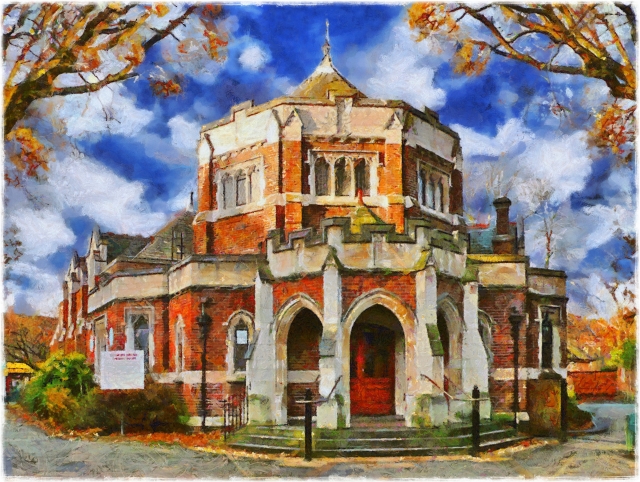
Victoria Baths, 1905
The swimming baths have to be one of the great municipal investments.

They were relatively cheap, and many doubled up as a place to wash the family.
In my case there were two that we visited.  The first was the Laurie Grove Baths in Deptford.

It had been built between 1895-98 “by the vestry board of St Paul's Deptford under the Public Baths and Washhouses Act 1846. As well as a large and a small swimming bath the 1st floor had 1st class Ladies and Men's Slipper Baths. 

These individual baths were provided for personal bathing as working class people did not have bathrooms in their own homes. There were also washhouses (laundries) which later had early washing machines installed. On the ground floor there were separate entrances for men and women linked by a ticket office.*

And like our own Victoria Baths these were ornate and grand.  By comparison the pool in the Peckham Health Centre was a complete contrast, with its modernist simple design and large expanse.

I used both but it is of The Deptford one that I have the fondest of memories.

Entrance to Victoria Baths, 1905
As you entered you were hit by that mix of warm air, chlorinated water and noise.

And even before you had bought your ticket and gone through the turn style the hot sticky atmosphere made your winter clothes stick to you, which continued as you walked along the pool side to the changing rooms.

The bigger of the two contained a water shute along with diving platforms which were both a terror and an abiding source of attraction for the young and a constant challenge to achieve the slide or dive without being stopped by the attendant.

But for many the Baths were less a place of fun and more an essential to everyday life.  Most offered a laundry and of course the slipper bath.

We were lucky in that we had a bathroom but my friend John and his siblings would make the short journey across the road armed with soap and then own towels.

Miles Platting Public Wash House, 1950
When I share that memory with my sons they can only look on and ponder that their father truly did belong to a time unlike anything they can imagine.

And it is no good fastening on the lighter moments, like the day Paul Driver fell into the baths fully clothed and for ever after was known as Dribble.

Such stories just confirm that Dad’s youth is as distant to them as the first flight of the Wright Brothers or the opening episode of Coronation Street in 1960.

My childhood along with the many functions of the old Public Baths has pretty much receded into history.
The buildings themselves have proved too costly to maintain or have just succumbed to age and changes of leisure activities.

So the Laurie Grove Baths in Deptford was converted in to art studios for Goldsmiths College, and many like the Leaf Street Baths in Hulme closed when new pools were opened.

All of which is a nice lead into the talk by John Mather on the history of Greater Manchester Swimming Pools on Thursday September 5th at 1.30.

Sharston, 1966
This starts off the autumn programme of the Chorlton History Group which hold their monthly meetings at Chorlton Good Neighbours, Wilbraham St Ninian’s Church, Egerton Rd South, Chorlton £1.50 charge for tea & biscuits.

Now that should have been the end but for a memory prompted by looking at the picture of the Sharston Baths in 1966 It was here a full twenty years after my first visits to Laurie Grove that I had the job of accompanying classes of year 7 students for swimming lessons.  Not that I was expected to get my feet wet.
I saw them onto the coach saw them off at the baths and travelled back to Poundswick High School.

Pictures; First Class Swimming Baths, Victoria Baths, 1905, m51825, entrance to the Victoria Baths, 1905, m51823, Miles Platting Public Wash House 1950, m57371,  Sharston Baths, 1966, m51865, courtesy of Manchester Libraries, Information and Archives, Manchester City Council, http://images.manchester.gov.uk/index.php?session=pass

* Laurie Grove Baths, Deptford, Greater London, Heritage Explorer, English Heritage, http://www.heritage-explorer.co.uk/web/he/searchdetail.aspx?id=8307&crit=bathroom

The picture which stubbornly refuses to give up its story, Newcastle-upon-Tyne in the 1920s

We all have them in the family collection of pictures.

They are those with no name, or date or any clue as to where they were taken or even what connection they have to the family.

Now this is almost one of those, and I say that because I am pretty sure it will be where my father worked in the 1920s but that is about it.

He had been born in 1906 and as soon as he could he began working with cars and coaches and by degree became a bus and coach driver, which remained his chosen profession from the 1920s till he retired from Glenton Tours in 1982.

By then he was at the prestige end taking passengers across Europe on sight seeing tours as far as the Italian Lakes.

Not for him the grammar school place he had been awarded but instead like Toad in Toad Hall it was the call of the motor car which to a young man in the 1920s had all the romance and sense of adventure which half a century before had been connected with the railway and later to the aeroplane.

None of which quite helps identify the photograph and for that matter the picture itself isn’t much help.

Now I don’t have enough knowledge to date the coach but a check of registration plates confirms that it was registered in Newcastle-upon-Tyne which I suppose is not much of a revelation given that the destination board is also for Newcastle and will have been issued no later than 1932.*

Dad was born in Gateshead on the southern side of the River Tyne and was certainly in London by 1937 which begins to narrow the time frame.  So sometime between the mid 1920s and 1937 he was here.

But where exactly I don’t know and I doubt if it even now exists.  Just one of those small garages in this case beside what was once a private house somewhere in either Newcastle or Gateshead.

That said it is still an interesting image.  The man stares back at the camera leaning on the bonnet of the coach with that rather casual and disdainful pose while just to our right and almost out of our view is a woman half hidden who also is caught looking at the photographer.

And with her back to us is the young child with what look to be full length boots waiting it seems for her mother who has been distracted by the camera man.

The coach is very similar to a model of an early touring coach which had been in the window of Glenton Tours in New Cross from the 1930s till it was deemed a too old and no longer fitted with the sleek new vehicles the form was operating in the 1950s.

And so it went into the back office and from there arrived home as a present which I am ashamed to admit  I slowly trashed but then I was only four.

What I like about this one are the curtains carefully tied back and made of lace reflecting an age of elegance which the plastic blinds of the 1960s and the tinted glass of today cannot match.

To the left is the working bit of picture and just beyond the doors are a collection of cars and coaches.

Now there are other pictures of my father which I take to be from the same period inside a garage which might just be this one.

If so his would have been the daily walk past that old fashioned petrol pump and underneath the large painted signs.

And as he gave his occupation as motor engineer he may well at the time of the picture have been working in the garage.

But that is the limit of what I know which just leaves me with the hope that someone will recognise the place or be able to date the coach.

We shall see.

And of course that will be a bonus for Dad rarely talked about this period of his life and I never asked.

The image had sat in his private collection of pictures for over sixty years and I saw it for the first time only after his death in 1994.

Nor was the original very promising for it was just a negative which was a bit scratched and faded.  But there was enough there to make me curious, and that curiosity has paid off.

I can't date it, or locate it and its significance to our family is unclear but is a wonderful image which captures an ordinary working environment.  I guess it was  taken by an amateur, who was not bothered with the half hidden face of one of the subjects and was equally content to leave the discarded newspaper in the picture.

And yet again it is a lesson in treasuring the family pictures.  It travelled with Dad from Newcastle across south east London to Well Hall Road where he spent the last thirty years of his life.

Picture; from the collection of Andrew Simpson

*There are few sites dedicated to the history of registration plates in the UK and this is just one of them, http://homepage.ntlworld.com/johnstonrh/a30a35/regnos/

Didsbury in the summer of 1959 and an exciting new project

It is a familiar enough scene.

The War Memorial and Llibrary in 1959
We are looking across at the Library and War Memorial in Didsbury in the summer of 1959.

And a decade later when I began to explore this part of south Manchester I can’t say it looked that different.

Nor for that matter does it today.  The tree behind the War Memorial has matured and another stands in front of it which wasn’t there in 1959 and there is now a telephone kiosk on our left.

That said there is something very dated about our picture which has less to do with it being monochrome and more to do with the people and that scooter.

The Library
Picture postcards from a century ago show us a landscape which looks old and different, but here it’s almost now but not quite.

And that brings me to the new project and collaboration with my old pal Peter Topping.  For over two years we have been working together with Peter painting pictures and me telling the stories behind them.

It took us from our first exhibition at the Big Green Festival in 2011 to the history trails in local venues and most recently the History Wall down at Albany Road which told the story of Chorlton across an 80 metre display, allowing people to walk the history of the township.The display will soon be relocated at Chorlton High School.

And now Amberley Press have invited us to produce a book on Didsbury recent past.

Sitting in the sun by the memorial
The format is the well tried and tested one of 180 images divided between the past and the same scene today.

But to spice up the format Peter will be doing the initial research, taking the new photos, and converting some of the scenes into paintings while I am working on the people and stories that bring the old and new images together.

We are grateful to all those who have already contributed picture postcards from their collection, but would welcome more.

From the very beginning we decided that the picture post card was one of the most powerfu ways we could record that old Didsbury.

But we also decided that we would not restrict ourselves to those of the late 19th and early 20th centuries.

Didsbury's more recent past is just as important and with this in mind we hope to includ others from the middle decades of the last century.

The Library today, © 2012 Peter Topping
So our 1959 Tuck postcard has its own story to tell and is as much a part of Didsbury’s history as plenty from an earlier period.

But I will leave you with a preview of one of Peter's painting which will be included in the book.

I rather think it makes for a nice contrast with the photograph from 1959.

Picture; War Memorial and Library from the series, Didsbury, Lilywhite, issued by Tuck & Sons, 1959, courtesy of TuckDB http://tuckdb.org/history and Painting of Didsbury Library © 2012 Peter Topping
web www.paintingsfrompictures.co.uk facebook Paintings from Pictures

Tuesday, 3 September 2013

Discovering who I am, debates around the use of archives and British Home Children

One of the homes run by the charity
Now it is a while since I featured the blog of the Together Trust which is the successor to the old Manchester and Salford Boys’ and Girls’ Refuges which began in 1870.

It started simply enough as a charity to give homeless children a bed for the night, but quickly developed into an organisation which campaigned for the rights of neglected and abused children setting up homes where they could receive care, attention and an education.

And for a brief forty years was also involved in the migration of children to Canada.

The Trust has an extensive archive which families of the children they helped can consult with the guidance of the archivist.

But anyone who has researched their family history will know this can raise all sorts of issues which can confront the researher with painful discoveries, but also especially for British Home Children give answers to their identity

So the last three blogs from their archivist are particularly interesting as they “explore the topic of ‘Accountability, Culture and Ethics’ within the Together Trust archive.”  

Emigration Book records
This was also the main theme surrounding this year’s Archives and Record’s Association (ARA) conference in Cardiff. The conference offered “a variety of speakers, discussing various subjects within the archive and records management context.”

One in particular which caught Liz’s attention was ‘Identity records and archival evidence: exploring the needs of Forgotten Australians and Former Child Migrants’. 

“The talk by Michael Jones, Research Archivist and National Programme Manager of the Find & Connect Web Resource explored how archives can help people understand their identity. 

Some children were emigrated to Australia as part of child emigration programmes up until the late 1960s. 

For these individuals the importance of their own records is immeasurable. Although the Together Trust stopped emigrating children to Canada by the First World War, its own records are also hugely important to their ancestors. 


Photograph from the records, migrated boy in Canada
To understand one’s heritage and the context of why people in their own family were shipped across to a new country is vital for people to understand their own identity. 

The importance of our archives in helping this understanding cannot be underestimated. “

Now there is a lot more but rather than rehash the three excellent articles I shall as ever just point you to the link.*

For all of us involved in BHC they make fascinating reading and in turn pass you on to the conference itself and the site Find & Connect Australia.**


* The Archivist has returned to the building, http://togethertrustarchive.blogspot.co.uk/2013/09/the-archivist-has-returned-to-building.html#more

** Find & Connect Australia, http://www.findandconnect.gov.au/

Pictures; courtesy of the Together Trust, http://togethertrustarchive.blogspot.co.uk/p/about-together-trust.html

On stumbling across St Ann's Church from the alley

Now what I like about this picture is that it is unusual.

Most images of St Ann’s Church are taken from the square, bit for some reason the photographer has caught the building from St Ann’s Alley which is that narrow thoroughfare running off from Cross Street down the side of Mr Thomas’s Chop House.

And the result is to frame the church on either side of two buildings and I rather think draws in.

To our right the area in the summer is now an outdoor area for the chop house, but until recently it was just an open space.

Now the date in the catalogue in 1905 but the other cards in the series all date from the 1950s and so I rather think this image will be the same.

Picture; St Ann’s Church, from the series, Manchester Lilywhite, issued by Tuck & Sons, courtesy of TuckDB http://tuckdb.org/history

Monday, 2 September 2013

A rant, a hotel in the city centre and a lesson on where not to stay

What constitutes good value for a stay in an 18th century hotel in a historic city in the south west?

Now this is not to be a rant by tired and grumpy of Tiverton that I have already done when the booking company requested feedback on the said hotel.

No this is more a reflection on another conversion of a private residence into a hotel.

Yesterday I was down in a peaceful Cornish valley with an old farm cottage which by degree over the last half century has been converted into a fine place to stay.

And the following day we were in a city centre hotel.

We had booked both places on line as we moved around Cornwall and so after a long journey north we were hoping for a place which matched the inn in the valley.

Now this hotel had all plenty going for it.

It was in a parade of stylish period houses close to many of the tourist attractions with some pretty stunning views.

Sadly the 18th century property had been converted to maximise the number of visitors that could be packed in and the rooms we slept in were woefully run down.

The paint around the doors was chipped, the cord to the once elegant sash window was broken while the seat of an arm chair in the first room we looked at was torn and the varnish on the wooden sill below the mirror was peeling.

To be fair the room was clean and the beds comfortable, the plasma TV big, and the staff did their best to make our stay a happy one, but the carpet bubbled in places and the shower was a little tired looking.

What saddened me was that there appeared to be an expectation that because we were in the heart of the city the state of the room was acceptable.

Now I am a realist and fully understand market forces, and the  argument of supply and demand but cannot reconcile a bubbly carpet, chipped paintwork and broken sash cord in what from the outside looked smart inviting and elegant.

All of which makes me reflect that this once fine period building had been badly converted, was shabbily maintained and sadly did not do justice to what it had once been.

Was I angry?  Yes.  Should we have found somewhere else?  Perhaps.

But we arrived late into the city and I doubt that we would have found any where else at that time and would have still had to pay something for the room.

As it was the cost was as much as that other hotel in the peaceful Cornish valley which was immaculate.

So I am cross because I don't think it was what we thought we were getting, angry that such a fine old building was not what it had once been, and a little concerned that someone somewhere thought that the rooms were OK to be marketed.

Pictures; from the collection of Andrew Simpson

Sunday, 1 September 2013

A lesson in conservation ......the Inn in the Cornish valley

We had been travelling around the southernmost bits of Cornwall.

Wide sandy beaches, rough jagged cliffs and the expanse of the sea
It was all planned so that we did the journey in short hops making the most of the countryside but never overstretching ourselves with more than a few hours in the car.

Often the route took us down small country lanes so narrow that in places it was impossible to see how two vehicles could pass each other.

The tall hedges and overhanging trees added to the magic of these lanes, but then with little warning we would be out in the open with the coast ahead of us and those stunning views of wide sandy beaches, rough grey jagged cliffs and the expanse of the sea.

The plans had been simple, book a couple of Travel Lodges on the way down and then treat ourselves to two up market country hotels.

Travel Lodges are by and large all the same, cheap cheerful and often next to an industrial site, which proved to be the case with our two.

But country hotels are different; usually they have character and history and can be quite enchanting.

So it was with the first we stayed at.
Trengilly Wartha Inn is set in a peaceful valley in the heart of the countryside close to the Helford River.*

It is a rambling old property with at its core an 18th century cottage which from the late 1940s had been added to by a series of owners.

The peaceful valley in the heart of the countryside close to the River Helford
Now I can be practical but I doubt that I would have been able to take the original small building and with a leap of faith think about transforming it into a paying concern.

The 18th century cottage had consisted of three rooms with a ladder giving access to the upstairs, and a lavatory of sorts in the barn where the animals were kept.

The early modernisation and additions were carried out with the help of German prisoners of war and each successive owner added and adapted the place.

The three fields which once provided a meagre living as a market garden are now a mix of open land, lake, and stream with wild flowers everywhere.

Trenggilly Wartha Inn
Not that this is in any way an outrageous advert for the place but  a reflection on how an old building can be adapted, change its use and ensure its survival.

As the current owners are the first to admit while some Inns have a rich and romantic past theirs did not even acquire the title Inn until recently.

But that makes it no less an interesting place and one which I rather think will prompt me to dig deep into its 19th century past, tracking its agricultural residents and placing them in the history of this bit of Cornwall.

And all of this as well as a very pleasant place to say with a most helpful and welcoming hosts which only leaves me to add that the translation of trengilly wartha  means settlement above the tree's.

Pictures; from the collection of Andrew Simpson

* Trengilly Wartha Inn, www.trengilly.co.uk